

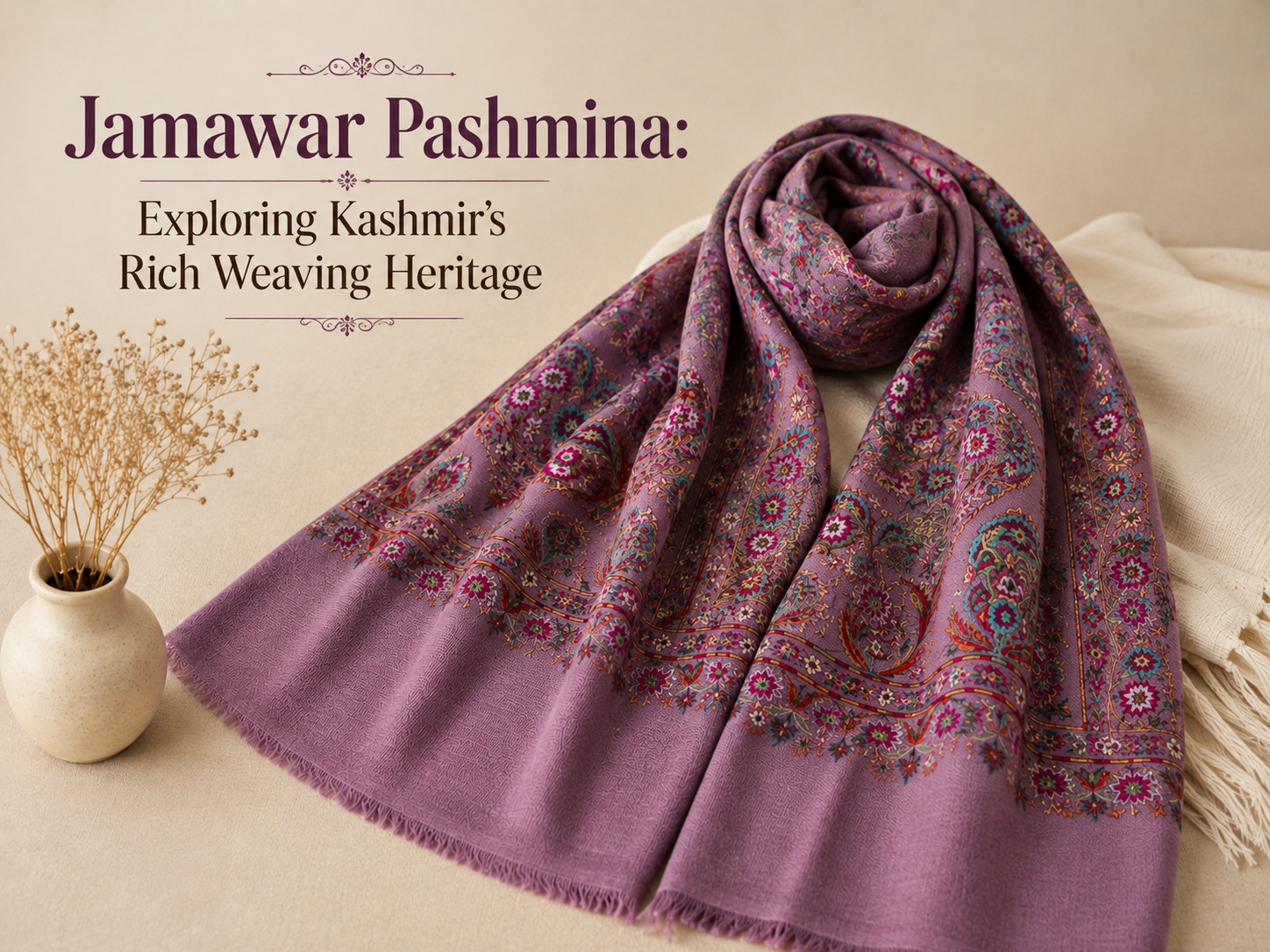
Jamawar Pashmina represents one of the most refined expressions of traditional craftsmanship, heritage, and timeless elegance. Known for its intricate patterns and luxurious texture, this remarkable textile reflects generations of artistic skill passed down through the weaving traditions of Jammu and Kashmir.
A beautifully crafted jamawar pashmina shawl is more than a fashion accessory; it is a piece of cultural artistry shaped through patience, precision, and an appreciation for fine detail.
The beauty of Jamawar lies in the complexity of its designs. Traditional motifs, floral patterns, paisleys, and detailed borders are woven together to create textiles that feel both historic and relevant. The artistry behind these creations has allowed Jamawar to remain admired by people who appreciate heritage textiles and exceptional craftsmanship.
The Heritage Behind Jamawar Pashmina
The story of Jamawar weaving is closely connected with the rich textile traditions of Kashmir. For centuries, skilled artisans have worked to preserve techniques that require remarkable attention and experience.
The weaving process often involves detailed planning, careful colour selection, and precise execution to ensure every pattern is balanced and visually harmonious.
A pashmina jamawar shawl stands apart because of the artistic detail incorporated into the fabric. Unlike simple textiles, Jamawar designs can feature elaborate patterns spread across a large portion of the surface. This creates a rich and luxurious appearance while showcasing the exceptional skill of the artisan.
The cultural importance of these textiles goes beyond their visual appeal. They represent an enduring connection between craftsmanship and heritage. Each carefully woven pattern carries the influence of artistic traditions that have evolved while remaining rooted in the identity of Kashmir.
Understanding the Art of Pashmina Jamawar Shawl Making
The process of pashmina jamawar shawl making jammu and kashmir is deeply connected to traditional handcraft techniques. Creating a detailed Jamawar textile requires knowledge of weaving, design, colour coordination, and finishing.
The Importance of Fine Craftsmanship
A traditional Jamawar creation begins with careful preparation of the textile and design. Artisans work with intricate motifs that require exceptional precision. Depending on the complexity of the artwork, the weaving process can demand significant time and patience.
The patterns often feature nature-inspired elements such as flowers, vines, leaves, and paisley forms. These motifs are arranged to create visual movement across the fabric. The result is a textile that appears artistic from every angle and reveals new details upon closer observation.
The value of a pure pashmina jamawar shawl is closely associated with the quality of craftsmanship and the attention given to each stage of its creation. Fine weaving creates a smooth, graceful appearance while allowing the detailed patterns to remain distinct and elegant.
Jamawar Pashmina and Timeless Elegance
Fashion trends may change, but heritage textiles continue to hold a special place because of their individuality and artistic value. Jamawar Pashmina has remained relevant due to its ability to combine tradition with sophistication.
A jamawar pashmina shawl can complement both traditional and contemporary wardrobes. Its detailed patterns create a statement without requiring excessive embellishment. The richness of the textile makes it suitable for special occasions, cultural celebrations, formal gatherings, and meaningful gifting.
The versatility of Jamawar craftsmanship also extends beyond shawls. The growing appreciation for heritage-inspired fashion has brought attention to creations such as the pashmina jamawar where intricate weaving techniques add depth and elegance to a classic silhouette.
Pashmina Vogue celebrates this connection between heritage craftsmanship and contemporary appreciation by highlighting textiles that reflect the artistry and cultural richness associated with traditional Pashmina weaving.
The Significance of Traditional Motifs
One of the defining characteristics of Jamawar is its elaborate use of motifs. Traditional patterns are not simply decorative elements; they contribute to the identity and visual language of the textile.
Paisley motifs remain particularly significant within Kashmiri design traditions. Floral elements and intricate borders also create a sense of rhythm and balance across the fabric. When combined with detailed weaving, these motifs transform the textile into a visual composition rather than just a piece of clothing.
The artistic arrangement of patterns requires a strong understanding of proportion and symmetry. Even highly detailed designs must feel balanced. This is where the experience of skilled artisans becomes essential.
Pashmina Vogue recognises the importance of preserving these artistic traditions while helping modern audiences appreciate the craftsmanship involved in heritage textiles.
Why Jamawar Pashmina Continues to Be Valued
The lasting appeal of Jamawar Pashmina comes from its combination of rarity, craftsmanship, and cultural significance. In a world increasingly influenced by fast fashion, hand-crafted textiles offer a different kind of value.
Every detailed pattern reflects time and human skill. The process cannot be rushed without affecting the quality of the final creation. This makes finely crafted Jamawar textiles especially meaningful for people who value authenticity and artistry.
A pashmina jamawar shawl also carries a sense of individuality. The complexity of traditional designs ensures that the textile remains visually distinctive. Its appeal is not limited to a particular season or trend, making it a lasting addition to a refined wardrobe.
The continued interest in heritage fashion demonstrates that consumers increasingly appreciate the story behind what they wear. They want to understand the craftsmanship, traditions, and artistic effort that contribute to a textile's identity.
Preserving Kashmir's Weaving Legacy
The future of Jamawar craftsmanship depends on continued appreciation for traditional skills and the artisans who preserve them. Supporting heritage textiles helps maintain techniques that have been developed and refined across generations.
The art of Jamawar weaving represents an important cultural legacy. It connects modern fashion with historical craftsmanship and demonstrates how traditional knowledge can remain valuable in a changing world.
Pashmina Vogue contributes to this appreciation by bringing attention to the elegance and cultural significance of authentic Pashmina-inspired craftsmanship. Understanding the story behind these textiles allows people to value them not only for their beauty but also for the heritage they represent.
Conclusion
Jamawar Pashmina remains a remarkable symbol of Kashmir's rich weaving heritage. From intricate paisley motifs to detailed floral patterns, every element reflects artistic skill and dedication. Whether experienced through a luxurious shawl or an elegant pashmina jamawar, this craft continues to inspire admiration.
The tradition of pashmina jamawar shawl making jammu and kashmir represents more than a textile-making process. It is a cultural art form shaped by generations of knowledge, creativity, and patience.
As appreciation for heritage craftsmanship continues to grow, Jamawar Pashmina will remain a timeless expression of luxury, tradition, and exceptional artistry. Pashmina Vogue continues to celebrate this enduring connection between Kashmir's weaving traditions and the elegance of handcrafted fashion.
Frequently Asked Questions
What is a Jamawar Pashmina shawl?
A Jamawar Pashmina shawl is a finely crafted textile known for its intricate woven patterns, traditional motifs, and luxurious appearance. It reflects the rich artistic heritage of Kashmiri weaving traditions.
What makes a Pashmina Jamawar shawl special?
A Pashmina Jamawar shawl is valued for its detailed craftsmanship and complex designs. Traditional motifs such as paisleys, flowers, and vines are carefully incorporated to create a visually rich textile.
Why is Jamawar weaving associated with Jammu and Kashmir?
Jamawar weaving has deep historical roots in the textile traditions of Jammu and Kashmir. Skilled artisans in the region have preserved and developed intricate weaving techniques across generations.
How is a pure Pashmina Jamawar shawl different from regular shawls?
A pure Pashmina Jamawar shawl is distinguished by the quality of its material, detailed weaving, artistic motifs, and the level of craftsmanship involved in its creation.
Comments
Log in or sign up to join the conversation.