

One of the readers of my posts suggested that the unknowns of the vaccine outweighed the unknowns of the virus. She was right. So, as I'm in a middling risk class (generally healthy 40-44 year-olds), I went and got myself a vaccination.
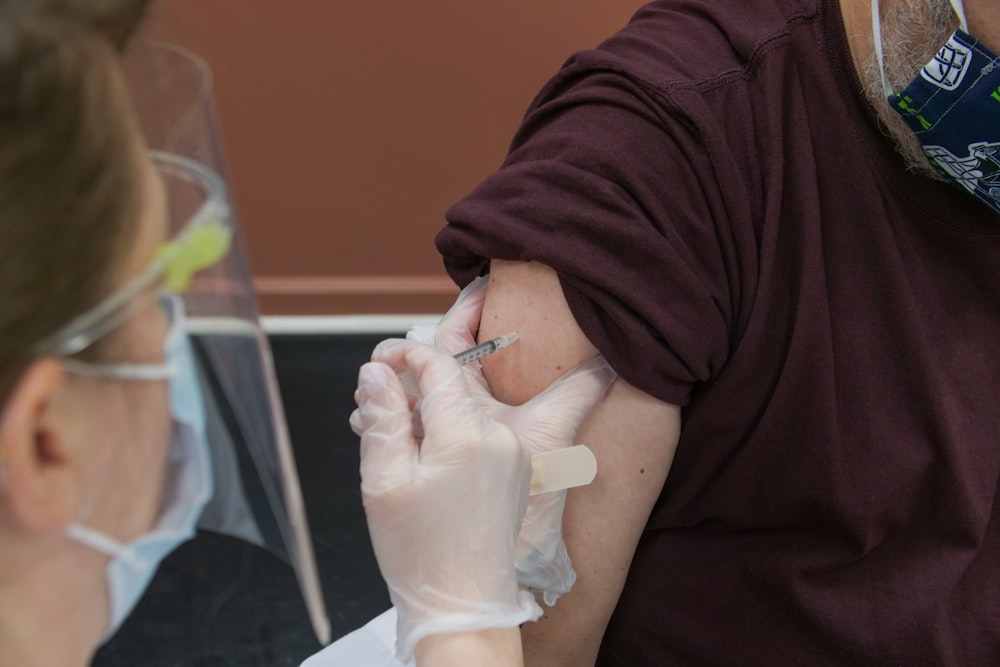
Then discovered one of the unknowns.
Three days after my second dose, I developed a nodule on a lymph node. This is quite normal for vaccinations and why women are not recommended to get mammograms within 9 weeks of certain vaccinations. Six days after my second dose, I woke up with both significant hearing loss and hyperacusis (uncomfortable sensitivity to certain frequencies) in my right ear. My wife is an audiologist. Sudden unilateral hearing loss has to be addressed immediately. The longer you wait, the greater the chance it becomes permanent. My wife has plenty of patients who have lost their hearing this way.
Within two hours, I was tested at her clinic and within an hour of that, I was at the ENT clinic at a major hospital. A few hours later and I was receiving treatment. It has been very successful, near as I can tell.
I'm not bringing this up to warn people about the vaccine. I would have done it anyway, I made the right call. Even knowing there's a risk of hearing loss, I would have done it. You play the cards you have based on the data you have - there's no other way to respond to the real-world. Especially when we have as many unknowns as we do right now.
The fact is: biology is not only incredibly complex but unpredictable (like economics and other scientific areas that regularly defy modeling). This is why we rely on human trials and not simply computer models. Only in a situation like this, with a highly contagious and poorly understood virus, would we take the risks we are taking.
This doesn't mean we shouldn't be taking them.
A few days after the hearing loss, I was talking to a doctor friend who mentioned she has seen a number of patients with Bell's Palsy after vaccination. She explained that, as the facial and hearing nerves run alongside each other, I might simply be having a slightly different response than they had.
It all sort of fit together, which was comforting.
For me, there are two lessons from this experience:
First, if you have sudden unilateral hearing loss (vaccination-related or not), get seen immediately. Be aware of this particularly after vaccination. It might just save your hearing and greatly enhance your quality-of-life.
The second lesson is a broader one. You see, my wife also has a patient with permanent hearing loss whose hearing improved a day after the first dose. This does not happen. People's permanent hearing loss does not spontaneously get better. But the vaccine made it happen.
This reinforces an uncomfortable reality: we're learning. Positive or negative, we're learning. All of us are guinea pigs. It may not be comfortable, but guinea pigs are useful. The model we've followed with these vaccines (that of jumping rapidly to human testing) might just be a far better approach for dealing with dangerous and unpredictable diseases than leaving decades worth of patients dying of such diseases as we slowly climb the hill to human testing.
Faced with the dangerous and unpredictable, shouldn't you be able to play the cards you have based on the data you can get?
Perhaps we can add this to the litany of lessons to take away from the entire coronavirus reality.



Comments
Log in or sign up to join the conversation.