

TM editors' note: This article discusses a penny stock and/or microcap. Such stocks are easily manipulated; do your own careful due diligence.
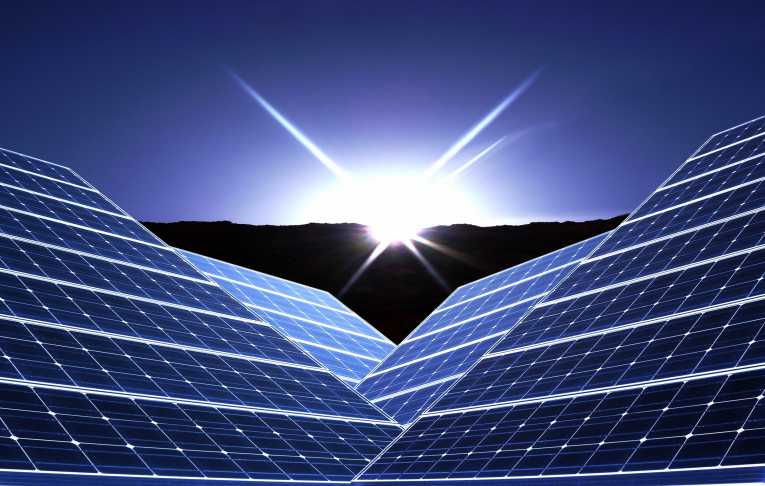
In the battered and beaten solar sector, one company is still standing and getting ready to reinvent itself for what could be a very interesting sunrise. Ascent Solar Technology Inc. (ASTI), is going to be the company to put solar in places where solar is not usually found. They are looking to be more adaptive and flexible with what they call “niche solar” and with their new cutting-edge CIGS (Copper, Indium, Gallium, Selenide) photovoltaic technology on flexible, plastic substrate is set to go all over this world and beyond.
ASTI, like many solar companies, got its start as oil prices soared out of control. The world was desperate for alternatives to oil when many in the world thought that we were running out of oil and many solar companies surge on ‘”peak oil” optimism.
Solar companies soared and so did ASTI with their stock hitting a high of $248 dollars a share as the company and Wall Street felt they had a superior consumer solar product that could fit the needs of America and the world that was soon looking for ways to keep their latest smartphone charged.
They started a consumer business called “Enerplex” products that made solar and battery power banks for smartphones. It was a top-notch product with superior technology. Yet in the world of consumer products, sometimes having a better product isn’t the only key to success (remember Beta vs. VHS?). If consumers are not aware that a superior product is better, or even needed, they may settle for cheaper alternatives which they believe might satisfy their needs. Worse, the market was saturated with a flood of cheap Chinese knockoffs and it was difficult for consumers to initially discern the difference.
There was also the solar panel business that many retail companies wanted to buy from ASTI, but that business was hit by harsh conditions as major retailers started to go the way of the horse and buggy. One of their biggest customers, the Sports Authority, went bankrupt and closed its door. This led to people questioning the viability of this company and many predicted that ASTI would be just another victim to the solar craze and end up on the dust heap of solar history. There were concerns about their balance sheet after the retail business had challenges and the stock price suffered.
Yet ASTI was not ready to give up. They still believed that the quality of the product matters, they just needed to have the proper vision for the product and to target the right customer; those who understood the value of their technology and the reason for its higher price point. A renewed focus on finding the customers who could understand and appreciate solar quality was launched. And the answer was found with the military and aerospace industries.
Enter the CIGS photovoltaic technology on flexible, plastic substrate, a new technology which could revolutionize the solar industry. During my research on ASTI, I spoke with ASTI's Senior Manager of Marketing and Corporate Communications, Brad Brochocki. He explained that ‘CIGS” technology is the only panel in the marketplace that is a flexible, lightweight, thin-film solar module. The lightweight and flexibility means it can be utilized in a harsh environment, such as battlefield, or even out in deep space. Brochocki says that ASTI is a leader in the CIGS field, and have patented the manufacturing process that puts solar on plastic. This patent ensures that ASTI is the only firm in the world commercially producing CIGS solar on a plastic substrate with “monolithic-integration”.
Brochocki says that monolithic-integration means that their technology will work even if it gets ripped or damaged, unlike traditional solar panels. Most solar panels are on glass or metal sheets and if they get damaged, they will stop working. Because ASTI solar has a plastic backing energy will travel around the damage and the panel will continue to work.
Brochocki offered the analogy of Christmas lights. "With most lights, if one goes out you lose the whole string, but with this technology, the lights stay on. So, if it is ripped or torn it continues to work.” He would argue many other solar panels will not work if damaged. Anyone that has experienced this with Christmas lights, or worse, expensive solar panels, will clearly see this as an advantage.
Brochocki says monolithic-integration sets them ahead of the pack for selected sector use. The company's vision is to deliver clean, innovative, reliable power solutions for everyone everywhere. It offers improved durability and not only offers resistance to damage but shade tolerance as well - meaning it's panels will work even without direct solar exposure. And as previously mentioned, these benefits not only offer a competitive edge, but opens the door to new areas of potential sale such as the military or aerospace.
ASTI was one of the few solar firms that were invited to the United States Special Operations Command – or SOCOM TE17 event. Only 35 companies were given the opportunity to demonstrate basic solutions to better enable critical components to units in the field - electronics, communication, and power. Brochocki posits that ASTI's thin, lightweight panels are exactly the kind of product the mitary needs; on the field of battle every ounce matters.
ASTI is not just a solar company. They have a solar technology that goes where other solar companies can’t go. And this applies not only to a consumer's home, or a country's army, but all over Earth and even beyond, into space. Of course the key factor will be if ASTI can secure government contracts. Despite having a superior product, they misjudged the retail space in the past. The risk for ASTI that they will miss the mark again. Some still fear the stock will fall even further if it fails to get the contract.


Comments
Log in or sign up to join the conversation.