

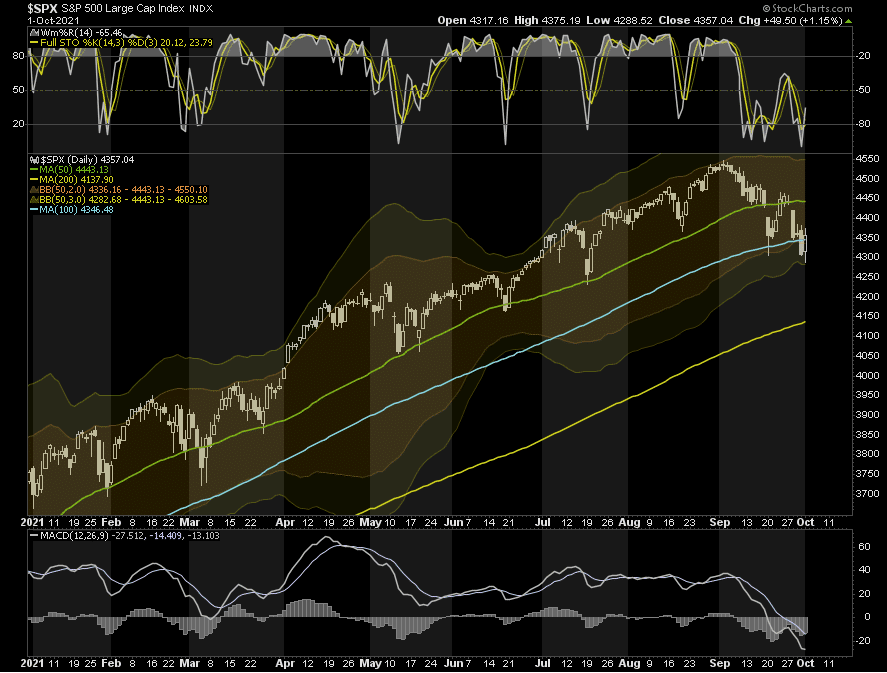
Can we call the September “bear market” over? The bull market regained its strut with Friday’s surge above the 100-DMA, which improves the odds of a resumption of the upward trend. It’s too early to tell if the last two weeks were just a bump in the road or something more serious.
However, as discussed in this past weekend’s newsletter:
“It is worth noting there are two primary support levels for the S&P. The previous July lows (red dashed line) and the 200-dma. Any meaningful decline occurring in October will most likely be an excellent buying opportunity particularly when the MACD buy signal gets triggered.
The rally back above the 100-dma on Friday was strong and sets up a retest of the 50-dma. If the market can cross that barrier, we will trigger the seasonal MACD buy signal suggesting the bull market remains intact for now.“
We are cautious on the market momentarily However if the MACD buy signal gets triggered later this month, such would suggest that the “seasonally strong period” is in play.
(Click on image to enlarge)
What To Watch Today
Economy
- 10:00 a.m. ET: Factory orders, August (1.0% expected, 0.4% in July)
- 10:00 a.m. ET: Durable goods orders, August final (1.8% in prior print)
- 10:00 a.m. ET: Durable goods orders, excluding transportation, August final (0.2% in prior print)
- 10:00 a.m. ET: Non-defense capital goods orders, excluding aircraft, August final (0.5% in prior print)
- 10:00 a.m. ET: Non-defense capital goods orders, excluding aircraft, August final (0.7% in prior print)
Earnings
- No notable reports scheduled for release
Politics
- While Washington avoided a shutdown last week, the debt ceiling, bipartisan infrastructure deal, and reconciliation package all remain unsolved. President Biden is scheduled to give a speech at 11:15 a.m. ET.
- Today marks the deadline for Facebook to respond to an amended complaint by the Federal Trade Commission (FTC) about the tech giant’s monopolistic tactics. A Facebook spokesman has called the FTC lawsuit “meritless.”
- Also, the Supreme Court is back in session today. It’s already being called a “blockbuster term” with multiple landmark rulings possible in the months ahead. The court — featuring six Republican appointees to just three Democrats — could even decide to overturn Roe v. Wade.
Courtesy of Yahoo
Is Technology About To Make A Comeback
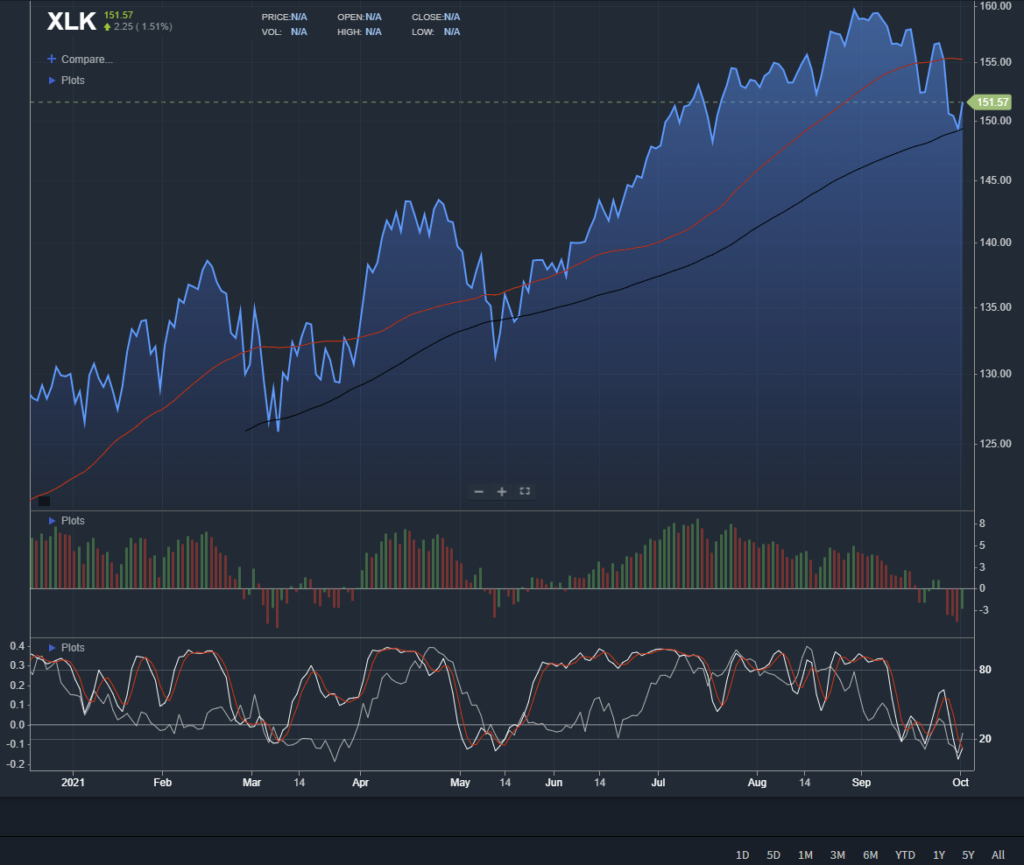
Technology shares were under a good bit of pressure over the last three weeks as interest rates rose ahead of the “debt ceiling/government shutdown” standoff. However, with that pressure now relieved with the short-term funding bill, interest rates retreated on Friday pushing Technology shares higher.
A quick chart from RIAPRO shows the S&P Technology Sector Spider (XLK) holding support at the 100-DMA and oversold on a short-term basis. The last two occasions that sported a similar setup led to decent short-term trades over the next few weeks.
(Click on image to enlarge)
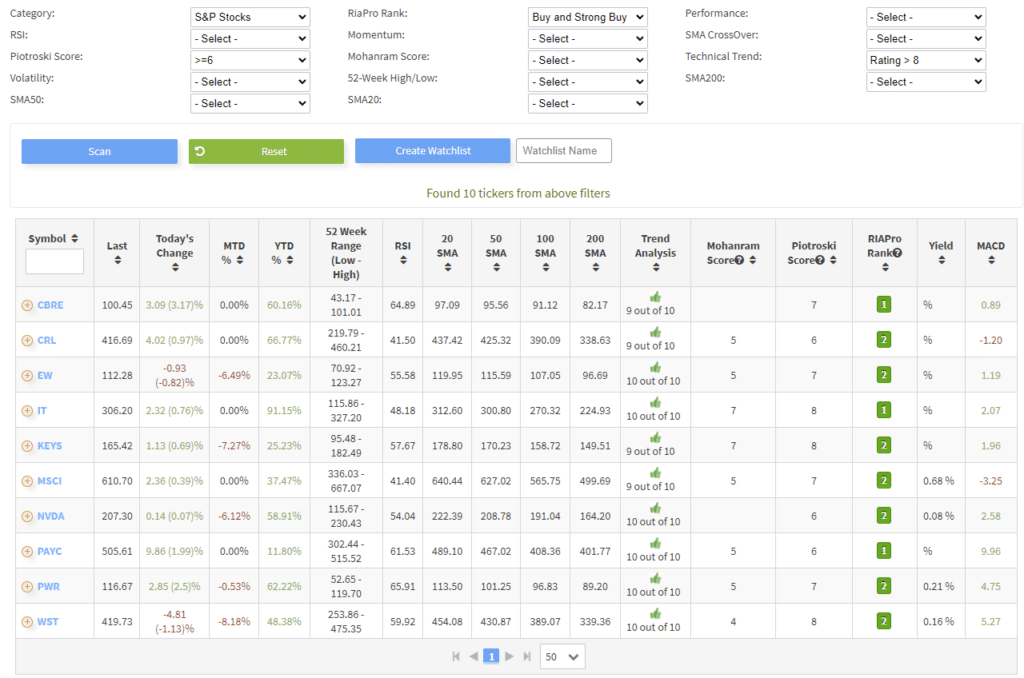
If we run a scan for the stocks with the “buy-rated” fundamentals, have a RIAPRO rank of “Buy” or “Strong Buy,” and are in a powerful technical trend, we find 10-candidates from the S&P 500 index. Nvidia (NVDA) and Paycom Software (PAYC) are interesting candidates from the Technology sector.
(Click on image to enlarge)
Atlanta Fed GDPNow
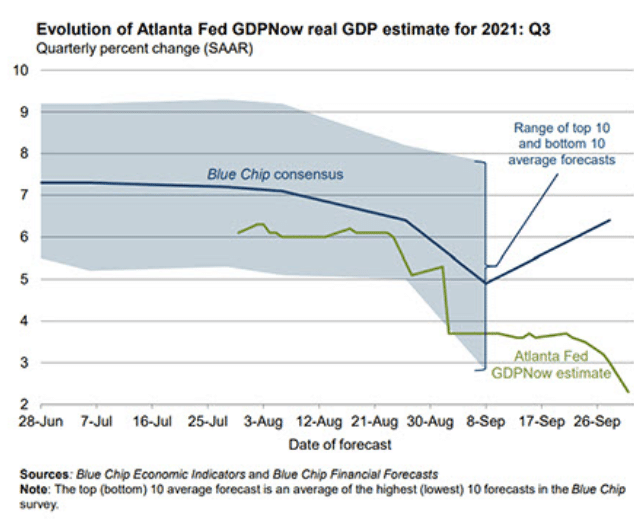
Today’s release of the Atlanta Fed’s GDP forecast took another big tick lower. As shown below, it now stands at 2.3% for the third quarter, down from 3.2%.
Farrell’s Rule #5 Continued
Yesterday we shared Bob Farrell’s rule #5- “The public buys the most at the top and the least at the bottom.”
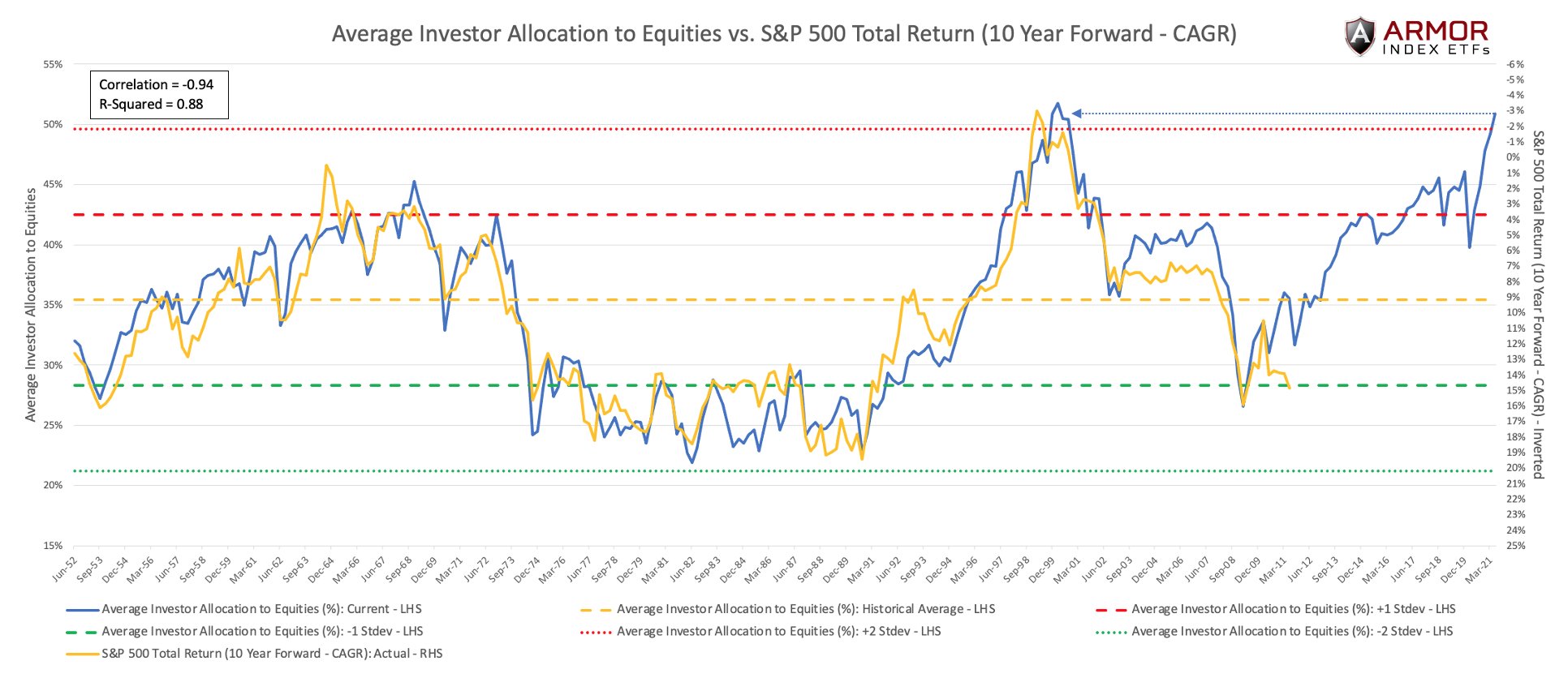
Today we follow it up with evidence from Jim Colquitt at Armor Index ETFs. Jim’s graph below compares the average investor allocation to equities to S&P 500 future 10-year returns. As we see, the data is very well correlated lending credence to rule #5. Note the correlation statistics at the top left of the graph.
More importantly, current allocations to equities are more than two standard deviations above the norm. Per Jim- “Since 1952, we’ve only had 4 quarterly observations above the two standard deviation line. Each of which resulted in negative returns (CAGR) for the subsequent 10 years. We now have a 5th.”
(Click on image to enlarge)



Comments
Log in or sign up to join the conversation.