

''Come to the edge,'' He said. They said, ''We are afraid.'' ''Come to the edge,'' He said. They came. He pushed them... and they flew.
Guillaume Apollinaire
The answer to that simple question is a resounding no; never give in to panic. Better yet, do not allow that foolish emotion to gain any traction. Once fear takes over, the game is over.
When the markets were crumbling last week, if you cleared your mind and paid close attention to the talking heads, you should have immediately felt like you were listening to a pre-recorded message. It was the same old twaddle minus the current date. Now that we have YouTube, you can revisit the broadcasts from the 2008 financial crisis, from the 2000 Internet top, etc., etc. In each instance, you will find that it’s the same rubbish is spun in a different way; this is recycling at its best. The emphasis is to focus on the fear and stress factor.
Let’s take a detached look at what is actually going on, and why these events are unfolding.
It’s more than obvious that the market is correcting; the more appropriate term would be letting out steam that was long overdue. Last week, was the worst week for equity markets since 2011; coincidentally, the markets have not experienced a significant pullback since 2011.
So what changed over the span of 1-2 weeks to warrant such negativity? Very little actually
- China devalued its currency to boost exports; it had to; we are in the midst of a currency war, and most nations other than the U.S. are allowing their currencies to literally collapse. However, devaluing the currency affects sales and profits at many multinational companies, including those back in the U.S. So expect the U.S. to do something that has a negative impact on the dollar.
- The next issue is that the world’s second-largest economy is no longer growing as fast. Growth is slowing down and so far it appears the government’s response to address this has been ineffective. In the short term, this will continue to be the case, but over the long term, we think their policies will be conducive for the economy and stock market.
- Manufacturing activity is slowing down in China, and this has a big impact on the commodity markets. This is the primary reason many markets in this sector are experiencing severe corrections. Copper, oil, and iron to name a few have just fallen apart.
- The extreme plunge in energy prices while a relief for consumers, has unnerved investors. Though to be fair, a lot of this had to do with excess supplies. Demand is not keeping up with supplies, which is a clear indication that worldwide demand for oil is softening.
- Up until recently, the Fed’s decision to start raising rates was another factor weighing on the markets. That uncertainty is no longer an issue as the Fed has now signalled that it will not be raising rates. There is really no inflation problem to tackle. We are referring to the manufactured numbers that suggest all is well when the opposite holds true. This is what the masses believe and so this is what counts, as what they believe drives the markets. Energy prices are down significantly, and the raw materials sector is basically in a bear market. Wages are not rising; at best, they are stagnant. Over 50% of the components of the CPI (consumer price index) have declined in the past six months. TIPS are also signalling that for the foreseeable future, inflation is not going to be an issue. Under these circumstances, a rate hike would make no sense, and only further destabilize the markets. Let’s not forget the additional turmoil; a rate hike would cause in the currency markets. A rate hike would further strengthen the dollar, and adversely affect U.S. exports, making them less competitive in the global markets.
- Again, we do not necessarily agree with the low inflation scenario as rents are rising and the cost of many goods over the past several years have risen dramatically. What we believe in is not of importance, for, in the end, it’s the crowd that drives the market, up to a certain point. When emotions hit a boiling point, which they have not, then one can start taking a position that is opposite to that of the masses.
So what happens next?
Any expert who claims they know precisely what will occur should be ignored. Even a broken clock is correct twice a day. Hence, if an expert makes a large enough number for pronouncements, one of them is bound to come to pass. It does not mean that individuals cannot determine the direction of the markets. As we have stated many times before, there is a vast chasm that separates spotting market bottoming and topping action, with trying to identify the exact top or bottom.
Investor confidence has taken a beating. Under these conditions, many investors will either sit on the sidelines or take some money out of the markets. This is good for it will drive stocks to even more attractive levels. The masses are famous for their inability to time the markets.
Some bullish or reassuring factors to consider
- Traders are not overtly bullish.
- Stocks are selling for roughly 17 times their trailing earnings. While not cheap, these valuations are by no means excessive. The long-term average is roughly 16.5 times earnings.
- Unemployment is down, and U.S. Manufacturing levels are rising.
- Corporations are flush with money.
- Banks are in much better shape than they were in during the financial crisis a few years ago.
- Insiders are not dumping shares; they are actually stepping in and buying them. .
Additional factors to consider
- The housing sector is relatively strong. Purchase applications are up 18% year over year.
- U.S. employees added 215,000 jobs in July
- Latest data shows that U.S. Economy grew at 3.7% in the 2nd quarter, up from the initial estimate of 2.3%
Conclusion
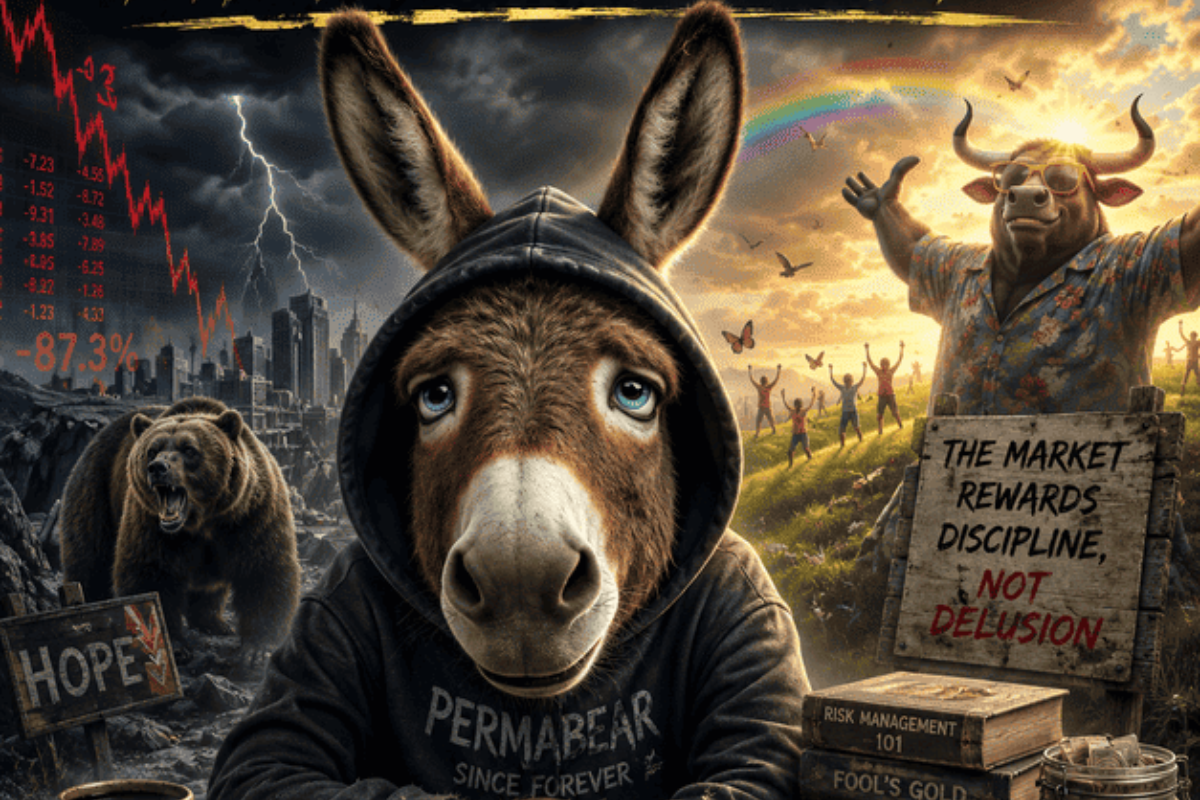
It is interesting to note that the naysayers like clockwork start their chanting and wailing precisely after the markets have started to correct; their screams are rather muted when the market is trending upwards. If you look at history, their record is rather dismal, as every so-called disaster and or end of the world scenario; they pandered about turned to be exactly the opposite of what they predicted. Instead, each of these so-called disaster scenarios proved to be nothing but splendid buying opportunities in disguise. Disasters will come and go. Depending on the lens you use to view such a situation, it can either represent a splendid opportunity or a monumental tragedy. History is replete with examples quite clearly illustrating that financial disasters usually make for splendid opportunities.
We are not advocating that you run out and lunge into the markets; we have been stating for quite some time that the markets needed to let out some steam. A 10% correction would be acceptable, but we would not panic even if they pulled back up to 20%. The markets have not experienced one decent correction since 2011. The markets have already shed in excess of 10%, and we suspect there is one more leg down in the works before the dust settles. Our general suggestion would be to buy when panic sets in, and blood is flowing freely in the streets.
I envy paranoids; they actually feel people are paying attention to them.
Susan Sontag


Comments
Log in or sign up to join the conversation.