

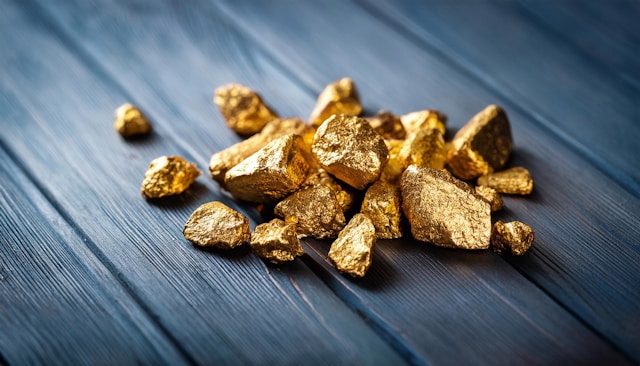
The value of gold has been on a tear as the world’s favorite safe-haven investment option, but is the precious metal reliant on the geopolitical outlook in the Middle East before resuming its upward trajectory?
Gold has fallen more than 10% since the war began on February 28, representing its largest correction following a whirlwind rally over the past 30 months.
On the surface, the notion of gold falling during periods of severe geopolitical uncertainty and conflict seems counterintuitive. After all, metals and commodities are largely recognized as safe haven assets that offer better protection against market sell-offs when events cause volatility.
But in the case of the war in Iran, gold’s declining value is due to a widespread flight to liquidity rather than to safety for investors. This is characterized by individuals choosing to sell gold to cover margin calls.
Gold’s recent decline is also driven by inflationary pressures caused by the conflict, particularly in the rising cost of oil and implications for consumer energy costs.
It’s for this reason that the Trump administration’s tentative two-week ceasefire with Iran could help to define 2026 for the price of gold, as well as silver and other precious metals. With this in mind, let’s take a deeper look at the headwinds and possible tailwinds facing the metal in the future:
Inflation Challenges
Rising inflation poses an immediate threat to the long-term appeal of gold because of its implications for interest rates, and the prospect of the Federal Reserve once again reverting to a hawkish monetary policy could see investors cycle their money out of the metal in favor of yielding assets as the prospect of higher returns grows.
The war has brought some troubling forecasts about inflation rates. While the Fed revised its forecast for 2026 upwards to 2.7% following the flare-up of conflict, the Organization for Economic Cooperation and Development (OECD) announced that it expects inflation to reach 4.2% for 2026.
“When inflation gets out of control, things can get bad very quickly, which is why interest rates are increased to cool down the economy and reduce inflation,” explained a Wealthify article on the topic.
“Let’s say we’re seeing the value of houses going down over time; people might delay purchases in the hope of buying things at a lower price, which reduces demand. As with all investing, however, the value of your investments can go down as well as up, meaning you could get back less than invested.”
It’s for this reason that gold is traditionally viewed as a useful safeguard against inflation, which helps to maintain the purchasing power of investors over the long term. However, because the Fed uses interest rate hikes to control inflation, gold’s inability to produce yields makes it less rewarding compared to other investment strategies.
Mark Haefele, chief investment officer at UBS Global Wealth Management, summarized the predicament by explaining that gold is a ‘hedge against the wider impact of conflicts,’ rather than direct wartime threats.
Haefele notes that during Russia’s initial invasion of Ukraine in 2022, the price of gold initially jumped before falling as investors sought out liquidity and alternative options like energy assets.
Oil as an Opportunity
Another challenge stemming from the war in Iran is that investors are beginning to view energy stocks as a more valuable play when it comes to commodities.
The price of Brent crude oil peaked at $119 per barrel during March, with Iran’s closure of the Strait of Hormuz proving to be a decisive factor in shaping the outlook for the US economy and its markets in the short term.
With ETFs like the United States Oil Fund (USO) posting growth of 82% in 2026 alone, it appears that a prolonged conflict will drive more money away from gold and towards other oil-focused commodities.
Using the events of 2022 as a guide, the value of gold slipped around 20% following an initial period of growth on a seven-month trend.
However, Russia was responsible for 10% to 11% of the world’s oil production at the time, which is almost half of the volume of oil that passes through the Strait of Hormuz.
If peace talks with Iran break down and the Strait of Hormuz is closed for a sustained period of time, the inflationary pressures of an energy shortfall are likely to drive oil far higher while gold is sold off for higher-yielding assets.
What’s Next for Gold
It’s important to keep in mind that gold remains one of the world’s most effective commodities to invest in, with its scarcity contributing to a reliable rate of appreciation over time.
For many investors, buying and holding gold is one of the best long-term strategies, regardless of the geopolitical challenges that continue to hang over 2026.
In the short term, the price of the metal will depend on the outlook in the Middle East and whether the inflationary impact of oil price squeezes can be successfully sidestepped amid the conflict in Iran. With this in mind, gold remains a strong option depending on your goals.


Comments
Log in or sign up to join the conversation.