

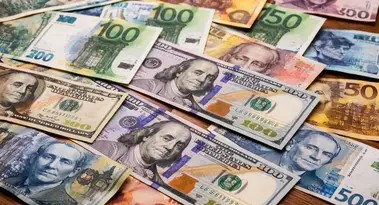
For years, the currency pecking order looked relatively fixed.
The US dollar dominated, the euro and yen anchored the traditional reserve complex, and commodity currencies were often treated as useful but cyclical side trades.
That hierarchy is now being challenged as oil, energy security and geopolitical fragmentation take on much greater importance in global markets.
This is why the rally in Norway’s krone and the Australian dollar matters. It is not simply a story about two currencies benefiting from higher commodity prices.
It is about investors starting to reward countries with hard-asset exposure, stable institutions and stronger external positioning more aggressively than before.
In short, the market is beginning to redraw the foreign-exchange map.
The hierarchy is starting to change
Oil’s surge earlier this year gave the first clear sign that currency leadership was shifting.
Commodity-linked currencies such as the Norwegian krone and the Australian dollar rose sharply as investors looked for markets that could benefit directly from higher raw-material prices rather than suffer from them.
Both currencies have gained strongly against the dollar this year, making them among the standout performers in the G10 space.
That move reflects a broader change in market thinking.
In a world shaped by supply disruptions, trade fragmentation and energy insecurity, investors are no longer looking only for traditional safe havens.
They are also looking for currencies linked to economies that can generate income from the very shocks destabilising the global economy.
Those questions naturally favour countries such as Norway and Australia.
The result is a more complex currency order. Traditional havens still matter, but so do currencies tied to oil, gas, metals and food.
Real resources are becoming more central to FX valuation again.
What could stop the reset
None of this means the rally will move in a straight line.
If oil retreats more sharply, if geopolitical tensions ease convincingly or if global growth weakens enough to drag down commodity demand, some of the urgency behind the trade could fade.
The dollar could also reassert itself quickly if markets swing back into full risk aversion.
Still, the bigger point stands. What markets are pricing now is not merely another short-lived burst of enthusiasm for commodity currencies.
They are beginning to price a world in which energy security, commodity access and geopolitical insulation carry more weight in determining currency leadership.
That is what makes this more than a tactical trade.
Oil and geopolitics are not just moving exchange rates day to day. They are resetting the global currency pecking order.

Comments
Log in or sign up to join the conversation.