

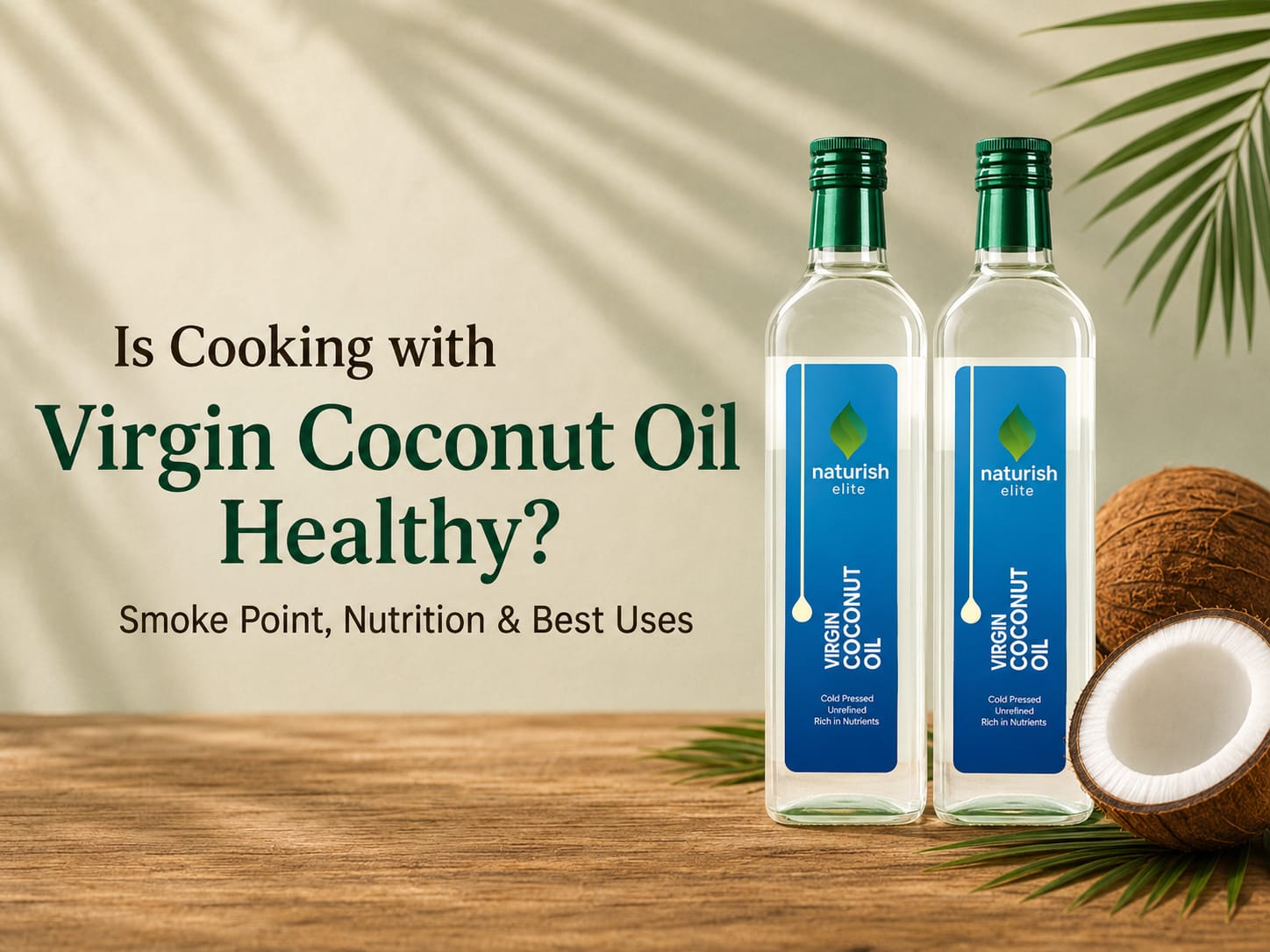
Virgin coconut oil has become a popular choice for people looking for a naturally aromatic cooking oil. But is it actually a healthy option for everyday cooking? The answer depends on how much you use, how you cook with it, and how it fits into your overall diet.
Naturish Elite offers a cold-centrifuged Virgin Coconut Oil made from fresh coconuts and processed at low temperature without added chemicals. It can be a practical option for people who prefer minimally processed cooking oils. If you are planning to buy virgin coconut oil online, understanding its properties, cooking temperature, nutritional profile and best uses can help you make a better choice.
What Is Virgin Coconut Oil?
Virgin coconut oil is extracted from fresh coconut rather than extensively processed dried coconut. Because it undergoes limited processing, it generally retains the characteristic aroma and flavour of coconut.
Naturish Elite uses fresh coconut milk and a cold-centrifugation process at around 30°C. The oil is filtered and tested for quality, making it suitable for consumers looking for a carefully processed coconut oil. This makes virgin coconut oil particularly suitable for recipes where its natural coconut aroma complements the dish.
Is Virgin Coconut Oil Healthy for Cooking?
Virgin coconut oil can be included in a balanced diet, but moderation is important. Like other cooking fats, it is calorie-dense, and coconut oil is particularly high in saturated fat.
This means it should not be treated as a miracle food or used excessively simply because it is naturally processed.
A balanced diet should include a variety of foods and appropriate sources of dietary fat. For people who enjoy its distinctive flavour, virgin coconut oil for cooking can be useful for selected medium-heat recipes, sautéing, baking and other preparations.
Understanding the Smoke Point
What Is the Smoke Point?
The smoke point is the temperature at which an oil starts producing visible smoke and undergoes significant thermal breakdown. Virgin coconut oil generally has a smoke point around 175°C, although the exact temperature can vary depending on the product and processing method.
What Does This Mean for Cooking?
Virgin coconut oil is suitable for cooking methods that use moderate temperatures. However, deliberately heating any oil until it smokes should be avoided. It works particularly well when the natural coconut flavour is desirable and the recipe does not require extremely high heat.
Nutritional Profile of Virgin Coconut Oil
Coconut oil is primarily composed of fat and provides approximately 120 calories per tablespoon. It contains a high proportion of saturated fat, with lauric acid being one of its major fatty acids.
Because of its calorie density, portion size matters. Using a reasonable amount can help you enjoy its flavour without unnecessarily increasing your overall fat and calorie intake.
Rather than relying on one oil exclusively, it is sensible to maintain variety in your diet and choose cooking fats according to the recipe and your nutritional requirements.
Best Ways to Use Virgin Coconut Oil
1. Sautéing Vegetables
Use a small quantity for medium-heat sautéing. Vegetables such as onions, carrots, beans, peppers and sweet potatoes can work particularly well with its mild coconut aroma.
2. Traditional Indian Cooking
Coconut oil can complement coconut-based recipes, selected vegetable preparations, tempering and curries. Its distinctive aroma can add another layer of flavour to traditional dishes.
3. Baking
Virgin coconut oil can be incorporated into selected baked recipes. Its natural flavour pairs nicely with ingredients such as banana, cocoa, oats and dried fruits.
4. Moderate Stir-Frying
For moderate-temperature stir-frying, coconut oil can be useful when its flavour suits the dish. Keep the temperature controlled and never allow the oil to reach the smoking point.
5. Breakfast Recipes
A small amount can be used in pancakes and selected breakfast preparations. Since coconut oil is calorie-dense, there is generally no need to use large quantities.
Virgin Coconut Oil from Kerala: What Should You Check?
Kerala has a strong connection with coconut cultivation and coconut-based food traditions. However, simply seeing Kerala on a label does not automatically guarantee quality. When choosing virgin coconut oil from kerala, check the source of the coconuts, extraction method, ingredient list, packaging, testing information and storage instructions. Quality should always be judged by the complete product information rather than geographical origin alone.
How to Store Virgin Coconut Oil
Keep the bottle tightly closed and store it away from direct sunlight, excessive heat and moisture. Coconut oil naturally changes between solid and liquid states depending on room temperature. This is normal and does not necessarily indicate spoilage.
The oil may solidify below approximately 24°C. The bottle can be gently warmed when a liquid consistency is required. Always use a clean, dry spoon and follow the storage instructions provided on the product packaging.
How Much Coconut Oil Should You Use?
There is no single amount that is appropriate for everyone. Your intake should depend on your overall diet, calorie requirements and the other sources of fat you consume. Since coconut oil is high in saturated fat, using moderate quantities is a sensible approach. The goal is not to consume as much as possible, but to use the oil appropriately as part of a varied diet.
If you are looking for the best coconut oil for cooking, focus on purity, processing method, sourcing, packaging and how well the oil suits your cooking requirements rather than relying only on marketing claims.
Why Choose Naturish Elite?
Naturish Elite focuses on providing Virgin Coconut Oil made using a controlled, low-temperature extraction process. Its oil is made from fresh coconut and carefully processed to preserve its natural characteristics.
For consumers who want to buy virgin coconut oil online, transparent information about sourcing and processing can make the purchasing decision easier.
Final Thoughts
So, is cooking with virgin coconut oil healthy? It can be included in a balanced diet, particularly for medium-heat cooking, sautéing, baking and recipes where its natural coconut flavour works well.
However, moderation remains important because coconut oil is high in saturated fat and calories. The smartest approach is to consider the quantity used, cooking temperature and your overall dietary pattern. If you prefer a naturally aromatic cooking oil with a carefully controlled extraction process, Naturish Elite can be considered as an option for everyday kitchen use.
FAQs
1. Is virgin coconut oil good for cooking?
Yes. Virgin coconut oil can be used for sautéing, baking, moderate stir-frying and selected traditional dishes. It is best used in moderate quantities.
2. What is the smoke point of virgin coconut oil?
Virgin coconut oil generally has a smoke point around 175°C, although the precise temperature can vary. Avoid heating the oil until it starts smoking.
3. Can virgin coconut oil be used every day?
It can be part of everyday cooking, but moderation is important because it is high in saturated fat and calories. A varied diet is preferable to relying exclusively on one cooking oil.
4. What is Virgin Coconut Oil from Kerala?
It refers to virgin coconut oil made from coconuts sourced from Kerala. However, consumers should also check extraction methods, ingredient purity, testing and packaging instead of judging quality solely by origin.
5. How should virgin coconut oil be stored?
Store it tightly closed in a cool, dry place away from direct sunlight and excessive heat. It may naturally become solid at cooler temperatures and liquid when warmer.
Comments
Log in or sign up to join the conversation.