

2020 has been a crazy year for the stock market - starting with the crash that lasted from February to April and ending with records high as the S&P 500 gained more than 16% over the course of the year. Over ten million new brokerage accounts were opened by individual traders last year, which is far more than ever before in one year. The hectic year was followed by 2021, a year that so far has been mostly positive for investors and welcomed even more new traders, and is believed to be one of the craziest in the market’s history.
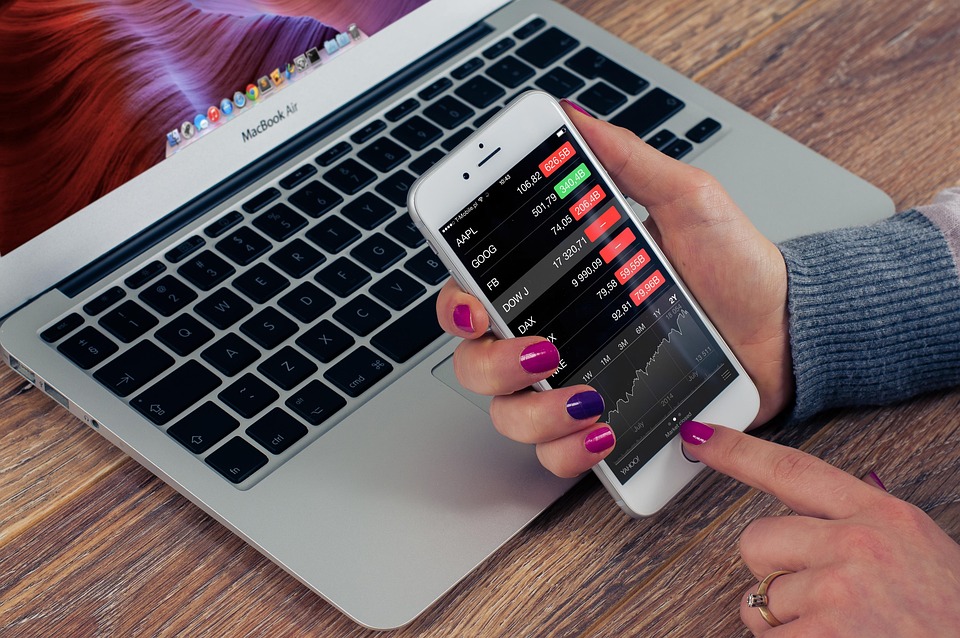
Many experts are wondering if the surge in the number of new investors was directly related to the economic situation caused by the pandemic, or to the mobile apps that are making buying stocks easier than ever? The simple answer is: both.
The impact of the pandemic
Starting last year, there have been a lot of people who suddenly have way more time on their hands than they did before. Being forced to stay inside not only made people spend a lot more time on their phones, but it became the ideal time for everyone to finally cross out some tasks from their personal to-do list. Some started painting, others baked bread, and some people decided to finally look into investing.
Many people decided to invest for the first time by using the stimulus money that they received from the government in 2020. In addition, almost a third of already existing investors invested their check as well, according to a survey.
This came as a big help for the market, as Wall Street’s recovery was fueled by the largest federal government stimulus ever, never before seen support from the Federal Reserve, and some optimism regarding the bouncing back of the economy in 2021, as Covid-19 vaccines were expected to become widely available.
With the continuous rise of money talk on social media and the fact that app stock trading is globally popular, it’s no wonder people used some of their newfound cash to invest.
Robinhood, one of the leaders in the market, confirmed that a flood of new traders joined the platform during the pandemic. In total, the company saw around 17.7 million monthly active users, out of which over 50% were first-time investors.
Why are mobile stock trading apps so attractive?
Mobile trading apps use wireless technology in securities trading. These platforms allow investors to access trading portfolios from their mobile devices such as phones or tablets, rather than being confined to more old-school trading methods via banks or computers websites. The technology has become more and more popular over the past few years and it allows easier access for investors to actively manage their transactions from anywhere, using something they most likely always carry around.
Even though banks and traditional online brokers are also starting to offer mobile solutions for stock trading, they do not seem to successfully target young people. However, the exciting new group of fintech startups has a different goal in mind. These apps often have a social media appeal and they are aimed at a particular target group of up to 35-year-olds who want both access to stock trading, but also a clean user experience. Usually, these apps also come with the promise of transparency and zero-fee trading.
There is no denying that accessibility and user-friendliness are important factors for these new investment platforms. In a nutshell, the easy access via mobile devices makes these new companies so appealing. The community integration, simple interface. and ease of entry has convinced a new wave of young individuals to start their own portfolios. On some apps such as Public, you can even “see why your friends buy or sell certain stocks, and share what you invest in”.
One other advantage that should not be ignored in the growing popularity of mobile trading apps is giving power back to the people, which has been Robinhood’s goal since its first day. Many individuals before never had the opportunity to invest, as the process may seem scary and inaccessible. Moreover, many lack the financial knowledge needed to make a wise decision, thus causing trading for beginners to seem not even worth it.
Sarah Levy, CEO of Betterment, an online investing platform, said that stock trading remains "a privilege of the few since the vast majority of equities are still held by the wealthiest Americans.” Levy also added that the US has "a lot of work to do" in addressing and combatting the root problem of wealth inequality that inevitably shuts many people out of the markets. Indeed, this is true, as 10% of the richest US families own about 84% of overall equities and 92% of directly held equities, according to a 2019 Federal Reserve survey analysed by The New York Times.
Mobile trading apps are an easy tool for ordinary people to now try to reclaim some of that privilege which, in reality, is more of a right. Creating an investment portfolio is easier than ever with the help of online platforms, which can be accessed from the web or directly from your phone (apps like Robinhood). This new climate brings some concerning new aspects in the market, but that usually comes down to the actions of all market participants, as opposed to novice individual investors.
The downsides of trading on mobile
With everything we have discussed so far, it does not seem that a good reason for why not to trade on your phone even exists. That is, unfortunately, not true. There’s something even riskier than trading stocks: trading stocks on your smartphone.
The main criticism of trading apps is the fact it allows virtually anybody to sign up and start using their money. Phone traders, researchers found, are more likely to chase instant gain and performance, by only buying stocks that have performed well in the recent past. A common mistake is that traders are investing more than they are willing to lose. With the gamification of stock trading, users tend to take higher risks and forget the real value of what they are trading.
Even though most of these platforms offer resources (usually in the form of blog posts), users are not obligated and sometimes not even encouraged to get properly informed or do their research. This is also an issue in an era of influencers, some known for ‘pumping and dumping’ stocks or cryptocurrency after artificially increasing the prices by manipulating their audience. The phenomenon has shown that some new investors blindly listen to advice without doing their research. While this is not directly the fault of the platform, many have wondered if the apps hosting these traders should have the ethical responsibility of properly educating their users and informing them of the risks. After all, not many users read the lengthy disclaimers that pop up when you sign up before they tap on ‘Agree’.
Similar research found that the effect of smartphones does not appear to be short-lived or transitory. Investors who place riskier trades on their mobile devices are more likely to repeat that dangerous behaviour in the future, regardless of whether they will use a phone to trade on or not.
But the volatility of the market is something that new investors may not be fully aware of, leading them to make rash decisions such as selling their shares the second they go down in price, to avoid losing even more money. What they might not be able to realise at that moment is that this fluctuation is normal and expected in the market and it is usually a reason to celebrate - most ‘buy and hold’ investors prefer to use the opportunity to buy into the dip.
Moreover, panic selling usually causes a snowballing effect since the prices will keep on dropping and more people will start to sell. This has been noticed more and more recently, and it is particularly being pinned on new investors.
The trend can however go both ways - investors can join forces to buy into one specific company at once and thus manipulating the market. A social-media-influenced frenzy took place at the beginning of the year due to the subreddit r/wallstreetbets shining a light on the heavily shorted stock GameStop Corporation (GME). The company’s value increased fourteen-fold, providing a lot of profit to small traders, while many major investors lost millions of dollars. The shares have since come crashing down only to spike up once again.
Robinhood then became the focus of the controversy after it decided to freeze trades for GameStop on the 28th of January. When the group of Reddit posters saw an opportunity to make some money while also giving a jab to hedge funds, they felt betrayed by Robinhood’s surprising decision to restrict buying the shares. The reasoning behind it was that the stock became increasingly volatile, in addition to having to deal with regulatory requirements. Robinhood has been scrutinized by its users after this move, as they appeared to side with the ‘big guys’ and not with the ordinary traders, even though that is the whole concept that the platform was built on. Even though this was probably the best thing they could have done to help their users not partake in a very risky trend and the most ethical approach, the way they communicated their solution came across as totally disappointing to most users.
What will happen if the market crashes?
In this article, we have explored the reasons behind the increased popularity of stock trading apps and the surge in the number of amateur investors, and we have determined that this came as a result of various external factors. But the question still stands: will this bring a market crash? The truth is, nobody can predict that.
The addition of new investors is not inherently a bad thing. As previously mentioned, the current technological advancements allow people from all social groups to start investing with as little as one dollar. Even if these investors might make bad decisions at first, one of the best reasons to start investing at an early age is to learn the unspoken rule of the market and make plenty of mistakes while there’s still time to recover - it is better to lose that one dollar than to lose a million later on in life.
With that being said, investors should truly be aware of their risk and not fall into the idea that you can get rich fast by following trends. Trading platforms should have more responsibility for educating new users and limiting the amount they can add to their portfolios. Since, for many users, these apps have become a source of entertainment or a gambling platform, a market crash could truly impact their finances and their mental health if they are not prepared to accept the loss.
Conclusion
2021 has been coined as a very good year in the stock market, with The S&P 500 now up more than 20% compared to last year and volatility being basically non-existent. This exceptionally positive situation could give a false sense of security to some novice traders and encourage them to follow trends or to invest more than they are willing to lose.
Due to the continuous rise in the popularity of mobile stock trading apps, the increased number of investors has impacted the stock prices. While this was historically a natural consequence that happened every time that the number of investors went up, it is quite clear that the way stock trading apps are configured is to make the trading process very accessible, with accounts that are easy to sign up for and easy to get sucked into. This then can lead to investors following others by either buying through the hype, or panic-selling when any volatility shows on the charts.
These flaws however are mostly connected to the behaviour of users, and it would be irresponsible for the experts to ignore the benefits that came with giving people the freedom of investing without having to be part of an elite social group.
Image source: Pixabay
Comments
Log in or sign up to join the conversation.