

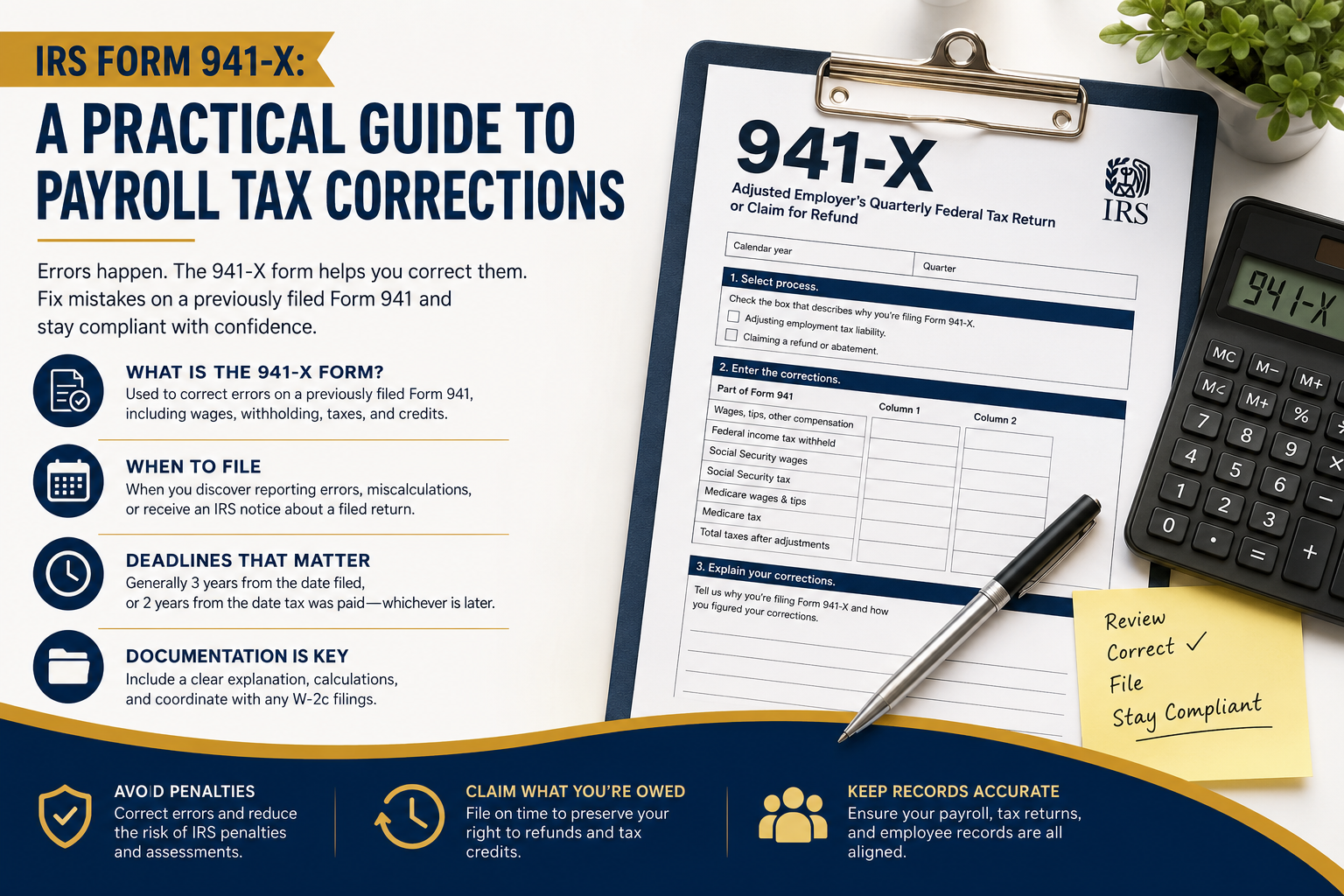
Payroll errors happen even in the most well-run organizations. Wages get misreported, tax withholdings are miscalculated, or a correction identified months after filing needs to be addressed before it snowballs into a compliance headache. When that happens, the 941 x form is the tool the IRS requires employers to use to fix a previously filed Form 941, the Employer's Quarterly Federal Tax Return.
Understanding how and when to use this form isn't just a technical exercise for payroll departments — it's essential for staying compliant, avoiding penalties, and keeping employment tax records accurate. This guide breaks down what the 941 x form is for, when it's needed, and how to approach the correction process with confidence.
What Is the 941 X Form?
The 941 x form, officially titled "Adjusted Employer's Quarterly Federal Tax Return or Claim for Refund," is used to correct errors on a previously submitted Form 941. It covers a wide range of issues, including incorrect wage amounts, miscalculated federal income tax withholding, errors in Social Security and Medicare tax reporting, and mistakes related to tax credits claimed on the original return.
Unlike the original 941, which is filed quarterly as a matter of routine, the 941-X is filed only when an error is discovered. It's a standalone correction document, not a replacement filing, and it must clearly identify what was wrong on the original return and what the corrected figures should be.
When Should You File a 941-X?
Not every payroll mistake requires an amended return, but many do. Common triggers for filing a 941 x form include:
Discovering that wages were overreported or underreported for a quarter
Correcting federal income tax withholding errors
Fixing Social Security or Medicare wage and tax miscalculations
Adjusting previously claimed tax credits, such as those related to sick leave or family leave
Responding to an IRS notice flagging a discrepancy on a filed return
One of the most important distinctions payroll professionals need to understand is whether a correction is treated as an "adjustment" or a "claim." Adjustments generally apply when the employer collects or repays the tax difference from employees, while claims apply when the employer is seeking a refund or credit for overpaid taxes. Choosing the wrong path can delay processing or trigger unnecessary IRS correspondence.
Filing Timelines and Documentation
The IRS enforces specific deadlines for filing a 941-X, generally tied to a three-year statute of limitations from the date the original return was filed, or two years from the date the tax was paid, whichever is later. Missing these windows can mean forfeiting the ability to claim a refund or credit, so timely identification of errors matters.
Supporting documentation is equally critical. The IRS expects a written explanation of what happened, why the correction is being made, and how the corrected figures were calculated. Employers should also be prepared to coordinate 941-X corrections with any related Form W-2c filings, since wage and withholding corrections often affect employee wage statements as well.
Common Mistakes to Avoid
Payroll teams frequently run into avoidable delays when filing a 941-X. Some of the most common missteps include:
Filing the correction on the wrong quarter's form
Failing to distinguish between an adjustment and a claim for refund
Omitting the required explanation of the correction
Not coordinating the correction with W-2c filings when employee wage records are affected
Missing the statute of limitations window entirely
Avoiding these errors starts with a clear internal process: identify the discrepancy, determine the correct filing type, gather documentation, and file promptly rather than waiting until the next quarterly cycle.
Why Getting the 941-X Right Matters
Filing an incorrect employment tax return can lead to more than just extra paperwork. It can trigger delayed refunds, additional tax assessments, and unwanted IRS correspondence that pulls payroll and finance teams away from other priorities. On the other hand, a properly prepared 941 x form resolves the issue cleanly, keeps the organization's employment tax records accurate, and reduces the risk of penalties down the line.
For payroll professionals, HR teams, accounting staff, and business owners alike, building confidence with this form is a practical skill that pays off well beyond a single correction. Knowing the difference between adjustments and claims, understanding filing deadlines, and maintaining solid documentation practices are the foundation of a compliant payroll correction process.
Final Thoughts
The 941 x form exists to give employers a clear, structured way to fix payroll tax reporting errors without starting over from scratch. Whether you're correcting a simple wage discrepancy or responding to an IRS notice, understanding the correction process — and avoiding the common pitfalls that slow it down — is key to maintaining strong payroll compliance and protecting your organization from unnecessary financial and administrative risk.
FAQs
1. What is the 941 x form used for?
It's used to correct errors on a previously filed Form 941, such as misreported wages, withholding mistakes, or incorrect Social Security and Medicare tax amounts.
2. How is a 941-X different from filing a new Form 941?
The 941 x form isn't a replacement filing — it's a standalone correction document that identifies the original error and reports the corrected figures for that specific quarter.
3. What's the deadline for filing a 941-X?
Generally, employers have three years from the date the original return was filed, or two years from the date the tax was paid, whichever is later.
4. Do I need to file a W-2c along with my 941-X?
If the correction affects employee wages or withholding, yes — the 941-X should be coordinated with a corresponding Form W-2c to keep wage records accurate.
Comments
Log in or sign up to join the conversation.