

Introduction
According to TechSci Research report, “IoT in Education Market Size- Global Industry Share, Trends, Competition Forecast & Opportunities, 2031F, The Global IoT in Education Market is projected to grow from USD 16.84 Billion in 2025 to USD 39.18 Billion by 2031 at a 15.11% CAGR.
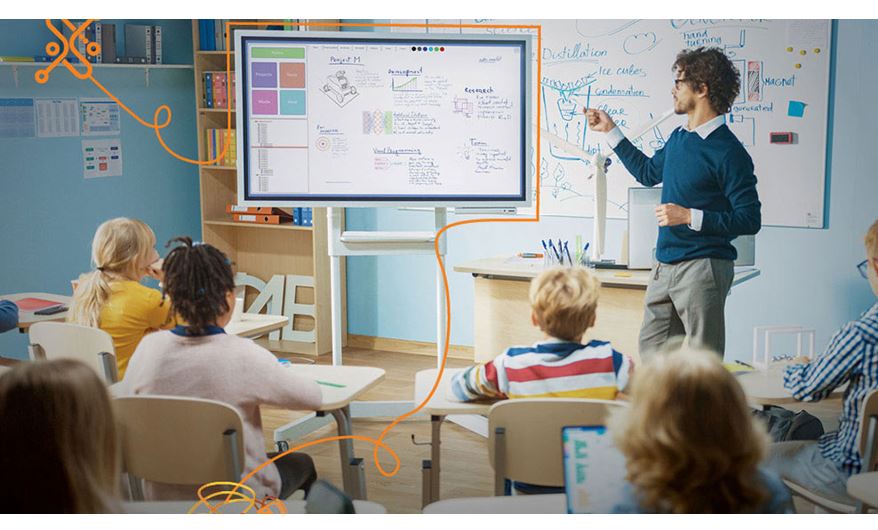
The Internet of Things (IoT) is transforming conventional education environments by connecting classrooms, learning devices, campus infrastructure, and student-management systems. Schools, universities, vocational institutes, and corporate training organizations are using IoT technologies to improve learning outcomes, automate administrative activities, strengthen campus safety, and deliver more personalized educational experiences.
The continued transition toward hybrid and remote education has further accelerated demand for connected learning infrastructure. Smart classrooms equipped with interactive displays, connected audio-visual systems, attendance sensors, cloud-based learning platforms, and real-time analytics enable educators to serve students regardless of their physical location.
IoT is also helping institutions build more responsive learning environments. Connected sensors can monitor classroom occupancy, equipment usage, environmental conditions, and student participation. At the same time, wearable technologies can provide information related to physical activity, attendance, and wellness. As IoT increasingly converges with artificial intelligence (AI), cloud computing, augmented reality (AR), and virtual reality (VR), its role in education is expected to expand considerably.
Industry Key Highlights
The Global IoT in Education Market is expected to grow from USD 16.84 billion in 2025 to USD 39.18 billion by 2031.
The market is projected to register a 15.11% CAGR during 2025–2031.
Hybrid and remote education models are accelerating the deployment of connected learning technologies.
Smart classrooms, attendance management, learning analytics, virtual laboratories, and performance-monitoring systems are key application areas.
Wearable devices are gaining adoption for attendance, engagement, physical activity, and student wellness monitoring.
Corporate training is emerging as the fastest-growing end-user segment.
Asia Pacific is projected to be the fastest-growing regional market.
Increasing government investments in digital education and smart learning infrastructure are supporting market expansion.
AI, cloud computing, AR, and VR are increasing the capabilities of IoT-enabled educational platforms.
Major companies operating in the market include Cisco Systems, Microsoft, Samsung Electronics, IBM, Huawei, Dell Technologies, Blackboard, SAP, Intel, and Oracle.\
Request For Sample Copy of Report For More Detailed Market insight
Main Drivers
Expansion of Hybrid and Remote Learning
The widespread adoption of hybrid education has created a strong requirement for connected learning environments. Institutions are combining physical classrooms with remote participation, requiring technologies capable of delivering consistent learning experiences across both settings.
IoT-enabled cameras, interactive displays, attendance sensors, microphones, and cloud platforms allow instructors to communicate with students in real time. Learners attending remotely can participate in discussions, access digital resources, and observe classroom demonstrations without being physically present.
Connected lecture-capture systems also allow educational content to be recorded and distributed automatically. This creates greater flexibility for students and helps institutions maximize the value of their teaching infrastructure.
Growth of Smart Classrooms
The development of smart classrooms is another major factor supporting IoT adoption. Connected projectors, interactive whiteboards, environmental sensors, digital attendance systems, and intelligent classroom-management tools are replacing traditional processes.
IoT can also help institutions optimize the physical learning environment. Sensors can monitor temperature, lighting, air quality, and classroom occupancy, allowing facilities teams to adjust conditions according to real-time requirements.
Such capabilities can improve student comfort while helping educational institutions manage energy consumption and infrastructure more efficiently.
Increasing Demand for Personalized Learning
Education providers are placing greater emphasis on personalized learning experiences. IoT devices generate continuous streams of information that can be analyzed to understand how students interact with educational content and classroom environments.
Learning platforms can use this information to identify participation patterns, learning difficulties, or changes in engagement. Educators can then adjust teaching strategies according to individual or group requirements.
This data-driven approach is particularly valuable as institutions attempt to move beyond standardized learning models and provide more adaptive educational experiences.
Rising Adoption of Wearable Technology
Smartwatches, fitness bands, biometric devices, and other connected wearables are creating new opportunities within education. These devices can capture information related to movement, attendance, physical activity, and selected wellness indicators.
For example, changes in activity patterns or other measurable signals may help educators identify situations where a student could require additional attention. While privacy and responsible data governance remain important considerations, the underlying technology offers opportunities for more holistic student support.
Wearables can also be incorporated into physical education programs and interactive classroom activities, making learning more engaging and measurable.
Emerging Trends
IoT Combined with AI and Analytics
The combination of IoT and AI is becoming an important trend in education technology. IoT devices collect information from classrooms, campuses, and connected learning platforms, while AI and analytics tools can transform this information into actionable insights.
Institutions can use these capabilities to identify attendance patterns, evaluate engagement, forecast infrastructure requirements, and improve resource allocation.
Connected Virtual Laboratories
IoT-enabled virtual laboratories are creating opportunities for students to interact with equipment and experiments remotely. Sensors connected to laboratory instruments can transmit information in real time, enabling students outside the physical campus to observe and participate in experiments.
This model can be particularly beneficial for institutions that have limited access to specialized laboratory equipment.
Greater Focus on Student Wellness
Education providers are increasingly considering student well-being alongside academic performance. Connected devices and wearable technologies can support initiatives involving physical activity, classroom engagement, and wellness programs.
The development of affordable and interoperable devices could encourage more schools and universities to integrate wellness-related IoT applications into their broader digital education strategies.
Smart Campus Management
IoT adoption is extending beyond classrooms into wider campus operations. Connected systems can support security, energy management, equipment tracking, facility monitoring, and space utilization.
Smart campus infrastructure can therefore provide educational institutions with a unified technology ecosystem capable of improving both academic and administrative operations.
Real-World Use Cases
Hybrid Classroom Management
IoT allows institutions to create classrooms where physical and remote learners can participate simultaneously. Connected cameras, microphones, displays, and attendance systems can automate many aspects of hybrid teaching.
An educational institution can monitor physical attendance alongside remote logins and participation, creating a more comprehensive picture of student engagement.
Automated Attendance
IoT-enabled attendance systems can reduce dependence on manual processes. Sensors, connected cameras, biometric devices, and smart identification technologies can automatically record attendance and transfer the information to institutional management platforms.
This can save administrative time while improving the availability and accuracy of attendance records.
Performance and Engagement Tracking
Connected devices can provide information about participation and interaction with learning systems. Educational institutions can analyze this information to identify students who may require additional academic support.
Such systems can complement, rather than replace, teacher judgment by providing additional data for informed decision-making.
Corporate Learning and Workforce Development
Corporate training is emerging as the fastest-growing end-user segment in the IoT in education market. Organizations increasingly need continuous reskilling and upskilling as technologies, processes, and job requirements evolve.
IoT-enabled training environments can combine sensors, wearables, AR/VR tools, and analytics platforms to create realistic training scenarios. Manufacturing companies, healthcare organizations, logistics providers, and technology firms can use connected learning systems to monitor employee progress and simulate workplace situations.
These capabilities can make corporate education more scalable and measurable across geographically distributed workforces.
Competitive Analysis
Cisco Systems Inc.
Microsoft Corporation
Samsung Electronics Co. Ltd.
IBM Corporation
Huawei Technologies Co. Ltd.
Dell Technologies Inc.
Blackboard Inc.
SAP SE
Intel Corporation
Oracle Corporation
Customers can also request for 10% free customization on this report.
Segmentation
The Global IoT in Education Market can be segmented based on component, application, end user, and region.
By Component
Hardware
Software
Services
Platforms
Hardware includes connected sensors, interactive devices, smart classroom equipment, wearables, and other IoT-enabled equipment. Software and platforms support data management, analytics, learning applications, and device integration, while services cover implementation, maintenance, consulting, and related support.
By Application
Smart Classrooms
Learning Management Systems
Virtual Labs
Student Attendance Management
Performance Tracking
Smart classrooms and learning management systems are becoming central to digital education infrastructure, while attendance and performance-tracking solutions are helping institutions automate administrative and academic monitoring.
By End User
K-12 Schools
Higher Education Institutions
Vocational Training Centers
Corporate Training
Among these segments, corporate training is emerging as the fastest-growing end-user category, supported by increasing requirements for workforce development, reskilling, and technology-enabled training.
By Region
North America
Europe
Asia Pacific
South America
Middle East & Africa
Asia Pacific is emerging as the fastest-growing regional market, supported by expanding internet connectivity, rising digital education adoption, government-led technology initiatives, and the growing presence of EdTech companies.
China, India, Japan, and South Korea are among the markets contributing to regional momentum through smart classroom deployment, cloud-based education platforms, connected attendance systems, and other digital learning initiatives.
The region's large student population and increasing availability of affordable smart devices provide substantial opportunities for IoT providers. Partnerships between regional institutions, technology companies, and global vendors are further supporting the development of connected education ecosystems.
4 Frequently Asked Questions
1. What is the size of the Global IoT in Education Market?
The Global IoT in Education Market is projected to increase from USD 16.84 billion in 2025 to USD 39.18 billion by 2031, representing a 15.11% CAGR during the forecast period.
2. Which segment is growing fastest in the IoT in Education Market?
Based on end user, corporate training is emerging as the fastest-growing segment, driven by the increasing need for continuous learning, employee reskilling, and technology-enabled workforce development.
3. Which region is expected to grow fastest?
Asia Pacific is emerging as the fastest-growing region, supported by government investments, expanding connectivity, smart classroom adoption, a large student population, and the rapid development of the regional EdTech ecosystem.
4. What are the major applications of IoT in education?
Major applications include smart classrooms, learning management systems, virtual laboratories, student attendance management, and performance tracking. IoT is also increasingly being applied to campus management, student engagement, wellness programs, and corporate training.
Contact US:
Techsci Research LLC
420 Lexington Avenue, Suite 300,
New York, United States- 10170
Tel: +13322586602
Email: [email protected]
Comments
Log in or sign up to join the conversation.