

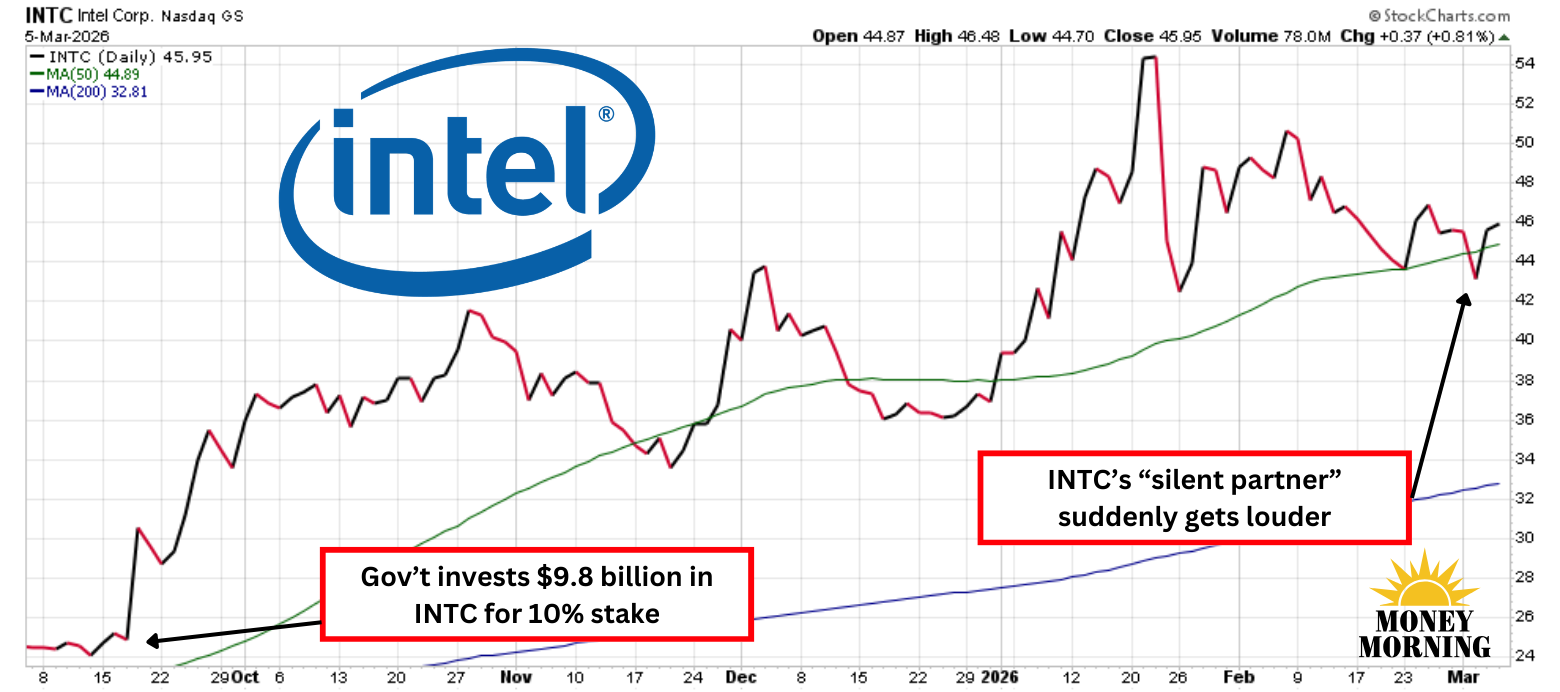
The federal government’s decision to take a roughly 10% stake in Intel (INTC) last year was hailed as a big milestone that could advance its chip foundry ambitions. In exchange for converting $8.9 billion in CHIPS Act grants into an equity investment, the move was positioned as a vote of confidence in U.S. semiconductor leadership.
INTC’s stock soared on the news, and has mostly risen since, nearly doubling in value since the September announcement. Investors cheered what looked like a partnership without downside. Now, Intel is discovering its partner may not be so silent.
Lawmakers Sound Alarm on Supplier Risks
A bipartisan group of U.S. lawmakers, led by Democratic Senator Elizabeth Warren and Republican Tom Cotton, recently raised national security concerns over Intel’s testing of chipmaking tools made by ACM Research (ACMR). Although ACMR is a U.S. company, it does most of its business in China. While it has been expanding its footprint internationally and will be opening a new facility in Oregon in the second half of 2026, the politicians sent a letter expressing concern that “ACM could gain exposure to cutting-edge chipmaking processes that may materially improve the quality and competitiveness of ACM and Chinese military companies.”
The letter, sent last Wednesday, worried that even limited testing could inadvertently transfer sensitive process knowledge. Intel has stated that ACM tools are not used in its production lines and that it complies with all U.S. regulations. Still, the scrutiny underscores the tightrope the company must walk as it scales domestic manufacturing while relying on a supplier ecosystem with deep China ties.
Trump’s Earlier Warnings Come Full Circle
The tensions feel especially pointed given recent history. Trump had previously said INTC’s new CEO Lip-Bu Tan should resign because of “conflicts of interest” due to his extensive connections to companies allegedly linked to China’s People’s Liberation Army. A month later the government was taking an equity stake in the company. The rapid shift from public criticism to taxpayer ownership raised eyebrows even then. Now, with lawmakers from both parties questioning supplier choices, the decision to bring on board a partner with a completely different agenda may not be the celebratory event it was hailed as.
Intel’s CEO has defended the company’s compliance record, but the episode illustrates how government involvement can quickly turn from financial backstop to oversight mechanism.
Bottom Line
The government hasn’t demanded Intel stop using ACMR equipment – yet. But this episode brings into sharp focus the risks associated with accepting the government as a partner. That partner could pressure management to make decisions not based on its fiduciary responsibility to all shareholders but rather to please its single largest one.
What began as a celebrated lifeline for Intel’s foundry ambitions now carries invisible strings – a noose that could tighten as national-security priorities clash with commercial ones. Investors betting on a smooth turnaround may need to recalibrate for a future where Washington’s voice grows louder in the boardroom.



Comments
Log in or sign up to join the conversation.