

The 12-month CPI has risen to 3.8%, driven largely by higher energy and electricity prices. As oil prices continue climbing following the closure of the Strait of Hormuz, the impact is now beginning to show up more clearly in inflation data. Electricity costs have also increased significantly, adding further pressure to consumer prices. How long the conflict involving Iran continues will likely play a major role in determining how much further inflation could rise. The CPI is also a key measure used by the Federal Reserve when deciding interest rate policy. Markets had widely expected rate cuts this year, but persistent inflationary pressure could complicate that outlook.
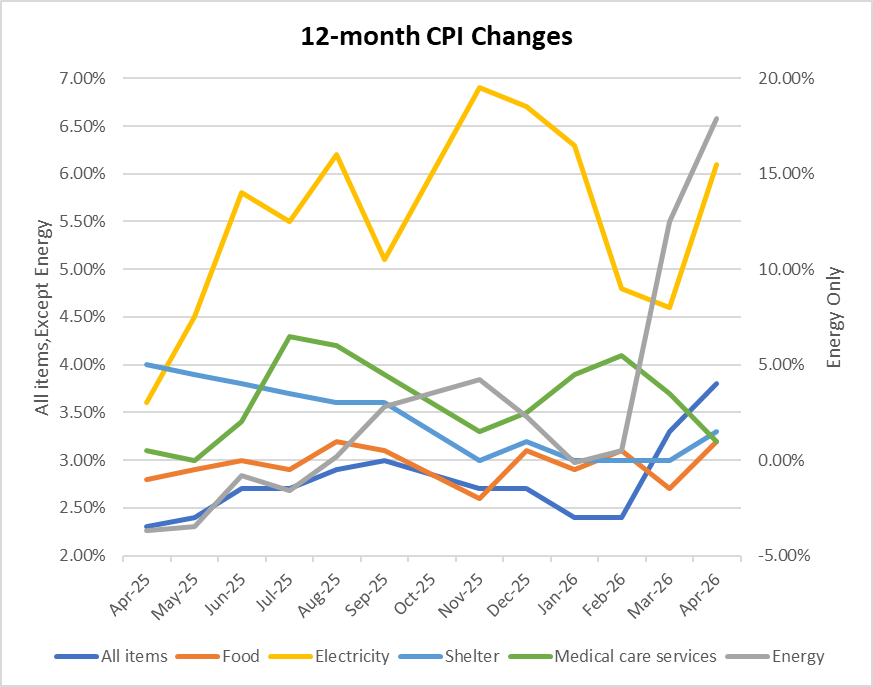
Source: U.S. Bureau of Labor Statistics, The Business Week Graphic
This graph was produced by Lucas Juery, CFA, CFPⓇ and is not intended to provide financial advice.


Comments
Log in or sign up to join the conversation.