

Industry Key Highlights
According to TechSci Research report, “Global Industrial MEMS Sensor Market Outlook - Industry Size, Share, Trends, Competition Forecast & Opportunities, 2031" The Global Industrial MEMS Sensor Market will grow from USD 6.48 Billion in 2025 to USD 10.66 Billion by 2031 at a 8.65% CAGR.
The Global Industrial MEMS Sensor Market is rapidly transforming into one of the most critical pillars of the modern industrial ecosystem. As industries worldwide continue their transition toward automation, intelligent manufacturing, and data-driven operations, MEMS (Micro-Electro-Mechanical Systems) sensors are becoming indispensable for enabling precision monitoring, predictive maintenance, real-time analytics, and operational efficiency.
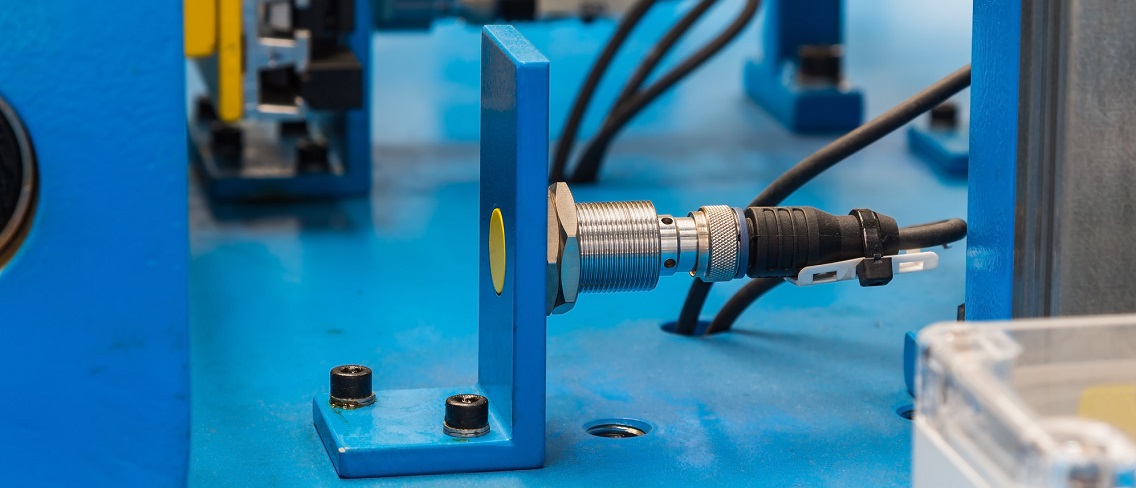
The market has witnessed substantial growth in recent years due to the increasing adoption of Industry 4.0 technologies, expanding industrial IoT deployments, rising automation across manufacturing facilities, and the growing need for miniaturized yet highly accurate sensing technologies. Industrial MEMS sensors are designed to integrate mechanical and electrical functions into compact semiconductor-based devices capable of detecting motion, pressure, vibration, acceleration, temperature, and other physical parameters with exceptional precision.
Industrial sectors including manufacturing, automotive, aerospace, healthcare, logistics, oil & gas, and energy management are increasingly relying on MEMS-based sensing systems to optimize productivity and improve operational reliability. These sensors play a vital role in supporting smart factories, autonomous industrial systems, robotics, and connected production environments.
Pressure sensors currently represent one of the fastest-growing segments within the market, driven by the need for accurate process monitoring, fluid management, predictive maintenance, and industrial safety systems. Additionally, the increasing deployment of MEMS inertial sensors in robotics, drones, autonomous guided vehicles, and machine monitoring systems is contributing significantly to overall market expansion.
Asia Pacific continues to dominate the global market owing to strong industrial manufacturing infrastructure, rapid automation adoption, expanding semiconductor ecosystems, and government initiatives supporting smart manufacturing transformation. Countries such as Japan, China, and South Korea are emerging as key innovation hubs for MEMS technology development and industrial automation deployment.
The integration of artificial intelligence (AI), machine learning (ML), edge computing, and low-power wireless connectivity into MEMS sensors is redefining industrial monitoring architectures. Modern MEMS sensors are evolving from passive data collection devices into intelligent systems capable of autonomous analysis, anomaly detection, and real-time decision-making.
As industrial environments become increasingly interconnected, the demand for highly efficient, compact, low-power, and cost-effective sensing technologies will continue to accelerate, positioning the Industrial MEMS Sensor Market for substantial long-term growth.
Market Drivers
Rapid Adoption of Industry 4.0
One of the primary growth drivers for the Industrial MEMS Sensor Market is the rapid implementation of Industry 4.0 technologies across global manufacturing sectors. Industry 4.0 focuses on integrating advanced digital technologies such as IoT, artificial intelligence, robotics, cloud computing, and smart sensors into industrial operations.
MEMS sensors form the foundation of Industry 4.0 ecosystems by enabling real-time monitoring, predictive analytics, and automated control systems. Smart factories increasingly rely on MEMS-based sensing technologies to monitor machine health, detect operational abnormalities, optimize production processes, and reduce maintenance costs.
The transition toward intelligent manufacturing environments is creating strong demand for advanced sensing solutions capable of delivering accurate, continuous, and real-time operational data.
Growing Industrial Automation
Industrial automation is expanding rapidly across manufacturing, automotive, logistics, pharmaceuticals, food processing, and energy sectors. Automated production systems require highly precise and reliable sensing technologies to ensure operational efficiency and process accuracy.
MEMS sensors are widely used in industrial robotics, automated machinery, conveyor systems, motion control applications, and equipment monitoring systems. Their compact size, low energy consumption, and high sensitivity make them highly suitable for automated industrial environments.
As manufacturers increasingly focus on improving productivity and minimizing human intervention, demand for intelligent MEMS sensing solutions continues to rise.
Emerging Trends in the Industrial MEMS Sensor Market
Expansion of Edge Computing
Edge computing is becoming increasingly important in industrial environments where real-time processing is critical. MEMS sensors integrated with edge processing capabilities allow data analysis to occur closer to the source rather than relying solely on cloud servers.
This reduces bandwidth consumption, improves response times, and enhances operational efficiency in industrial automation systems.
Industries such as manufacturing, autonomous robotics, and energy management are rapidly adopting edge-enabled MEMS sensing platforms.
Wireless MEMS Sensor Networks
The emergence of low-power wireless communication technologies is enabling the development of wireless MEMS sensor networks for industrial applications.
Wireless MEMS sensors simplify deployment in legacy industrial facilities where wired infrastructure may be expensive or impractical. These sensors support remote monitoring, asset tracking, environmental sensing, and equipment diagnostics.
Protocols such as Bluetooth Low Energy, Zigbee, Wi-Fi, and LoRaWAN are enhancing the connectivity capabilities of industrial MEMS systems.
Increased Focus on Smart Factories
Smart factory initiatives are creating substantial opportunities for MEMS sensor manufacturers. Smart factories rely on interconnected machines, robotics, AI systems, and real-time data analytics to optimize production efficiency.
MEMS sensors provide the real-time operational data required to support intelligent manufacturing systems. They help monitor machinery performance, optimize workflows, and improve production quality.
As smart manufacturing adoption expands globally, demand for advanced industrial sensing technologies will continue growing.
Advancements in Semiconductor Manufacturing
Continuous advancements in semiconductor fabrication technologies are improving the performance, reliability, and affordability of MEMS sensors.
Modern MEMS manufacturing techniques enable higher integration densities, improved sensitivity, enhanced durability, and lower production costs. These innovations are expanding the range of industrial applications for MEMS technology.
Competitive Analysis
STMicroelectronics NV
TDK Corp.
Robert Bosch GmbH
Analog Devices Inc.
Murata Manufacturing Co. Ltd
ROHM Co Ltd
Infineon Technologies AG
NXP Semiconductors NV
Panasonic Corporation
Omron Corporation
Challenges in the Market
Economic Volatility
Industrial capital expenditure often fluctuates with broader economic conditions. During periods of economic uncertainty, companies may delay automation and infrastructure investments, impacting MEMS sensor demand.
Integration Complexity
Integrating MEMS sensors into existing industrial infrastructure can be technically challenging, particularly in legacy facilities with outdated systems.
Calibration and Reliability Issues
Industrial environments can expose sensors to harsh conditions including temperature fluctuations, chemical exposure, and mechanical stress. Ensuring long-term calibration stability and reliability remains a key challenge. Community discussions also highlight concerns related to sensor durability and maintenance complexity in real-world industrial deployments.
Cybersecurity Risks
As MEMS sensors become increasingly connected through IIoT networks, cybersecurity risks associated with data transmission and connected industrial systems continue to rise.
10 Benefits of the Research Report
Provides comprehensive insights into the Industrial MEMS Sensor Market landscape.
Offers detailed market size analysis and long-term growth forecasts.
Identifies emerging technological trends shaping the industry.
Examines key market drivers, restraints, and opportunities.
Delivers in-depth competitive analysis of leading market players.
Highlights regional growth patterns and investment opportunities.
Evaluates evolving industrial automation and IoT adoption trends.
Supports strategic decision-making for manufacturers and investors.
Provides detailed segmentation analysis by type and region.
Helps stakeholders understand future technological developments and market expansion opportunities.
Contact US:
Techsci Research LLC
420 Lexington Avenue, Suite 300,
New York, United States- 10170
Tel: +13322586602
Email: [email protected]
Comments
Log in or sign up to join the conversation.