

Introduction
According to TechSci Research report, “India Industrial Automation Market Size- By Region, Competition Forecast & Opportunities 2030F”, India Industrial Automation Market was valued at USD 16.2 billion in 2024 and is expected to reach at USD 37.42 Billion in 2030 and project robust growth in the forecast period with a CAGR of 14.8% through 2030.
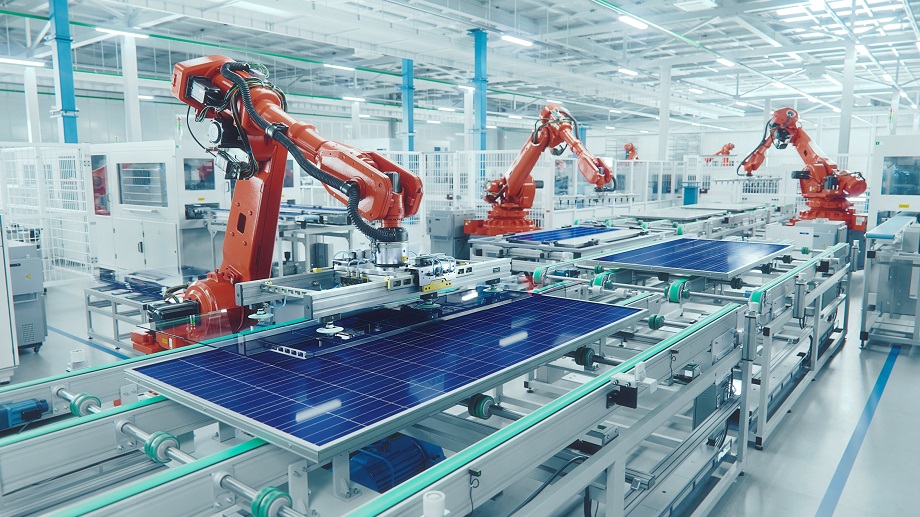
India's manufacturing sector is undergoing a remarkable transformation as businesses increasingly adopt intelligent technologies to improve productivity, efficiency, and operational excellence. Industrial automation has become a cornerstone of this evolution, enabling manufacturers to streamline production processes, minimize downtime, enhance quality control, and remain competitive in an increasingly digital global economy.
The integration of automation technologies across industries such as automotive, pharmaceuticals, food & beverages, textiles, packaging, mining, and electronics is reshaping the country's industrial landscape. Companies are investing heavily in robotics, artificial intelligence (AI), Industrial Internet of Things (IIoT), cloud computing, machine learning, and advanced analytics to create connected manufacturing environments capable of making real-time decisions and optimizing operations.
Government initiatives including Make in India, Digital India, and policies supporting domestic manufacturing are further accelerating automation adoption across large enterprises as well as small and medium-sized manufacturers. As industries embrace digital transformation, automation is no longer viewed as a competitive advantage alone—it has become a business necessity.
Request For Sample Copy of Report For More Detailed Market insight: https://www.techsciresearch.com/sample-report.aspx?cid=15147#requestform
Industry Key Highlights
Market valued at USD 16.2 Billion in 2024
Expected to reach USD 37.42 Billion by 2030
Forecast CAGR of 14.8%
Industry 4.0 driving digital transformation across manufacturing
Factory automation leading the industry segment
North India emerging as the fastest-growing regional market
Growing adoption of robotics, AI, and IoT technologies
Increasing investments in predictive maintenance solutions
Rising demand for smart factories and connected manufacturing
Government initiatives accelerating industrial modernization
Energy-efficient automation supporting sustainable manufacturing
Market Overview
Industrial automation refers to the use of advanced control systems, intelligent software, robotics, sensors, and digital technologies to automate manufacturing and industrial processes with minimal human intervention. Modern automation systems enable industries to improve productivity, maintain consistent product quality, reduce operational costs, and respond quickly to changing market demands.
India's industrial automation market has witnessed substantial expansion due to rapid industrialization, increasing labor costs, globalization, and the growing need for operational excellence. Manufacturers are increasingly adopting intelligent production systems capable of collecting real-time operational data, monitoring equipment performance, and optimizing manufacturing workflows.
Automation solutions are now being deployed across a wide range of industries, including automotive manufacturing, pharmaceuticals, food processing, energy, mining, packaging machinery, textile production, and electronics manufacturing. As supply chains become more interconnected, companies are focusing on digital integration to improve visibility, agility, and decision-making.
The growing emphasis on quality assurance, workplace safety, resource optimization, and sustainability continues to strengthen demand for industrial automation technologies across India.
Key Drivers
Industry 4.0 Revolution
One of the strongest growth drivers is the widespread adoption of Industry 4.0 technologies.
Manufacturers are integrating Artificial Intelligence (AI), Internet of Things (IoT), cloud computing, big data analytics, machine learning, and digital twins into production environments to create intelligent manufacturing ecosystems.
These technologies enable predictive maintenance, automated decision-making, real-time monitoring, production optimization, and improved equipment utilization.
By leveraging connected devices and advanced analytics, manufacturers can significantly reduce downtime while maximizing operational efficiency.
Government Support for Manufacturing
Government initiatives such as Make in India and Digital India are encouraging industries to modernize manufacturing facilities through automation and digital technologies.
Policy support, infrastructure development, investment incentives, and industrial corridor projects are attracting domestic and international manufacturers seeking to establish advanced production facilities within the country.
These initiatives continue strengthening India's position as a global manufacturing destination.
Rising Need for Operational Efficiency
Manufacturers face increasing pressure to reduce production costs while improving product quality and meeting shorter delivery timelines.
Automation systems help organizations optimize production schedules, reduce material waste, minimize human errors, improve workplace safety, and increase manufacturing flexibility.
These operational advantages are encouraging companies across industries to accelerate automation investments.
Sustainability and Energy Management
Energy efficiency has become a major priority for manufacturing companies.
Modern automation systems continuously monitor energy consumption, machine utilization, and production efficiency, enabling businesses to reduce operating costs while supporting environmental sustainability goals.
Intelligent energy management solutions are becoming increasingly important as industries pursue greener manufacturing practices.
Emerging Trends
Smart Factories
The concept of smart factories is rapidly gaining momentum across India.
Connected manufacturing facilities equipped with intelligent sensors, robotics, cloud platforms, and industrial software can automatically monitor production performance, detect equipment failures, and optimize manufacturing processes without constant human supervision.
These smart production environments improve productivity while enhancing operational transparency.
Artificial Intelligence and Machine Learning
Artificial intelligence is transforming industrial automation by enabling machines to analyze production data, identify performance patterns, predict maintenance requirements, and recommend process improvements.
Machine learning algorithms continuously improve operational efficiency through data-driven decision-making, helping manufacturers reduce downtime and improve product quality.
Industrial Internet of Things (IIoT)
The Industrial Internet of Things allows machines, sensors, and production equipment to communicate in real time.
Connected devices provide continuous visibility into manufacturing operations, allowing managers to monitor production remotely, identify inefficiencies, and respond immediately to operational issues.
IIoT also strengthens predictive maintenance by identifying equipment problems before costly failures occur.
Robotics and Collaborative Automation
Industrial robotics continues expanding across manufacturing sectors including automotive, electronics, pharmaceuticals, and packaging.
Collaborative robots (cobots) are increasingly working alongside human employees to perform repetitive, hazardous, and precision-based tasks safely and efficiently.
This trend improves productivity while enhancing workplace safety and reducing labor-intensive operations.
Real-World Use Cases
Automotive Manufacturing and Smart Assembly Lines
India's automotive industry is among the largest adopters of industrial automation technologies. Automobile manufacturers are deploying robotic welding systems, automated painting solutions, machine vision inspection, and intelligent assembly lines to improve production efficiency and ensure consistent product quality. Automation enables manufacturers to produce vehicles with greater precision while reducing production time and minimizing operational errors. As electric vehicle (EV) production expands, smart automation systems are becoming increasingly important for battery assembly, component inspection, and quality assurance.
Pharmaceutical Manufacturing
The pharmaceutical sector relies heavily on automation to maintain strict quality standards, regulatory compliance, and operational efficiency. Automated production lines handle processes such as formulation, packaging, labeling, and quality inspection with minimal human intervention. Intelligent monitoring systems continuously track environmental conditions, production parameters, and equipment performance, ensuring consistent product quality while reducing contamination risks. Automation also supports faster drug manufacturing and improved traceability throughout the production lifecycle.
Food and Beverage Processing
Food manufacturers are increasingly integrating automation technologies into production facilities to improve hygiene, product consistency, and operational efficiency. Automated packaging machines, robotic sorting systems, conveyor solutions, and digital quality inspection systems help manufacturers meet growing consumer demand while complying with food safety regulations. Smart sensors also monitor temperature, humidity, and storage conditions to minimize product waste and improve supply chain efficiency.
Textile and Apparel Manufacturing
India's textile industry is embracing automation to remain competitive in global markets. Intelligent weaving machines, automated dyeing systems, digital fabric inspection, and robotic material handling solutions improve production speed while maintaining consistent product quality. Automation also enables manufacturers to handle customized orders more efficiently and reduce dependence on manual labor for repetitive tasks.
Smart Warehousing and Logistics
Industrial automation extends beyond manufacturing into warehousing and logistics operations. Automated guided vehicles (AGVs), robotic picking systems, AI-driven warehouse management software, and IoT-enabled inventory tracking help businesses optimize storage, reduce delivery times, and improve order accuracy. As e-commerce and manufacturing continue to grow, intelligent logistics automation is becoming an essential component of India's industrial ecosystem.
Competitive Analysis
Siemens AG
ABB Ltd.
Rockwell Automation, Inc.
Schneider Electric SE
Honeywell International Inc.
Mitsubishi Electric Corporation
FANUC Corporation
Hitachi, Ltd.
Customers can also request for 10% free customization on this report.
Future Outlook
The future of the India Industrial Automation Market remains exceptionally promising as industries continue embracing digital transformation and intelligent manufacturing. The growing adoption of Industry 4.0 technologies, increasing investments in smart factories, and strong government support for domestic manufacturing are expected to drive long-term market expansion.
Factory automation is anticipated to remain the dominant industry segment due to its widespread application across automotive, electronics, pharmaceuticals, consumer goods, food processing, and packaging industries. Manufacturers are expected to increase investments in robotics, machine vision, AI-powered analytics, and digital twins to improve operational efficiency and competitiveness.
North India is likely to maintain its position as the fastest-growing regional market, supported by expanding manufacturing hubs in Uttar Pradesh, Haryana, Punjab, and the Delhi-NCR region. Improved infrastructure, industrial corridors, logistics networks, and favorable government policies will continue attracting investments in advanced manufacturing facilities.
The increasing focus on sustainability will further accelerate the adoption of intelligent energy management systems capable of monitoring power consumption, reducing waste, and improving resource utilization. Cloud-based industrial platforms, cybersecurity solutions, and predictive maintenance technologies will also become increasingly important as manufacturing environments become more connected.
As India strengthens its position as a global manufacturing hub, industrial automation will play a central role in improving productivity, fostering innovation, enhancing supply chain resilience, and enabling sustainable industrial growth.
10 Benefits of This Research Report
Provides an in-depth analysis of the India Industrial Automation Market and its future growth prospects.
Delivers accurate market size estimates and long-term growth forecasts.
Identifies major growth drivers influencing industrial automation adoption across sectors.
Highlights emerging technologies including AI, IoT, robotics, cloud computing, and smart manufacturing.
Offers detailed segmentation analysis by component, industry, vertical, and region.
Evaluates the competitive landscape and profiles leading market participants.
Identifies investment opportunities arising from Industry 4.0 and digital transformation initiatives.
Explores automation applications across automotive, pharmaceuticals, food processing, textiles, and energy industries.
Supports strategic planning through actionable market intelligence and business insights.
Helps manufacturers, investors, technology providers, and policymakers make informed decisions based on comprehensive industry analysis.
Conclusion
The India Industrial Automation Market is entering a transformative phase as businesses increasingly recognize automation as a strategic necessity rather than an operational enhancement. Rapid industrialization, expanding manufacturing capabilities, and the widespread adoption of Industry 4.0 technologies are creating significant opportunities for automation providers across the country.
With the market projected to grow from USD 16.2 Billion in 2024 to USD 37.42 Billion by 2030, at a robust CAGR of 14.8%, the sector is poised for sustained expansion. Government initiatives such as Make in India and Digital India, combined with rising investments in smart factories, robotics, artificial intelligence, and IoT-enabled manufacturing systems, are strengthening India's industrial competitiveness on the global stage.
Looking ahead, continued advancements in intelligent automation, predictive analytics, collaborative robotics, and cloud-based manufacturing platforms will redefine industrial operations across multiple sectors. Companies that invest in digital transformation and scalable automation solutions will be better positioned to enhance productivity, improve quality, reduce operational costs, and respond quickly to evolving market demands. As India advances toward becoming a global manufacturing powerhouse, industrial automation will remain a key driver of innovation, sustainability, and long-term economic growth.
Contact US:
Techsci Research LLC
420 Lexington Avenue, Suite 300,
New York, United States- 10170
Tel: +13322586602
Email: [email protected]
Web: https://www.techsciresearch.com/
Comments
Log in or sign up to join the conversation.