
SBR Emulsion (Styrene-Butadiene Rubber Emulsion) is a synthetic water-based polymer emulsion that can improve the flexibility, adhesion, water resistance and durability of some industrial products. This article will introduce the main industrial applications of SBR emulsion, the performance advantages and the main concerns of choosing the right SBR emulsion.
Why Do Industries Use SBR Emulsion?
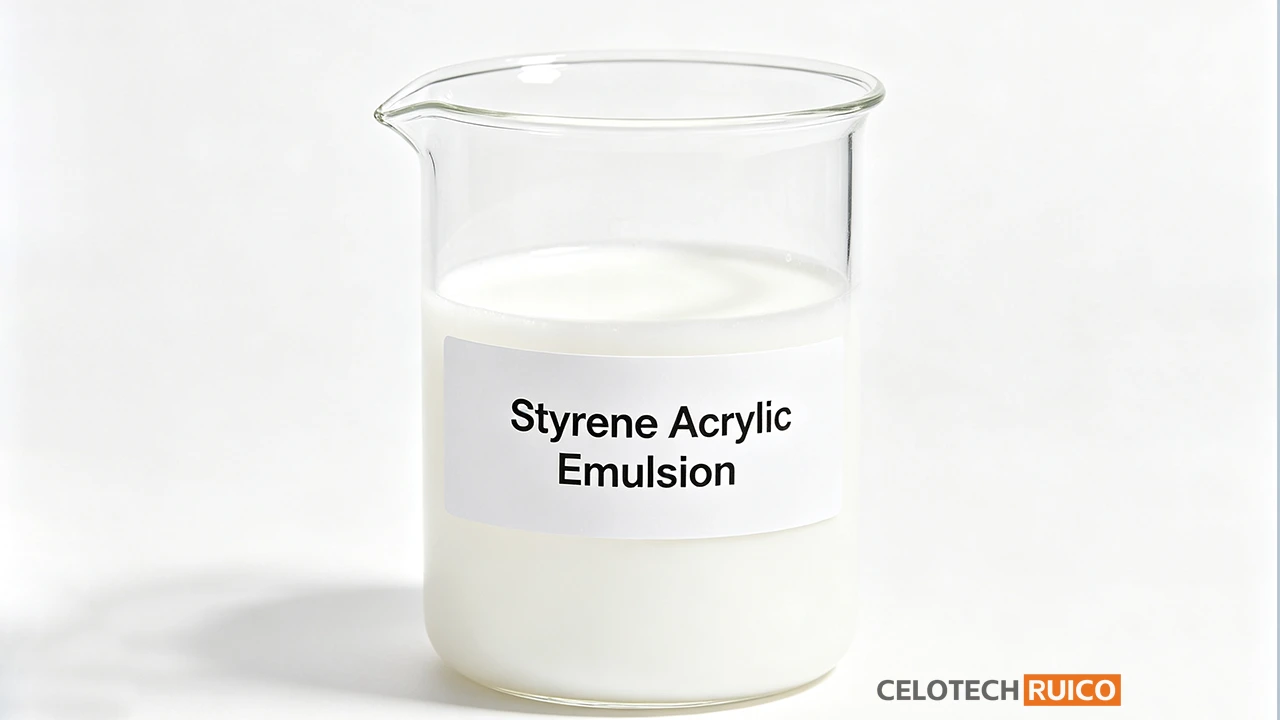
The advent of SBR emulsion has solved the problems of insufficient flexibility, poor water resistance, and easy cracking and peeling in applications such as building materials, adhesives, coatings, textiles, and papermaking.
In production, SBR emulsion is low-odor, low VOC and environmentally friendly, which can save some of your environmental protection production processes and thereby reduce production costs.
In addition, SBR emulsion not only improves product performance but, more importantly, helps the final product adapt to more complex usage environments. Whether it is an environment frequently subjected to scratching and trampling, or a frequently damp basement or bathroom, it can still remain intact for a long time.
Therefore, for your product production, SBR emulsion is not a simple auxiliary material, but an important functional material that enhances the competitiveness of the product.
Detailed Analysis of SBR Emulsion Properties
High Flexibility
By providing excellent flexibility, SBR emulsion significantly reduces issues such as hardening, embrittlement, and cracking.
Conventional materials—such as ordinary cement, starch-based coatings, and low-cost emulsions—form hard, brittle layers that crack or flake off under slight deformation; in contrast, SBR emulsion dries to form an elastic, rubber-like film that remains crack-free even when subjected to various external forces.
Excellent Abrasion Resistance
The superior abrasion resistance of SBR emulsion extends the service life of products used in high-friction environments. Products formulated with SBR emulsion form a dense film that resists wear and pulverization, even under repeated friction.
This property is particularly valuable in flooring coatings, repair mortars, and rubber-related applications where repeated mechanical wear occurs.
Outstanding Water Resistance
Unlike ordinary VAE or starch-based binders—which absorb water and soften after prolonged immersion, leading to a significant loss of adhesion and issues like blistering, peeling, delamination, and leakage—SBR emulsion forms a film that effectively blocks moisture penetration. It does not absorb water, soften, or lose bond strength upon contact with moisture, maintaining coating integrity even in damp environments such as basements or pools.
Balanced and Stable Adhesion
This refers to the bond strength between the SBR emulsion film and the substrate. It exhibits excellent adhesion to a wide range of materials—including inorganic substrates (cement, kaolin), fibrous substrates (plant and synthetic fibers), and others—making it compatible with raw materials across various industries.
Industrial Applications of SBR Emulsion
Construction Industry
1. Cement Modification
If you manufacture construction materials—such as modified cement mortars, repair mortars, tile adhesives, self-leveling compounds, or flooring materials—SBR emulsion is an excellent choice for modification.
While traditional cement-based materials offer high strength, they suffer from significant brittleness, making them prone to cracking due to temperature fluctuations, substrate movement, or long-term use.
Incorporating SBR emulsion enhances the flexibility and bonding performance of cement systems. For construction and infrastructure projects subject to sustained stress, vibration, or environmental changes, SBR emulsion provides a more stable and durable solution, helping to extend the service life and reliability of structural materials.
2. Waterproof Coatings
If your product is intended for waterproofing applications, the material must meet requirements for both water resistance and crack resistance.
Many waterproofing materials fail not because they lack waterproofing capability, but because cracks develop due to substrate movement during long-term use.
The properties of SBR emulsion help enhance your product’s elongation, crack resistance, adhesion, and water resistance.
Consequently, it is frequently used in:
Basement waterproofing;
Roof waterproofing;
Cement-based waterproof coatings;
Waterproofing mortars.
For products exposed to damp environments over extended periods, selecting an SBR emulsion with excellent stability is crucial.
Industrial Adhesives
If you manufacture industrial adhesives, you may require materials that offer both strong bonding capabilities and a degree of elasticity. Compared to rigid adhesive products, SBR emulsions offer superior flexibility, enabling the adhesive layer to withstand a certain degree of stretching and vibration.
Common applications include:
Carpet backing adhesives;
Textile adhesives;
Adhesives for composite materials;
Adhesives for packaging materials.
In these applications, it is essential to consider not only initial bond strength but also long-term stability.
Paper Coating
For the paper industry, SBR emulsions are primarily used in paper coating and impregnation processes.
They help improve:
Paper surface strength;
Coating adhesion;
Water resistance;
Surface gloss.
Coating uniformity and stability are critical for high-quality paper production, making SBR emulsions a popular choice among manufacturers.
Tire Manufacturing
In the production of tires and rubber products, SBR emulsion is used to treat reinforcing materials via dipping, thereby enhancing the bond between the rubber and the reinforcement.
During tire manufacturing, a strong bond between the rubber and various reinforcing materials (such as fiber cords) is essential to ensure the tire maintains adequate strength and durability over long-term use.
Treatment with SBR emulsion increases adhesion between the rubber and fiber materials, creating a more stable bond and helping to improve the product’s:
durability;
fatigue resistance;
structural stability.
Consequently, SBR emulsion is utilized not only in conventional rubber processing but also in applications requiring superior bonding performance—such as tire cords and rubber reinforcements—thereby ensuring more reliable performance for tires and rubber products.
How Do You Choose the Right SBR Emulsion?
The ideal SBR emulsion for your product must align with your specific formulation and end-use application.
Consider Your Final Application First
Before making a selection, clearly define your product objectives, such as:
Waterproof materials: Focus on elasticity, water resistance, and crack resistance.
Adhesives: Focus on bond strength and long-term stability.
Cement-modified materials: Focus on workability, adhesion, and flexibility.
Check Solids Content
Solids content is a key indicator of SBR emulsion performance. A higher solids content implies a greater proportion of active polymer per unit of product; this affects film formation, formulation dosage, and final cost (generally, higher solids content correlates with a higher price). However, higher solids content is not always better; the choice should be based on your specific formulation requirements.
Pay Attention to Viscosity
The viscosity of the SBR emulsion affects mixing performance during production, application results, and storage stability. If the viscosity is unsuitable for your production process, it may increase processing difficulties. Therefore, when purchasing, it is advisable to confirm whether your SBR emulsion supplier can provide a product that matches your specific production conditions.
Evaluate Stability During Storage and Transportation
If you are importing SBR emulsion, the transportation cycle is typically long. Consequently, you should pay attention to:
Mechanical stability (processes such as mixing and raw material transfer in the workshop generate significant mechanical stress; poor stability can lead to the formation of coagulated lumps, rendering the SBR emulsion unusable).
Storage stability (checking for phase separation or sedimentation during prolonged storage—e.g., several months; a stable product typically shows only minor, soft sediment after standing, which redisperses easily with gentle stirring).
Freeze-thaw stability.
Once an emulsion breaks (coagulates), the final application performance may be compromised, even if the specifications appear normal.
FAQs
For Basement Waterproofing, Which is More Cost-Effective: Sbr Emulsion or Acrylic Emulsion?
Basements are typically dark and humid environments, so SBR emulsion is the preferred choice. For the same application area, raw material costs are about 30% lower, while flexibility and water impermeability fully meet standards. Acrylic emulsion should be reserved for outdoor roofing exposed to prolonged sunlight.
Can SBR Emulsion Used in Paper Coating Solve the Issue of Powder Dusting During Printing?
Yes. SBR provides strong anchoring for inorganic pigments and fillers, resulting in a coating with excellent abrasion resistance and improved water resistance and gloss; the quality of the finished paper is far superior to that produced using starch or standard binders.
Do CelotechRuico’s SBR Emulsion Prices Fluctuate Significantly, and Is The Supply Stable for Large-Volume Orders?
Our raw materials rely on the petrochemical supply chain, resulting in less price volatility compared to natural latex. As a major manufacturer, we maintain stable year-round production; prices for bulk orders can be locked in through negotiation, so there is no need to worry about raw material shortages disrupting production schedules during peak seasons.
Small Mortar Processing Plant: Can General Sbr Emulsion Meet the Production Requirements?
For ordinary home decoration repairs and underground waterproofing, a standard general brand is completely sufficient. If you need a high-wear-resistant floor or special pool waterproofing, you can customize a high-waterproof modified SBR emulsion.
What Are the Advantages and Disadvantages of SBR Emulsion Compared to Natural Latex?
SBR emulsion is synthesized through chemical processing, with high controllability and suitability for various industrial fields, but its toughness is not as high as natural latex. Natural latex is biodegradable, more environmentally friendly, and has higher air permeability and skin affinity, but costs are high.
How long Is the Shelf life of SBR Emulsion?
The shelf life of SBR emulsion depends on the product formulation and storage conditions; it should be kept out of freezing and direct sunlight and stored at a suitable temperature. The shelf life is usually 6 months.
CelotechRuico SBR Emulsion Solutions
Different applications require specific grades of SBR emulsion, each with distinct specifications and parameters; these detailed metrics are crucial in determining suitability for your product formulation. With years of experience in producing and exporting SBR emulsions, CelotechRuico offers comprehensive, one-stop SBR emulsion solutions across a wide range of industries. Please contact us to discuss a solution tailored to your needs.
Comments
Log in or sign up to join the conversation.