

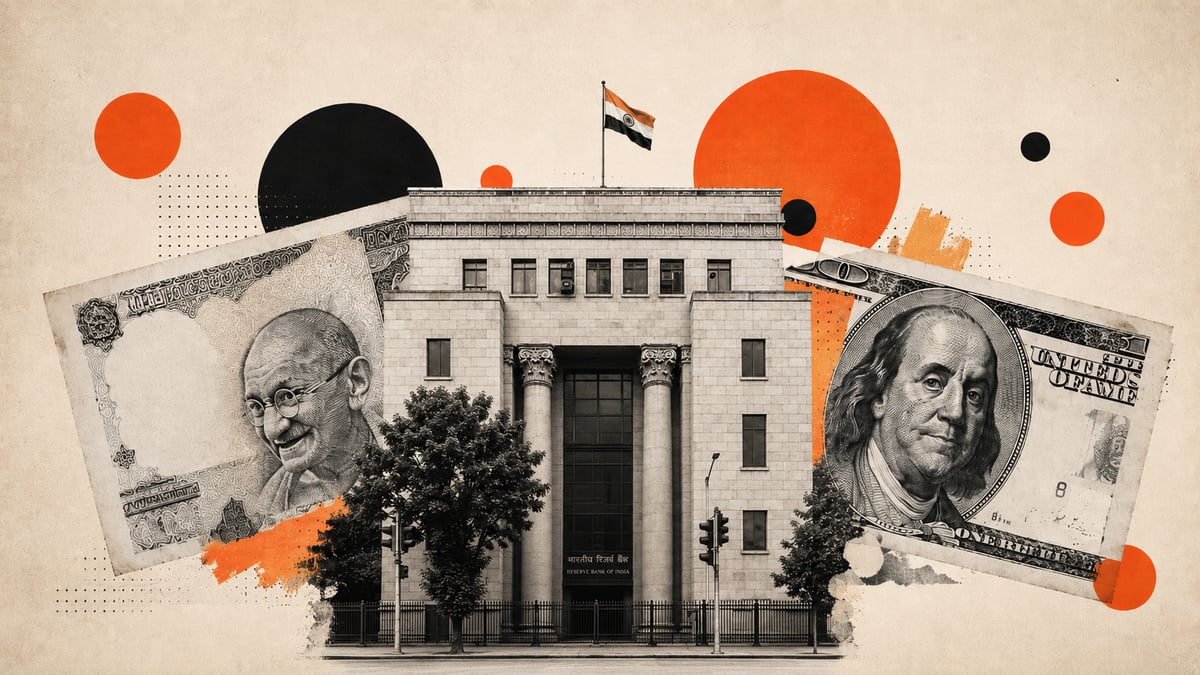
The Indian Rupee (INR) continues to outperform the US Dollar (USD) on the back of weakness in the Greenback and forceful Reserve Bank of India’s (RBI) measures to curb the US Dollar’s demand by Oil Marketing Companies (OMCs).
In the opening trade on Friday, the USD/INR pair posts a fresh over five-week low at 94.69. In the Asian session, the US Dollar Index (DXY), which tracks the Greenback’s value against six major currencies, posts a fresh 10-day low near 101.80.
The US Dollar extends its weakness on Friday, following remarks from Federal Reserve (Fed) Chair Kevin Warsh at the Fireside Chat with International Monetary Fund (IMF) Managing Director Kristalina Georgieva, in which he stressed achieving price stability, surging investment, and Artificial Intelligence (AI)-led structural growth.
Warsh flags investment surge and AI risks as Fed keeps options open into year-end
Fed Chair Warsh’s speech scores 5.6/10 on the FXS Speechtracker, modestly softer relative to the historical average of 6.1/10, reflecting a cautious tone despite upbeat comments on structural growth and an investment surge. The admission of being “over-scarred from the global financial crisis” underscores a bias toward vigilance on financial stability and tail risks, even as Warsh stresses that recent developments have broadly matched the Fed’s expectations and that key policy decisions will crystallize at the October and December meetings. Warsh’s focus on AI as a demand-side force and on field hearings and task forces signals an effort to build new intellectual capital before committing to a clearer policy path, keeping Dollar traders attentive to incoming data on output, employment, and inflation.
The FXS Fed Sentiment Index was unchanged, moving 0.00 points to a still-elevated level of 127.51, consistent with hawkish territory despite the slightly softer speech score on the FXS Speechtracker. The lack of index movement suggests that Warsh’s remarks, while emphasizing caution and uncertainty around AI and tail risks, did not materially shift market perceptions of the Fed’s underlying hawkish stance into the remaining 2026 meetings.
As usual, Fed Chair Warsh has not delivered any meaningful remarks on the monetary policy outlook. Warsh has already stated explicitly that “so-called forward guidance” is not appropriate in the current scenario.
Meanwhile, financial markets remain confident that the Fed will leave interest rates unchanged at the October meeting, but will hike them in December, according to the CME FedWatch tool.
This week, the major trigger for a significant appreciation in the Indian currency remains RBI’s measures to curb the demand of the US Dollar. However, market experts doubt the sustainability of INR’s strength.
RBI steps steady INR but OCBC warns rebound may prove fleeting
Strategists at OCBC highlight that RBI’s measures of limiting access to certain INR non-deliverable derivatives to hedging purposes, extending the 20% cash reserve requirement to banks’ own qualifying FX hedges, and the special USD window for oil companies are merely a shift in demand of the currency from the spot market rather than a reduction in India’s underlying US Dollar requirements.
OCBC concludes that “we may still see room for some near-term INR gains, but the sustainability of the move will depend on whether portfolio outflows moderate and external pressures from oil prices and US yields ease.” For now, they judge that the latest policy steps “may help establish a firmer near-term footing for INR, rather than mark a decisive reversal in its broader depreciation trend.”
USD/INR Technical Analysis
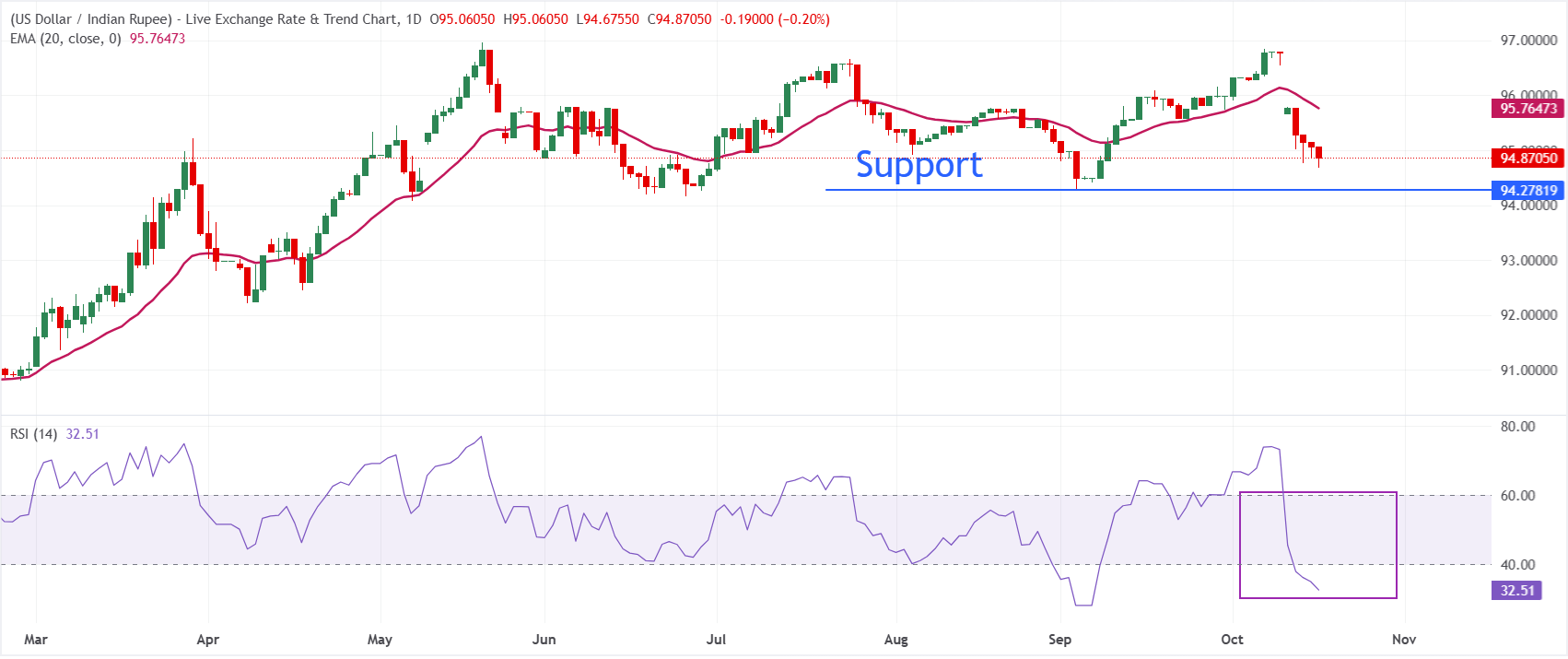
In the daily chart, USD/INR trades below 95.00, keeping a bearish near-term bias as it remains below the 20-period exponential moving average (EMA) at 95.76.
The positioning under this key dynamic barrier suggests the recent slide is still in play, while the Relative Strength Index (RSI) at 32.51 hovers just above oversold territory, hinting that downside momentum is slowing but not yet reversing.
On the topside, immediate resistance is located at the 20-period EMA around 95.76, where any recovery would likely face initial selling pressure. On the downside, the September 3 low at 94.29 is the key support level.


Comments
Log in or sign up to join the conversation.