

Share markets in India are presently trading marginally lower. Sectoral indices are trading on a negative note with stocks in the realty sector and consumer durables sector witnessing maximum selling pressure.
The BSE Sensex is trading down by 103 points (down 0.3%), while the NSE Nifty is trading down by 46 points (down 0.4%). The BSE Mid Cap index is trading down by 0.9%, while the BSE Small Cap index is trading down by 1.2%.
The rupee is trading at 68.94 to the US$.
Stocks from the oil & gas sector are witnessing selling pressure today. Losses are seen amid a surge in global crude oil prices.
Among the top losing stocks from the oil & gas sector were GAIL share price (down 2.8%), HPCL share price (down 2.4%), and BPCL share price (down 2.2%).
Note that crude oil prices have been witnessing a rising trend lately. In the past one year alone, oil prices have surged more than 50%.
Also note that rising crude oil prices not only affect fuel prices, but also has many other repercussions for the Indian economy.
They can be a big worry for the Modi government as well. This is because the Modi government has been a big beneficiary of lower crude oil prices.
Richa Agarwal, editor of Hidden Treasure, tracks the oil and gas sector very closely. She believes the rise in crude oil prices is a bearish sign for stock markets globally. At the same time, any market correction will throw up interesting buying opportunities in small-cap stocks. Apart from that, what does rising crude oil prices mean for stock markets?
How the government handles this situation of rising crude oil and fuel prices remains to be seen. Meanwhile, we will keep you posted on all the developments from this space. Stay tuned.
In news from the currency markets... Continuing its downfall this week, the Indian rupee hit an all-time low today, breaching 69 per dollar for the first time ever.
The depreciation in rupee is seen on the back of rising crude oil prices and strong month-end dollar demand amid sustained foreign capital outflows.
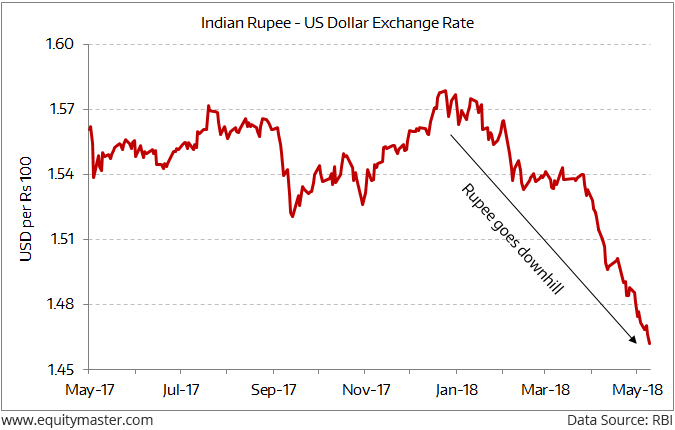
Note that the rupee has been witnessing selling pressure against the US dollar since the start of this calendar year. It is currently the worst performing currency in Asia, and has fallen more than 7% this year.
This is evident in the chart below, which shows the quantum of US dollars a 100-rupee note can buy and how this rate has been declining over the past few months:
Indian Rupee in a Steep Decline
What does a fall in rupee mean for the Indian economy?
A depreciation in rupee means importers buying goods and services at a higher rate than earlier. This doesn't bode well for a developing economy that relies heavily on imports.
Also, India imports most of its oil requirements. So, a fall in rupee leads to a consequent rise in the import bill.
On the corporate side, companies who have taken foreign loans from abroad will be impacted. The repayment obligations in terms of principal and interest will rise, leading to a dent in the cash flows and financials.
Further, companies who import a majority of their raw material requirements will get impacted provided they have not hedged their foreign currency exposure.
Looking at the brighter side, rupee depreciation brings a cheer on the exports front.
A depreciating rupee will provide a much-needed cushion to falling exports. However, a falling rupee will not be the only factor to boost exports. There are certain structural issues too which the government needs to address.


Comments
Log in or sign up to join the conversation.