

India Power Management IC Market: Size, Growth, Trends and Forecast 2030
The India Power Management IC Market is expanding steadily as electronics manufacturers and technology companies place greater emphasis on energy efficiency, compact product design, battery performance, and reliable power delivery. Power Management Integrated Circuits (PMICs) are essential semiconductor components that regulate, distribute, monitor, and optimize electrical power across electronic systems.
According to the provided market data, the India Power Management IC Market was valued at USD 4.27 billion in 2024 and is projected to reach USD 7.67 billion by 2030, registering a CAGR of 10.10% during the forecast period.
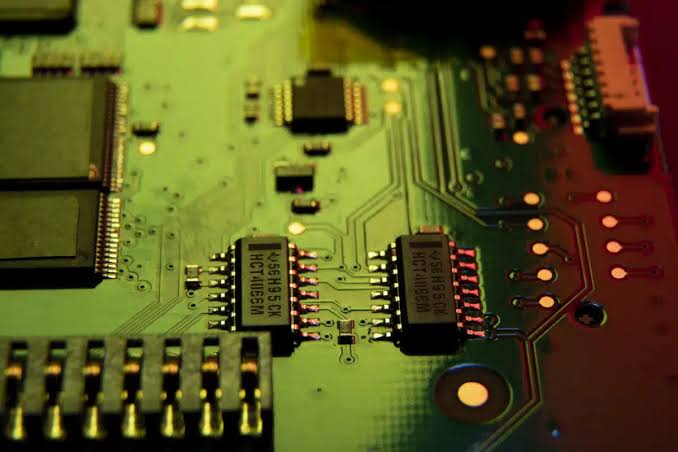
The increasing penetration of smartphones, laptops, wearables, smart home equipment, connected appliances, electric vehicles, industrial electronics, and IoT devices is creating sustained demand for advanced PMIC technologies. As electronic products become more sophisticated, manufacturers need highly integrated solutions capable of managing multiple power requirements within increasingly compact form factors.
PMICs help regulate voltage, manage battery charging and discharging, control power sequencing, minimize energy losses, and protect components from electrical fluctuations. Their importance is particularly evident in portable electronics, where manufacturers must balance performance with limited battery capacity and restricted internal space.
India's growing consumer base, expanding electronics ecosystem, increasing technology adoption, and rising demand for energy-efficient products are therefore creating favorable conditions for the country's PMIC industry.
Industry Key Highlights
The India Power Management IC Market was valued at USD 4.27 billion in 2024.
The market is expected to reach USD 7.67 billion by 2030.
The market is projected to grow at a CAGR of 10.10% during the forecast period.
Consumer electronics represented the largest end-user segment in 2024.
Smartphones, laptops, wearables, smart home products, and connected appliances are major demand generators.
PMIC adoption is expanding beyond consumer devices into automotive, industrial, telecommunications, healthcare, and IoT applications.
Electric vehicle development is creating additional demand for battery management and power-control technologies.
Renewable energy and smart-grid investments are increasing opportunities for advanced power management solutions.
North India is emerging as the fastest-growing regional market.
Growing miniaturization is encouraging manufacturers to adopt highly integrated PMIC architectures.
Request For Sample Copy of Report For More Detailed Market insight
Main Drivers
Expansion of Consumer Electronics
The rapid development of India's consumer electronics industry remains one of the most important factors supporting PMIC demand. Consumers increasingly expect electronic products to deliver stronger performance, longer battery life, faster charging, and smaller designs.
Smartphones, notebooks, tablets, smartwatches, fitness trackers, wireless devices, and connected home products all require sophisticated power management. PMICs allow manufacturers to distribute electrical power efficiently across processors, displays, memory, sensors, communication modules, and other components.
As device functionality increases, the number of power requirements within a single product also grows. This creates a greater need for integrated circuits capable of coordinating multiple voltage levels and power domains efficiently.
Rising Demand for Smaller and More Efficient Devices
Miniaturization has become a defining trend across electronics manufacturing. Consumers increasingly favor lightweight and slim products, while manufacturers seek to fit more functionality into smaller enclosures.
Traditional discrete power components can occupy considerable board space. PMICs address this challenge by combining multiple power-management functions into a single integrated solution. This can help manufacturers reduce component count, simplify circuit design, improve energy efficiency, and optimize available space.
The trend is particularly relevant to wearables and portable electronics, where both physical dimensions and battery capacity are constrained.
Increasing Adoption of Wearable and Smart Devices
Wearables are another important source of PMIC demand. Smartwatches, fitness trackers, connected health devices, and other wearable products typically operate with small batteries while supporting sensors, wireless connectivity, displays, and computing functions.
Efficient power management is therefore essential for extending operating time between charges. PMICs can dynamically regulate power according to device requirements, helping manufacturers design products that provide useful functionality without significantly increasing battery size.
The growing adoption of smart lighting, intelligent thermostats, voice-controlled devices, connected appliances, and other smart-home technologies is also expanding the addressable market for power management components.
Growth of Electric Vehicles
The increasing development and adoption of electric vehicles is opening another significant application area for PMIC technologies. EV power systems require efficient management of batteries, charging circuits, motors, electronic control units, and auxiliary systems.
PMICs can support voltage regulation, battery-related functions, monitoring, and power distribution across vehicle electronics. As vehicle manufacturers incorporate more digital features and electronic systems, the importance of efficient power management is expected to increase.
North India's automotive manufacturing ecosystem and EV-related initiatives are particularly relevant to regional PMIC demand.
Renewable Energy and Smart Infrastructure
India's growing focus on renewable energy is creating opportunities for power-management technologies in solar, wind, energy storage, and power-distribution systems.
Electronic systems used in renewable energy installations require reliable power conversion, regulation, monitoring, and control. PMICs can contribute to these functions across equipment associated with energy generation, storage, and distribution.
The development of smart grids is also creating demand for increasingly sophisticated electronic infrastructure capable of monitoring and managing power flows efficiently.
Growth of IoT Applications
The expansion of the Internet of Things is further strengthening the need for efficient PMIC solutions. IoT devices are often expected to operate for extended periods while consuming minimal energy.
Applications across agriculture, healthcare, industrial automation, logistics, and smart cities can involve large numbers of connected devices. Low-power PMICs can help optimize energy consumption while supporting the continuous operation of sensors, communication modules, and embedded processors.
Emerging Trends
Advanced Battery Management
Battery-powered products are increasingly incorporating sophisticated battery-management capabilities. PMICs can support charging control, voltage regulation, monitoring, and power optimization, helping manufacturers improve the usability of portable products.
Higher Integration
The industry is moving toward highly integrated PMIC designs that combine several functions into fewer components. Greater integration can simplify product architecture while supporting smaller and more efficient electronic devices.
Energy-Efficient Electronics
Energy efficiency is becoming increasingly important across consumer, industrial, automotive, and telecommunications applications. Manufacturers are therefore seeking PMICs capable of reducing power losses and optimizing energy consumption under different operating conditions.
PMICs for EV and Mobility Applications
The expansion of electric mobility is increasing demand for specialized power-management solutions. Battery systems, charging infrastructure, motor-control systems, and vehicle electronics all require effective power regulation and distribution.
Smart and Connected Infrastructure
The growing deployment of IoT-enabled systems, smart-city technologies, connected industrial equipment, and intelligent energy infrastructure is creating new application opportunities for PMIC manufacturers.
Real-World Use Cases
Smartphones and Portable Electronics
Smartphones are among the most power-intensive compact consumer devices. A single handset may contain a processor, display, cameras, memory, wireless communication systems, sensors, and other components with different power requirements.
PMICs help regulate and distribute power among these components while supporting battery charging and protection. Similar applications exist in laptops, tablets, wireless devices, and portable computing products.
Wearables
Smartwatches and fitness trackers require continuous operation from relatively small batteries. PMICs help manage power consumption across displays, sensors, processors, and wireless connectivity modules.
Efficient power management can enable manufacturers to provide additional features without proportionally increasing device size or battery capacity.
Smart Home Devices
Connected lighting systems, smart thermostats, security equipment, voice-controlled devices, and intelligent appliances require reliable power regulation. PMICs can help these products manage energy consumption while supporting connected functionality.
Electric Vehicles
EVs rely on multiple electronic systems that require controlled and efficient power delivery. PMIC applications can extend across battery-management systems, charging systems, electronic control modules, and other vehicle electronics.
Renewable Energy Systems
Solar and other renewable-energy installations rely on electronic equipment for power conversion, monitoring, storage, and distribution. Power management components can help these systems regulate electrical energy and support reliable operation.
IoT and Industrial Systems
IoT sensors and industrial monitoring equipment frequently need to operate with low energy consumption. PMICs can help manage power across sensors, processors, communication systems, and other embedded components.
Competitive Analysis
Texas Instruments Inc.
Analog Devices, Inc.
Infineon Technologies AG
Qualcomm Incorporated
STMicroelectronics N.V.
NXP Semiconductors N.V.
Broadcom Inc.
Microchip Technology Incorporated
Customers can also request 10% free customization on this report.
Segmentation
The India Power Management IC Market can be segmented based on product type, end user, power source, and region.
By Product Type
Voltage Regulators
Battery Management ICs
Motor Control ICs
Multi-channel ICs
Others
Voltage regulators support stable power delivery, while battery management ICs are particularly important for portable electronics and electric mobility. Motor control ICs serve applications involving electrically driven systems, while multi-channel ICs support products requiring management of multiple power outputs.
By End User
Consumer Electronics
Automotive
Industrial
Telecommunication
Healthcare
Others
Consumer Electronics held the largest market share in 2024, supported by the widespread adoption of smartphones, laptops, wearables, smart home products, and other electronic devices.
By Power Source
AC-DC
DC-DC
AC-DC and DC-DC power-management solutions serve different power-conversion requirements across consumer, industrial, automotive, telecommunications, and other applications.
By Region
North India
South India
West India
East India
North India is emerging as the fastest-growing region in the India PMIC market. Increasing electronics consumption in cities such as Delhi, Chandigarh, and Jaipur is supporting regional demand.
The region's automotive manufacturing base is also creating opportunities through EV adoption and related electronic systems. Haryana and Uttar Pradesh are particularly relevant to automotive and technology-driven development.
At the same time, renewable-energy investments across states such as Punjab, Rajasthan, and Uttar Pradesh are creating additional applications for power-management technologies. The development of IoT applications across agriculture, healthcare, and smart infrastructure further strengthens the regional opportunity.
Future Outlook
The India Power Management IC Market is entering a period of sustained development as electronics become more connected, compact, energy-efficient, and computationally capable. The projected growth from USD 4.27 billion in 2024 to USD 7.67 billion by 2030, representing a 10.10% CAGR, reflects increasing demand across multiple industries.
Consumer electronics are expected to remain an important application area, while automotive electrification, renewable energy, industrial automation, telecommunications, healthcare technology, and IoT applications provide additional growth opportunities.
The continued shift toward smaller devices and longer battery life will increase the need for highly integrated PMIC architectures. At the same time, expanding electric mobility and smart infrastructure will create new requirements for advanced power regulation and monitoring.
India's expanding electronics ecosystem therefore provides a broad opportunity for PMIC manufacturers to develop application-specific, energy-efficient, and integrated solutions capable of supporting the next generation of connected and intelligent products.
Frequently Asked Questions
1. What is the size of the India Power Management IC Market?
The India Power Management IC Market was valued at USD 4.27 billion in 2024 and is expected to reach USD 7.67 billion by 2030.
2. What is the CAGR of the India Power Management IC Market?
The market is projected to grow at a CAGR of 10.10% during the forecast period.
3. Which end-user segment held the largest market share in 2024?
The Consumer Electronics segment held the largest market share in 2024, driven by demand for smartphones, laptops, wearables, smart home products, and other connected electronic devices.
4. Which region is emerging as the fastest-growing region in the India PMIC Market?
North India is emerging as the fastest-growing region, supported by increasing electronics adoption, EV development, renewable-energy investments, infrastructure expansion, and the growing IoT ecosystem.
Contact US:
Techsci Research LLC
420 Lexington Avenue, Suite 300,
New York, United States- 10170
Tel: +13322586602
Email: [email protected]
Comments
Log in or sign up to join the conversation.