

According to TechSci Research report, “India LNG Market Outlook– By Region, Competition, Forecast & Opportunities, 2020-2030F", the India LNG Market stood at USD 8.9 Billion in 2024 and is anticipated to grow with a CAGR of 13.2% in the forecast period, 2026-2030.
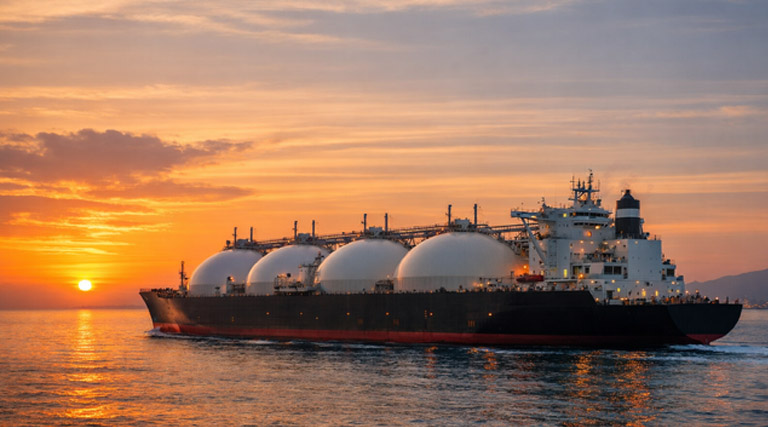
India LNG Market
Industry Key Highlights
India LNG Market is experiencing robust growth as the country accelerates its transition toward cleaner and more sustainable energy sources.
Rising industrialization and urbanization are significantly increasing demand for Liquefied Natural Gas (LNG) across multiple sectors.
Government initiatives to increase the share of natural gas in the national energy mix are supporting long-term market expansion.
Expansion of LNG regasification terminals and pipeline infrastructure is improving nationwide accessibility to natural gas.
LNG is gaining popularity as a cleaner fuel for heavy commercial vehicles, marine transportation, and industrial applications.
The LNG Regasification Facilities segment dominates the market owing to increasing LNG imports and infrastructure investments.
Growing investments in city gas distribution networks are creating new consumption opportunities across urban and semi-urban regions.
Increasing adoption of digital technologies, automation, and smart terminal management is improving operational efficiency.
Rising investments from domestic and international energy companies are strengthening India's LNG ecosystem.
Environmental sustainability objectives and carbon emission reduction targets continue to support long-term LNG demand.
Request For Sample Copy of Report For More Detailed Market insight: https://www.techsciresearch.com/sample-report.aspx?cid=4436#requestform
India LNG Market Overview
The India LNG Market has emerged as one of the fastest-growing segments within the country's energy industry as India actively diversifies its energy portfolio and reduces its dependence on conventional fossil fuels. Rapid industrial growth, increasing electricity demand, expanding transportation infrastructure, and rising environmental awareness are encouraging greater adoption of Liquefied Natural Gas (LNG) across numerous industries.
LNG has become an attractive energy source because it offers lower greenhouse gas emissions compared to coal and petroleum products while delivering high energy efficiency. As India progresses toward cleaner energy solutions, LNG is expected to play a crucial role in bridging the gap between conventional fossil fuels and renewable energy sources.
The country's expanding industrial sector, including manufacturing, petrochemicals, fertilizers, steel, ceramics, and power generation, has significantly increased natural gas consumption. Since domestic gas production remains insufficient to satisfy growing demand, LNG imports continue to rise steadily.
Government policies promoting gas-based economic development, investments in LNG import terminals, expansion of gas pipeline networks, and increasing private sector participation are creating a favorable business environment for the LNG industry. These developments are transforming India's LNG value chain while enhancing energy accessibility across multiple regions.
Market Drivers
Growing Demand for Cleaner Energy
One of the primary drivers of the India LNG Market is the country's growing commitment to reducing carbon emissions while ensuring energy security.
Compared to coal and diesel, LNG produces considerably lower emissions of carbon dioxide, sulfur oxides, nitrogen oxides, and particulate matter. Consequently, industries are increasingly replacing conventional fuels with LNG to comply with stricter environmental regulations and corporate sustainability goals.
The transition toward cleaner fuels is particularly evident across manufacturing, transportation, commercial establishments, and power generation facilities.
Expansion of Industrial Activities
India's industrial sector continues to expand rapidly, increasing demand for reliable and cost-effective energy sources.
Industries including:
Steel manufacturing
Cement production
Petrochemicals
Fertilizer manufacturing
Glass production
Food processing
require uninterrupted fuel supplies for continuous operations.
LNG offers high combustion efficiency, lower maintenance requirements, and improved operational reliability, making it an attractive energy option for industrial users.
Government Support for Gas-Based Economy
The Indian government has introduced several initiatives aimed at increasing natural gas consumption across the country.
These initiatives include:
Expansion of LNG import infrastructure
Development of city gas distribution networks
Construction of cross-country gas pipelines
Promotion of cleaner transportation fuels
Investments in gas-based industrial development
These policy measures are expected to significantly increase LNG demand over the coming years.
Increasing LNG Imports
Domestic natural gas production currently meets only a portion of India's growing energy requirements.
As industrial consumption continues to rise, LNG imports have become increasingly important in maintaining energy security.
The development of additional LNG receiving terminals enables greater import capacity while ensuring uninterrupted fuel supply to industrial consumers.
Emerging Market Trends
Rapid Expansion of LNG Regasification Infrastructure
The expansion of LNG regasification infrastructure has become one of the most significant trends shaping the India LNG Market.
Regasification terminals convert imported LNG back into gaseous form before it enters the national pipeline network.
These facilities have become indispensable for ensuring stable natural gas availability across industrial, commercial, and residential sectors.
Continuous investments in new terminals, capacity expansion, and modernization projects are expected to strengthen India's LNG supply chain significantly.
LNG Adoption in Transportation
The transportation sector represents one of the fastest-growing application areas for LNG.
Commercial vehicle operators are increasingly adopting LNG-powered trucks and buses due to:
Lower fuel costs
Reduced emissions
Improved engine performance
Compliance with environmental regulations
Development of LNG refueling stations along major freight corridors is further encouraging market adoption.
Heavy-duty transportation is expected to become one of the largest future consumers of LNG.
Digitalization of LNG Infrastructure
Digital transformation is becoming increasingly important throughout the LNG industry.
Operators are integrating:
Artificial Intelligence
IoT sensors
Predictive maintenance
Remote monitoring
Cloud-based operational platforms
These technologies improve terminal safety, reduce downtime, optimize storage management, and enhance operational efficiency.
Automation is also helping companies reduce operational costs while improving service reliability.
Growing Role of Floating LNG Facilities
Floating Storage and Regasification Units (FSRUs) are emerging as an attractive solution for rapidly expanding LNG import capacity.
Compared to conventional onshore terminals, floating facilities require lower capital investment and shorter construction timelines.
They provide flexibility while enabling quicker market entry for LNG suppliers.
As India's coastal infrastructure expands, floating LNG terminals are expected to play an increasingly important role in strengthening energy security.
Segment Analysis
LNG Regasification Facilities Dominate the Market
Among different infrastructure categories, LNG Regasification Facilities represent the dominant segment within the India LNG Market.
These facilities serve as the critical connection between imported LNG cargoes and the domestic gas distribution network.
Since LNG is transported in liquid form at extremely low temperatures, regasification terminals convert it back into gaseous form before distribution to consumers.
The dominance of this segment is supported by several factors.
Firstly, India's increasing dependence on imported LNG has significantly increased the need for additional regasification capacity.
Secondly, coastal terminals provide efficient unloading, storage, and distribution infrastructure for imported LNG.
Thirdly, expansion of national gas pipeline networks has enhanced the utilization of regasified natural gas across multiple industrial clusters.
Major industrial sectors including fertilizer manufacturing, petrochemicals, power generation, city gas distribution, and steel production rely heavily on these facilities for uninterrupted natural gas supply.
Furthermore, the government continues to encourage private investment in LNG infrastructure, resulting in continuous capacity expansion across multiple coastal regions.
The modernization of existing regasification terminals through digital automation, improved storage systems, and advanced safety technologies is further strengthening their operational capabilities.
As India's natural gas demand continues to rise, LNG regasification facilities will remain the backbone of the country's LNG infrastructure.
Competitive Analysis
The India LNG Market is highly competitive, with participation from integrated energy companies, LNG terminal operators, pipeline developers, and international energy suppliers.
Competition is increasingly focused on infrastructure expansion, technological innovation, supply chain optimization, strategic partnerships, and long-term LNG procurement agreements.
Market participants are investing heavily in new regasification terminals, LNG storage facilities, floating LNG projects, and city gas distribution infrastructure to strengthen their market presence.
Companies are also adopting digital technologies such as AI-powered terminal management, predictive maintenance systems, IoT-enabled monitoring, and advanced analytics to improve operational efficiency and reduce costs.
Strategic collaborations between domestic and international energy companies continue to accelerate technology transfer and strengthen India's LNG ecosystem.
Major Market Players
Petronet LNG Limited
GAIL(India) Limited
Royal Dutch Shell plc
Adani Ports and Special Economic Zone Limited
Indian Oil Corporation Limited
H-Energy Private Limited
Total S.A.
GSPC LNG Limited
Bharat Petroleum Corporation Limited.
Essar Ports Ltd
Customers can also request for 10% free customization on this report.
Contact US:
Techsci Research LLC
420 Lexington Avenue, Suite 300,
New York, United States- 10170
Tel: +13322586602
Email: [email protected]
Web: https://www.techsciresearch.com/
Comments
Log in or sign up to join the conversation.