

Industry Overview
According to TechSci Research report, “Fiber Optic Components Market Size in India – By Region, Competition, Forecast and Opportunity, 2019-2029F”, The India Fiber Optic Components Market achieved a valuation of USD 1.18 billion in 2023 and is projected to experience substantial growth during the forecast period, exhibiting a Compound Annual Growth Rate (CAGR) of 10.12% until 2029.
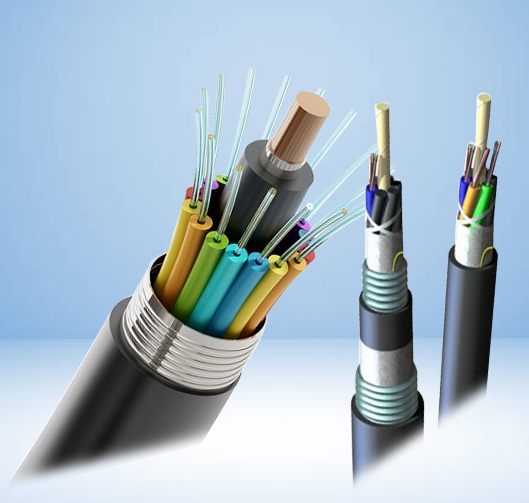
The India Fiber Optic Components Market has emerged as one of the most strategically important segments within the country's telecommunications and digital infrastructure ecosystem. As India undergoes an unprecedented digital transformation, the demand for high-speed, secure, and reliable data transmission technologies has increased significantly, positioning fiber optic components as indispensable enablers of connectivity and technological advancement.
Fiber optic components form the foundation of modern communication networks by facilitating the transmission of enormous volumes of data at exceptional speeds and with minimal signal loss. Components such as fiber optic cables, splitters, transceivers, amplifiers, connectors, and circulators are increasingly being deployed across telecommunications networks, data centers, healthcare systems, industrial facilities, and enterprise environments to support rapidly expanding digital requirements.
The growing dependence on data-intensive technologies, including cloud computing, video streaming platforms, Internet of Things (IoT) devices, artificial intelligence applications, and remote working solutions, has accelerated the deployment of fiber optic infrastructure across India. Organizations and governments alike are investing substantially in advanced communication technologies to ensure uninterrupted connectivity, low latency, and enhanced network performance.
India's digital economy is experiencing a remarkable transformation driven by increased internet penetration, smartphone adoption, digital payment systems, and expanding e-governance initiatives. These developments have significantly increased the demand for fiber optic components that can support large-scale data transmission requirements while ensuring reliability and efficiency.
As businesses continue embracing digital transformation initiatives and consumers increasingly rely on high-speed internet services, the India Fiber Optic Components Market is expected to witness substantial growth and technological innovation in the coming years.
Request For Sample Copy of Report For More Detailed Market insight: https://www.techsciresearch.com/sample-report.aspx?cid=2005#requestform
Industry Key Highlights
Rapid expansion of fiber optic infrastructure across urban and rural regions
Increasing demand for high-speed broadband connectivity and data transmission
Growing investments in telecommunications and digital infrastructure projects
Rising deployment of 5G networks and advanced communication technologies
Expansion of hyperscale data centers and cloud computing facilities
Strong government initiatives promoting digital inclusion and internet accessibility
Increasing adoption of IoT devices and smart technologies
Rising demand from healthcare, manufacturing, education, and enterprise sectors
Growing participation of domestic manufacturers and international technology providers
Continuous innovation in high-speed and high-capacity optical communication solutions
Understanding Fiber Optic Components and Their Significance
Fiber optic technology has fundamentally transformed modern communications by enabling the transmission of information through light signals rather than electrical currents. This technology offers significantly higher bandwidth, lower latency, improved reliability, and enhanced security compared to traditional copper-based communication systems.
Fiber optic components serve various functions within communication networks, including:
Fiber Optic Cables
Fiber optic cables form the physical medium through which data is transmitted. They provide exceptionally high bandwidth capabilities and can carry vast amounts of information over long distances without significant signal degradation.
Fiber Optic Splitters
Splitters divide optical signals into multiple pathways, enabling efficient network distribution and facilitating widespread connectivity.
Fiber Optic Transceivers
Transceivers convert electrical signals into optical signals and vice versa, enabling seamless communication between different network components.
Fiber Optic Amplifiers
Amplifiers strengthen optical signals over long distances, ensuring reliable communication and minimizing transmission losses.
Fiber Optic Connectors
Connectors facilitate the efficient joining of fiber optic cables and equipment, ensuring stable and secure data transmission.
Fiber Optic Circulators
Circulators direct optical signals between various channels, improving network efficiency and enabling advanced communication architectures.
Collectively, these components create the robust communication infrastructure necessary for supporting India's rapidly evolving digital ecosystem.
Market Drivers
Growing Digital Transformation Across Industries
Digital transformation initiatives are reshaping every major industry in India. Organizations are increasingly adopting digital technologies to improve operational efficiency, enhance customer experiences, and gain competitive advantages.
Industries including banking, healthcare, education, retail, manufacturing, and government services are investing heavily in digital infrastructure. These digital initiatives generate enormous volumes of data that require high-speed communication networks capable of supporting real-time data transmission and advanced applications.
Fiber optic components have become essential in enabling these digital transformation initiatives by providing the speed, reliability, and scalability required for modern business operations.
Expansion of High-Speed Internet Services
India has witnessed extraordinary growth in internet adoption over the past decade. Increasing smartphone penetration and affordable internet services have dramatically expanded the country's digital user base.
Consumers are increasingly utilizing:
Video streaming services
Online gaming platforms
Cloud applications
Social media platforms
Remote work solutions
E-learning applications
Digital financial services
The rising consumption of data-intensive services necessitates robust network infrastructure capable of delivering high-speed connectivity and superior user experiences. Fiber optic components are playing a critical role in supporting this rapidly expanding digital ecosystem.
Government-Led Digital Initiatives
Government initiatives aimed at expanding digital inclusion and internet accessibility have significantly contributed to the growth of the fiber optic components market.
The Digital India initiative has accelerated investments in broadband infrastructure and encouraged the deployment of optical fiber networks across urban and rural areas. Programs focused on extending high-speed internet access to underserved regions have generated substantial demand for fiber optic cables and associated components.
The government's focus on developing smart cities, promoting digital governance, and supporting technological innovation continues to create favorable conditions for the expansion of fiber optic infrastructure across the country.
Rising Demand for Data Centers
India is becoming a major destination for data center investments. The rapid growth of cloud computing, digital services, e-commerce, and enterprise digitization is fueling the establishment of hyperscale data centers across the country.
Modern data centers require high-capacity communication systems capable of supporting:
Massive data storage
Real-time processing
Cloud computing operations
Artificial intelligence workloads
Disaster recovery systems
Edge computing applications
Fiber optic components provide the high bandwidth and reliability necessary to support these demanding environments, making them an integral part of India's expanding data center ecosystem.
Growing Adoption of 5G Technology
The rollout of fifth-generation wireless networks represents one of the most significant drivers of demand for fiber optic components.
5G technology requires highly sophisticated and dense communication infrastructure capable of supporting:
Ultra-low latency
Gigabit-speed connectivity
Massive machine communications
Enhanced mobile broadband
Real-time industrial automation
Smart transportation systems
Fiber optics serve as the backbone of 5G networks by enabling efficient backhaul and fronthaul communications. The growing deployment of 5G infrastructure is expected to significantly increase demand for advanced fiber optic components throughout the forecast period.
Emerging Trends in the India Fiber Optic Components Market
Emergence of Smart Cities
India's smart city initiatives are creating substantial opportunities for fiber optic component providers. Smart city applications depend on seamless communication and high-speed data exchange to support intelligent infrastructure systems.
Applications include:
Smart transportation systems
Intelligent traffic management
Smart surveillance systems
Energy management solutions
Connected public services
Environmental monitoring
These applications require extensive fiber optic networks capable of supporting continuous and reliable communication.
Increasing Integration of Artificial Intelligence and IoT
The integration of artificial intelligence and Internet of Things technologies is reshaping communication requirements across industries.
Connected devices continuously generate massive volumes of data that must be transmitted and processed in real time. Fiber optic components provide the bandwidth and reliability necessary for supporting these advanced technologies.
Industries such as manufacturing, healthcare, agriculture, and logistics are increasingly adopting AI-driven and IoT-enabled systems, further accelerating demand for advanced optical communication infrastructure.
Rising Deployment of Fiber-to-the-Home (FTTH) Networks
The demand for superior broadband experiences has encouraged service providers to expand Fiber-to-the-Home networks.
Consumers increasingly require high-speed internet services to support:
Remote work
Online education
Video conferencing
Streaming services
Smart home applications
Cloud-based gaming
FTTH deployments require substantial investments in fiber optic cables, splitters, connectors, and transceivers, creating significant growth opportunities for market participants.m
Development of Edge Computing Infrastructure
Edge computing is emerging as a transformative technology that enables data processing closer to end users.
Applications such as autonomous systems, industrial automation, and real-time analytics require low-latency communication networks. Fiber optic components facilitate the high-speed transmission capabilities necessary for supporting edge computing environments.
As organizations increasingly adopt edge computing architectures, investments in fiber optic infrastructure are expected to increase substantially.
Market Challenges
High Installation Costs
Although fiber optic technologies offer superior performance advantages, the initial cost of deploying optical networks remains relatively high.
Installation expenses include:
Fiber optic cables
Network equipment
Specialized installation services
Maintenance infrastructure
Skilled workforce requirements
These costs may create adoption barriers for smaller organizations and cost-sensitive market segments.
Infrastructure Complexity
Deploying and maintaining fiber optic networks requires specialized expertise and sophisticated infrastructure planning.
Challenges include:
Network design complexities
Installation difficulties
Compatibility requirements
Maintenance procedures
Technical workforce shortages
Addressing these challenges will be critical for ensuring widespread adoption and sustainable market growth.
Supply Chain Management
Ensuring consistent availability of high-quality fiber optic components remains an important industry challenge.
Manufacturers must manage:
Raw material availability
Production capacities
Logistics operations
Quality assurance processes
Inventory management
Strengthening supply chain resilience will remain a priority for market participants.
Regional Analysis
Southern Region Leads the Market
The Southern Region dominated the India Fiber Optic Components Market and is expected to maintain its leadership throughout the forecast period.
States such as Karnataka, Telangana, and Tamil Nadu possess highly developed technology ecosystems characterized by:
Strong IT industries
Major technology parks
Advanced manufacturing capabilities
Robust digital infrastructure
High technology adoption rates
The region's thriving innovation ecosystem and favorable business environment have accelerated investments in fiber optic infrastructure.
The Southern Region's leadership highlights its pivotal role in shaping India's digital future and fostering technological innovation.
Competitive Analysis
Key market players in the India Fiber Optic Components Market include:
Sterlite Technologies Limited
Finolex Cables Limited
Birla Cable Limited (MP Birla Group)
Vindhya Telelinks Limited (MP Birla Group)
Universal Cables Limited (MP Birla Group)
Polycab India Limited
Gupta Power Infrastructure Limited
KEC International Limited
Apar Industries Limited
Aksh Optifibre Limited
Customers can also request 10% free customization on this report.
Future Outlook
The future of the India Fiber Optic Components Market appears exceptionally promising. India's ambition to become a digitally empowered economy will continue to accelerate investments in high-speed communication infrastructure.
Several factors are expected to shape future market growth:
Expansion of 5G networks
Rapid growth of data centers
Rising cloud computing adoption
Development of smart cities
Increasing enterprise digitalization
Growth in IoT deployments
Expansion of broadband connectivity initiatives
Emergence of artificial intelligence applications
Rising demand for edge computing infrastructure
Continuous technological innovation in optical communications
Fiber optic components will remain fundamental to enabling India's next generation of digital services and supporting the country's transition toward an increasingly connected and intelligent economy.
10 Benefits of the Research Report
Provides comprehensive insights into market size and growth opportunities.
Offers detailed segmentation analysis by type, application, and data rate.
Identifies emerging technologies and evolving market trends.
Examines major growth drivers and industry challenges.
Delivers regional market assessment and opportunity analysis.
Provides extensive competitive landscape evaluation.
Assists organizations in developing informed investment strategies.
Helps stakeholders understand future demand patterns.
Enables businesses to identify untapped market opportunities.
Supports strategic decision-making through actionable market intelligence.
Conclusion
The India Fiber Optic Components Market has emerged as one of the most critical enablers of the country's digital transformation journey. Increasing internet penetration, expanding digital services, 5G deployment, cloud computing growth, and government-led digital initiatives are collectively driving unprecedented demand for advanced fiber optic infrastructure.
As industries become increasingly data-driven and interconnected, fiber optic components will continue to serve as the backbone of modern communications, enabling faster connectivity, greater efficiency, and transformative technological innovation. With sustained investments, strategic partnerships, and continuous product advancements, the India Fiber Optic Components Market is poised to play a defining role in shaping India's digital future and establishing the country as a global leader in next-generation connectivity technologies.
Contact US:
Techsci Research LLC
420 Lexington Avenue, Suite 300,
New York, United States- 10170
Tel: +13322586602
Email: [email protected]
Web: https://www.techsciresearch.com/
Comments
Log in or sign up to join the conversation.