

According to TechSci Research report, “India E-Waste Management Market Report– By Region, Competition, Forecast and Opportunities, 2020-2030F”, India E-Waste Management Market was valued at USD 60.63 Billion in 2024 and is expected to reach USD 103.16 Billion by 2030 with a CAGR of 9.10% during the forecast period. The market is undergoing rapid transformation as India witnesses an unprecedented surge in electronic consumption, digitalization, and industrial expansion. Increasing awareness regarding environmental sustainability, stringent government regulations, and the growing emphasis on circular economy practices are collectively driving the adoption of organized e-waste collection, recycling, and disposal services. As businesses and consumers continue to embrace technological innovation, the volume of discarded electronic products is expected to rise significantly, creating long-term opportunities for companies specializing in e-waste management and resource recovery.
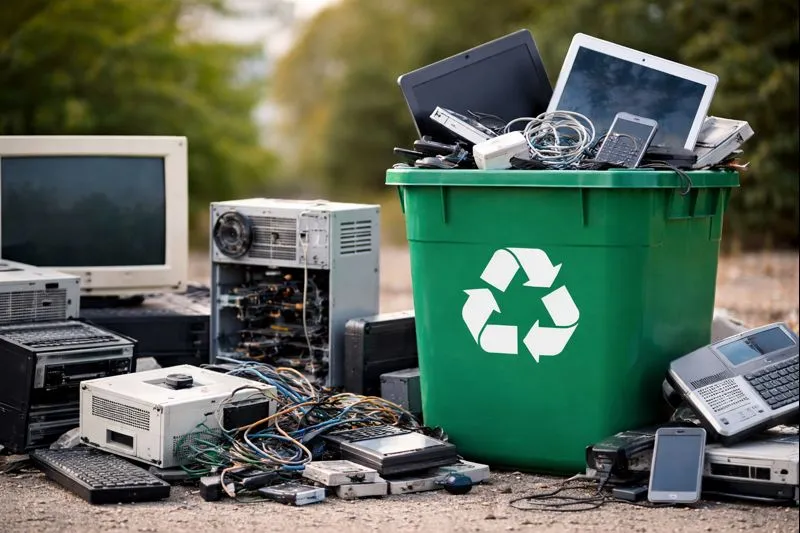
India E-Waste Management Market Overview
India has emerged as one of the world's largest consumers of electronic devices, supported by rising disposable incomes, rapid urbanization, expanding internet penetration, and the government's focus on digital transformation. Smartphones, laptops, televisions, home appliances, and other consumer electronics have become integral to everyday life. However, this rapid digital adoption has resulted in an equally significant increase in electronic waste generation.
Electronic waste contains valuable materials such as gold, silver, copper, aluminum, palladium, and rare earth elements that can be recovered and reused through scientific recycling methods. At the same time, it also contains hazardous substances including lead, mercury, cadmium, and brominated flame retardants that pose serious environmental and health risks if improperly disposed of. Consequently, efficient e-waste management has become an essential component of India's sustainability agenda.
The market is benefiting from government regulations such as Extended Producer Responsibility (EPR), increasing investments in recycling infrastructure, technological innovations in waste processing, and growing participation from both organized and private recycling companies. As awareness regarding responsible disposal continues to improve among consumers and businesses, the industry is expected to witness substantial expansion over the coming years.
Request For Sample Copy of Report For More Detailed Market insight: https://www.techsciresearch.com/sample-report.aspx?cid=27138#requestform
Industry Key Highlights
India E-Waste Management Market valued at USD 60.63 Billion in 2024.
Expected to reach USD 103.16 Billion by 2030.
Forecast CAGR of 9.10% during 2025–2030.
Rapid technological advancements continue to accelerate electronic replacement cycles.
Government initiatives supporting Extended Producer Responsibility (EPR) are strengthening organized recycling.
Metal recyclers accounted for the largest market share in 2024.
North India emerged as the fastest-growing regional market.
Increasing investments in advanced recycling technologies are improving material recovery rates.
Growing environmental awareness is encouraging responsible disposal practices.
Expansion of the circular economy is creating long-term investment opportunities.
Market Drivers
Rapid Technological Advancements
One of the strongest drivers influencing the India E-Waste Management Market is the continuous evolution of technology. Every year manufacturers introduce more advanced smartphones, laptops, wearable devices, televisions, networking equipment, and household appliances with enhanced performance, energy efficiency, and smart connectivity. Consumers are increasingly replacing functioning devices with upgraded versions, resulting in shorter product life cycles and significantly higher volumes of discarded electronics.
The expansion of emerging technologies such as Artificial Intelligence, Internet of Things (IoT), cloud computing, and smart home automation is further accelerating electronic consumption. As organizations modernize their digital infrastructure, obsolete servers, networking equipment, and computing devices contribute substantially to industrial e-waste generation.
Rising Electronic Device Penetration
India's growing middle-income population and increasing purchasing power have dramatically expanded the consumer electronics market. Affordable smartphones, online retail platforms, digital payment systems, and government initiatives promoting digital inclusion have enabled millions of consumers to access electronic products.
The rapid adoption of electronics across households, educational institutions, healthcare facilities, manufacturing industries, and commercial establishments continues to increase annual e-waste volumes, thereby creating sustained demand for professional recycling and disposal services.
Growing Environmental Awareness
Consumers are becoming increasingly aware of the harmful environmental consequences associated with improper disposal of electronic waste. Illegal dumping releases toxic substances into soil, groundwater, and the atmosphere, posing long-term risks to ecosystems and public health.
Educational campaigns, corporate sustainability initiatives, and environmental regulations have encouraged responsible disposal behavior. Businesses are also integrating sustainable waste management practices into their Environmental, Social, and Governance (ESG) strategies, supporting organized recycling channels.
Government Regulations
Government initiatives remain instrumental in shaping market growth. Policies promoting Extended Producer Responsibility require manufacturers and producers to establish collection mechanisms for end-of-life electronic products. Regulatory frameworks encourage recycling, resource recovery, and environmentally sound disposal methods while discouraging informal recycling practices that often expose workers and communities to hazardous materials.
Emerging Trends
Shift Toward Circular Economy
The India E-Waste Management Market is increasingly embracing circular economy principles that prioritize reuse, refurbishment, remanufacturing, and recycling. Instead of treating discarded electronics as waste, businesses are recognizing them as valuable secondary resource streams capable of reducing dependence on virgin raw materials.
This transition supports sustainability objectives while improving resource efficiency across manufacturing industries.
Adoption of Advanced Recycling Technologies
Modern recycling facilities are increasingly deploying automated sorting systems, robotic dismantling equipment, artificial intelligence, sensor-based separation technologies, and environmentally friendly hydrometallurgical processes. These innovations improve recovery efficiency while reducing environmental impact and operational costs.
Advanced recycling also enables greater extraction of precious metals, increasing profitability for recycling companies.
Growth of Reverse Logistics Networks
Companies are strengthening reverse logistics capabilities to simplify the collection of discarded electronics from households, offices, retailers, and industrial facilities. Digital collection platforms, doorstep pickup services, and organized collection centers are improving recycling participation rates while reducing illegal disposal.
Corporate Sustainability Initiatives
Large enterprises are adopting comprehensive electronic asset disposal programs to comply with ESG commitments. Certified recycling partners are increasingly being selected to ensure secure data destruction, regulatory compliance, and environmentally responsible material recovery.
Segment Analysis
By Processed Material
Among processed materials, metals represent the most valuable segment due to the significant concentration of precious and industrial metals present in electronic waste. Copper, gold, silver, aluminum, and palladium recovered from discarded electronics are widely reused across manufacturing industries.
Plastic recycling is also gaining momentum as manufacturers increasingly utilize recycled polymers to reduce production costs and environmental impact. Glass recycling remains important, particularly for televisions, monitors, and display equipment, while other materials continue to offer niche recycling opportunities.
By Recycler Type
Metal recyclers dominated the India E-Waste Management Market in 2024 owing to the substantial economic value associated with metal recovery. Electronic circuit boards, cables, connectors, batteries, and semiconductors contain high-value metals that can be efficiently extracted using sophisticated recycling technologies.
Mechanical shredding, chemical extraction, smelting, and hydrometallurgical processing enable recyclers to recover valuable resources while minimizing waste generation. Growing industrial demand for recycled metals further strengthens the dominance of this segment.
Plastic recyclers, glass recyclers, and printed circuit board recyclers are also witnessing increased investment as recycling technologies continue to advance and recovery efficiencies improve.
By Category
Temperature exchange equipment, screens and monitors, large equipment, small equipment, and small IT & telecommunication equipment collectively contribute to India's expanding e-waste stream.
Smartphones, laptops, tablets, printers, networking equipment, televisions, refrigerators, washing machines, and air conditioners are among the largest contributors to annual electronic waste generation due to high ownership levels and relatively short replacement cycles.
Regional Analysis
North India represents the fastest-growing regional market, supported by rapid urbanization, industrial expansion, increasing electronic consumption, and proactive government initiatives. Major metropolitan areas including Delhi, Chandigarh, Noida, Gurugram, Jaipur, Lucknow, and other urban centers generate substantial volumes of electronic waste from residential, commercial, and industrial sectors.
The region's strong IT industry, manufacturing base, educational institutions, and corporate offices contribute significantly to electronic equipment usage. Growing investments in organized recycling facilities, collection centers, and waste processing infrastructure continue to strengthen North India's leadership position.
Other regions are also witnessing increasing adoption of scientific recycling practices as state governments expand environmental awareness campaigns and strengthen waste management infrastructure.
Competitive Analysis
Increasing Competition Through Technology
The competitive landscape is evolving as companies invest in automated recycling technologies, digital tracking systems, and environmentally sustainable processing facilities. Businesses are differentiating themselves through higher recovery efficiency, regulatory compliance, and value-added services such as secure data destruction and reverse logistics.
Strategic Partnerships
Market participants are increasingly collaborating with electronics manufacturers, municipal authorities, retailers, and corporate organizations to establish efficient collection and recycling ecosystems. Such partnerships improve collection volumes while ensuring regulatory compliance.
Expansion Strategies
Leading companies are expanding processing capacities, establishing regional collection centers, and investing in advanced recovery technologies to meet growing demand. Geographic expansion and service diversification remain key competitive strategies.
Major Companies Operating in the India E-Waste Management Market
Sims Limited
Electronic Recyclers International, Inc.
Waste Management Holdings, Inc.
Aurubis AG
EnviroServe Inc.
Umicore N.V.
Veolia Environnement SA
Boliden Mineral AB
Future Outlook
The future of the India E-Waste Management Market remains highly promising as the country's digital economy continues to expand. Rapid adoption of smart devices, electric vehicles, renewable energy systems, data centers, and industrial automation will generate increasing quantities of electronic waste requiring organized collection and recycling.
Government support, technological innovation, private sector investments, and stronger environmental regulations are expected to accelerate market formalization. Companies capable of delivering efficient, sustainable, and technologically advanced recycling solutions will be well-positioned to capitalize on emerging opportunities.
The growing emphasis on resource recovery, carbon reduction, and circular economy practices is likely to transform e-waste from an environmental challenge into a valuable economic resource. As recycling infrastructure expands across urban and semi-urban regions, India is expected to become one of the fastest-growing e-waste management markets globally.
10 Benefits of the Research Report
Provides detailed analysis of current market size and future growth projections.
Offers comprehensive insights into emerging market trends and technological developments.
Identifies major growth drivers, challenges, and investment opportunities.
Examines market segmentation across processed materials, recycler types, and categories.
Delivers regional analysis highlighting high-growth markets.
Profiles leading companies and evaluates their competitive strategies.
Assesses the impact of government regulations and sustainability initiatives.
Supports strategic business planning with reliable market intelligence.
Helps investors identify attractive expansion opportunities within the e-waste ecosystem.
Enables informed decision-making through comprehensive analysis of market dynamics and future industry outlook.
Contact US:
Techsci Research LLC
420 Lexington Avenue, Suite 300,
New York, United States- 10170
Tel: +13322586602
Email: [email protected]
Web: https://www.techsciresearch.com/
Comments
Log in or sign up to join the conversation.