

Introduction
According to TechSci Research report "India Digital Twin Market By Region, Competition, Forecast & Opportunities, 2029", India Digital Twin market was valued at USD 612 Million in 2023 and is anticipated to project robust growth in the forecast period with a CAGR of 27.01% through 2029.
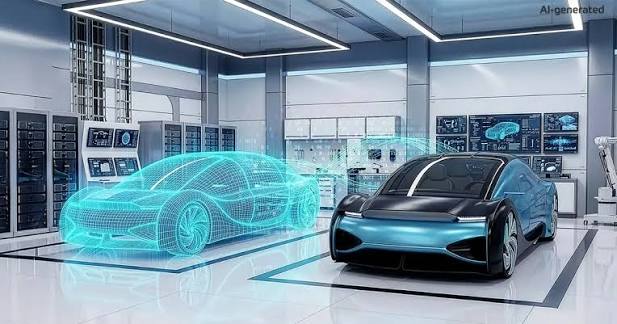
The India Digital Twin Market is developing rapidly as organizations across manufacturing, transportation, healthcare, energy, aerospace, and other industries adopt digital technologies to improve operational visibility and decision-making. A digital twin creates a virtual representation of a physical product, process, system, or asset and can use real-time information to replicate its behavior, monitor performance, and evaluate potential outcomes.
The increasing availability of electronic data, connected devices, cloud platforms, artificial intelligence, machine learning, and advanced analytics is strengthening the foundation for digital twin deployment in India. Businesses are increasingly looking beyond traditional monitoring methods and using virtual models to understand how assets and processes may perform under different operating conditions.
One of the most important applications is predictive maintenance. Instead of waiting for equipment to fail, organizations can monitor asset conditions and identify potential issues earlier. This approach can help reduce unexpected downtime, improve asset utilization, and support more efficient maintenance planning.
The growing complexity of industrial products and systems is another factor supporting adoption. Digital twins enable organizations to simulate products and processes before physical implementation, helping engineering and operational teams identify potential problems, evaluate alternatives, and optimize designs.
Government interest in digital infrastructure and disaster-management applications is also contributing to market opportunities. Digital twin technologies can potentially support simulations of scenarios involving floods, fires, earthquakes, infrastructure disruptions, and other complex events, helping organizations evaluate responses in controlled virtual environments.
Environmental sustainability is becoming another important application area. Digital twins can help businesses monitor resource consumption, identify inefficiencies, and model operational changes that may improve energy and resource utilization.
Request For Sample Copy of Report For More Detailed Market insight
Industry Key Highlights
The India Digital Twin Market is experiencing growth through digital transformation, predictive maintenance, IoT, cloud computing, and advanced analytics.
Increasing use of electronic and real-time data is strengthening digital twin applications.
Product is projected to dominate the market by type during the forecast period.
Digital twins are increasingly being applied across manufacturing, automotive, healthcare, aerospace, energy, and other industries.
Predictive maintenance remains an important use case for digital twin technology.
IoT, artificial intelligence, machine learning, big data, and cloud technologies are expanding digital twin capabilities.
Government programs and infrastructure initiatives are creating additional opportunities for digital twin applications.
South India holds the largest market share, supported by its advanced information technology ecosystem and concentration of technology establishments.
North India ranks second and is benefiting from expanding cloud services, 5G networks, and digital infrastructure.
Digital twins are increasingly being used for product development, process optimization, asset monitoring, supply chain management, and customer experience improvement.
Main Drivers
Growing Adoption of Predictive Maintenance
Predictive maintenance is one of the strongest applications supporting digital twin adoption in India. Traditional maintenance models may involve scheduled servicing or corrective action after equipment failure. Digital twins provide an alternative approach by continuously monitoring the condition and behavior of assets.
Sensor-generated information can be analyzed through a virtual representation to identify changes in operating conditions. Organizations can then use these insights to plan maintenance activities before significant failures occur.
Manufacturing, energy, utilities, transportation, and other asset-intensive industries can benefit from this approach. Reduced downtime, improved equipment utilization, and better maintenance planning can contribute to operational efficiency.
Increasing Digital Transformation
Indian enterprises are investing heavily in digital technologies to modernize business processes and improve competitiveness. Digital transformation initiatives increasingly involve connected equipment, cloud platforms, analytics, automation, and AI.
Digital twins bring several of these technologies together within a single virtual model. By connecting physical assets with their digital counterparts, organizations can obtain a more detailed understanding of operational performance.
As enterprises move toward Industry 4.0 models, digital twins are becoming increasingly relevant to smart manufacturing and connected operations.
Rising Use of IoT and Connected Devices
The expansion of IoT is creating a larger flow of real-time information that can feed digital twin platforms. Sensors installed on machinery, vehicles, buildings, and other assets can continuously generate operational data.
Digital twin systems can use this information to represent current conditions and analyze historical and potential future behavior. The combination of IoT and digital twins therefore allows businesses to move from static models toward dynamic operational representations.
Increasing Importance of Environmental Sustainability
Sustainability objectives are encouraging organizations to examine energy consumption, resource utilization, emissions, and operational efficiency.
Digital twins can help businesses simulate different operating scenarios and evaluate the potential impact of changes before implementing them in physical environments. This can support more informed decisions involving energy efficiency, resource management, equipment utilization, and infrastructure planning.
Government and Infrastructure Initiatives
Government-backed digital infrastructure initiatives are creating additional opportunities for digital twin technologies. Programs such as the National Digital Twin of India and Infrastructure Vision 2025 are contributing to interest in virtual representations of infrastructure and complex systems.
Digital twins can support planning, monitoring, simulation, and scenario analysis across infrastructure projects, potentially improving visibility throughout the asset lifecycle.
Emerging Trends
AI-Enabled Digital Twins
Artificial intelligence and machine learning are increasing the analytical capabilities of digital twin platforms. AI can help identify patterns in operational data, detect anomalies, and support predictive analysis.
The integration of AI can therefore transform digital twins from monitoring tools into more intelligent decision-support platforms.
Cloud-Based Digital Twin Platforms
Cloud computing is making digital twin technologies more accessible and scalable. Cloud-based infrastructure can provide organizations with the computing and storage capabilities required to process large volumes of sensor and operational data.
This is particularly important for enterprises managing distributed assets or complex systems across multiple locations.
Digital Twins for Disaster Simulation
Digital twins are gaining attention for simulating complex scenarios involving infrastructure and environmental risks. Virtual models can help organizations examine how buildings, transportation systems, utilities, and other infrastructure may respond under different conditions.
Potential applications include planning for fires, floods, earthquakes, and other disruptive events.
Smart Manufacturing
Manufacturers are increasingly connecting machines, production lines, and enterprise systems to improve visibility across operations. Digital twins can replicate manufacturing processes and help teams test production scenarios virtually.
This can support process optimization, quality improvement, predictive maintenance, and production planning.
5G and High-Bandwidth Connectivity
The expansion of 5G networks can support digital twin applications requiring rapid transfer of information between physical assets, sensors, cloud platforms, and digital models.
Faster connectivity can be particularly useful for applications involving large volumes of real-time data or geographically distributed assets.
Real-World Use Cases
Manufacturing
Manufacturing represents one of the most important application areas for digital twins. Companies can create virtual representations of machines, production lines, and complete manufacturing processes.
Engineers can test production configurations digitally, identify potential bottlenecks, and evaluate changes before making physical modifications. Digital twins can also support equipment monitoring and predictive maintenance.
Product Design and Development
Digital twins can be used during product development to simulate how a product may perform under different conditions. Engineers can evaluate designs virtually and identify potential issues before manufacturing physical prototypes.
This can help organizations shorten development cycles and improve product quality while reducing the number of costly physical iterations.
Automotive and Transportation
Automotive manufacturers can use digital twins to monitor vehicles, components, manufacturing processes, and supporting infrastructure. Data from connected systems can be used to analyze vehicle performance and support maintenance planning.
Transportation organizations can similarly apply digital twin technologies to infrastructure and fleet management.
Healthcare and Life Sciences
Healthcare organizations can potentially use digital twins for equipment monitoring, facility management, operational planning, and other applications. In life sciences, virtual models can support the analysis of complex processes and systems.
Aerospace and Defence
Aerospace systems require high reliability and extensive testing. Digital twins can enable organizations to model aircraft components, systems, and operational conditions, supporting engineering analysis and maintenance planning.
Energy and Utilities
Energy companies can use digital twins to monitor assets, analyze performance, and optimize maintenance. Applications can include power-generation equipment, grids, renewable-energy infrastructure, and other utility assets.
Competitive Analysis
The India Digital Twin Market includes global technology companies, engineering software providers, IT service companies, and specialized digital twin solution providers.
Key market players include:
Pratiti Technologies Pvt Ltd
Tata Consultancy Services
ANSYS, Inc.
Siemens Aktiengesellschaft
PTC India Limited
IBM India Private Limited
Microsoft Corporation (I) Pvt. Ltd.
Faclon Labs Private Limited
TwinGrid Labs Private Limited
Cisco Systems, Inc.
Customers can also request for 10% free customization on this report.
Segmentation
The India Digital Twin Market can be segmented based on type, application, end-user, and region.
By Type
Process
Product
System
The Product segment is expected to dominate during the forecast period. Product digital twins are widely applicable to manufacturing and engineering environments, where virtual replicas can support product development, performance analysis, predictive maintenance, and lifecycle management.
By Application
Manufacturing Process Planning
Product Design
Predictive Maintenance
Others
Manufacturing process planning enables organizations to evaluate production workflows virtually, while product design applications allow engineers to assess product performance before physical production.
Predictive maintenance remains a significant application because digital twins can connect asset data with virtual models to identify potential operational problems.
By End-User
Manufacturing
Automobile & Transportation
Healthcare & Lifesciences
Aerospace & Defence
Energy & Utilities
Others
Manufacturing is an important application environment because factories contain interconnected equipment and processes that can benefit from real-time monitoring and simulation. Automotive, aerospace, energy, healthcare, and transportation industries are also developing digital twin use cases.
By Region
North India
South India
West India
East India
South India holds the largest market share due to its established IT ecosystem and concentration of technology companies and digital infrastructure.
North India ranks second and is benefiting from the expansion of cloud services, 5G connectivity, and digital infrastructure. Increasing internet traffic and the presence of cloud service providers are also contributing to regional technology development.
Government-led initiatives such as the National Digital Twin of India are further supporting the broader development of the digital twin ecosystem.
Future Outlook
The India Digital Twin Market is expected to continue developing as organizations seek better ways to connect physical assets with digital intelligence. The combination of IoT, cloud computing, AI, machine learning, big data, and advanced analytics is creating a stronger technological foundation for digital twin deployment.
Predictive maintenance is expected to remain an important application, particularly in asset-intensive industries. At the same time, product design, manufacturing planning, infrastructure management, energy optimization, and disaster simulation are creating additional opportunities.
The strong technology ecosystem in South India provides an important foundation for market development, while North India's expanding connectivity and cloud infrastructure create additional opportunities.
As Indian enterprises increasingly adopt Industry 4.0 technologies and digital operating models, digital twins can become an important tool for improving asset visibility, testing scenarios, optimizing processes, and supporting data-driven decision-making.
Frequently Asked Questions
1. What is driving the India Digital Twin Market?
The market is being driven by predictive maintenance, digital transformation, IoT adoption, cloud computing, artificial intelligence, machine learning, increasing electronic data, and the growing need for efficient monitoring and simulation.
2. Which segment is expected to dominate the India Digital Twin Market by type?
The Product segment is expected to dominate during the forecast period, supported by applications in product design, manufacturing, performance optimization, predictive maintenance, and lifecycle management.
3. Which region holds the largest share of the India Digital Twin Market?
South India holds the largest market share, supported by its advanced IT ecosystem and the presence of numerous technology establishments.
4. What are the major applications of digital twins in India?
Major applications include manufacturing process planning, product design, predictive maintenance, and other operational and engineering applications across manufacturing, automotive, transportation, healthcare, aerospace, defence, energy, and utilities.
Contact US:
Techsci Research LLC
420 Lexington Avenue, Suite 300,
New York, United States- 10170
Tel: +13322586602
Email: [email protected]
Comments
Log in or sign up to join the conversation.