

India’s building infrastructure is undergoing a significant transformation as developers, businesses, institutions, and homeowners increasingly move toward connected, automated, and energy-efficient environments. Building Automation & Control Systems (BACS) are becoming an important component of modern infrastructure, enabling centralized monitoring and management of essential building functions such as heating, ventilation and air conditioning (HVAC), lighting, energy consumption, surveillance, fire safety, intrusion detection, and access control.
According to TechSci Research report, “India Building Automation & Control Systems Market – By Region, Competition, Forecast and Opportunities, 2021-2031F”, India Building Automation & Control Systems Market was valued at USD 11.37 Billion in 2025 and is expected to reach USD 18.09 Billion by 2031 with a CAGR of 8.05% during the forecast period.
Rapid urbanization, expanding commercial infrastructure, rising disposable incomes, and growing awareness of energy conservation are contributing to the adoption of automation technologies. At the same time, increasing security requirements are encouraging property owners to integrate surveillance, access management, fire detection, and emergency-response capabilities into unified platforms.
The transition is particularly visible in metropolitan areas, where shopping centers, IT parks, educational institutions, hospitals, hotels, residential towers, and mixed-use developments require sophisticated systems capable of managing multiple building functions simultaneously. Connected automation allows operators to monitor different zones through centralized interfaces while enabling automated alerts and real-time responses.
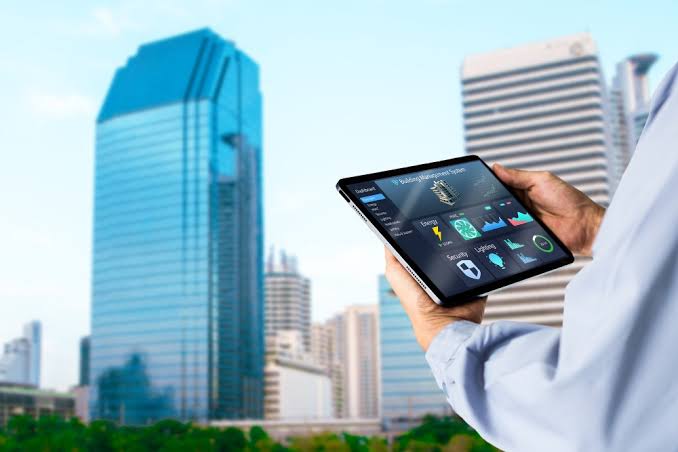
Industry Key Highlights
The India Building Automation & Control Systems Market is expected to grow from USD 11.37 Billion in 2025 to USD 18.09 Billion by 2031.
The market is projected to register a CAGR of 8.05% during the forecast period.
Increasing adoption of smart buildings is strengthening demand for integrated automation platforms.
Residential is emerging as the fastest-growing end-user segment, supported by smart-home adoption and increasing consumer awareness.
North India is emerging as the fastest-growing regional market due to infrastructure expansion and rapid urban development.
IoT-enabled devices, artificial intelligence, wireless connectivity, and cloud-based platforms are transforming building management.
Energy optimization and security are becoming major considerations in building design and modernization.
Smart residential communities and premium housing projects are increasingly incorporating automated security and energy-management features.
Commercial and institutional buildings are adopting centralized control systems to improve operational efficiency and occupant safety.
Government-led smart-city and sustainable infrastructure initiatives are creating additional opportunities for automation technology providers.
Request For Sample Copy of Report For More Detailed Market insight
Main Drivers
Rapid Urbanization and Infrastructure Development
India’s expanding urban population is creating demand for sophisticated residential, commercial, and institutional infrastructure. As cities become more densely populated, building operators require technologies that can manage complex facilities efficiently.
Large properties often contain numerous systems operating simultaneously. Automation platforms can integrate HVAC, lighting, surveillance, access control, fire safety, and energy management, reducing the need for independent monitoring of each function.
The continued development of metropolitan business districts, technology parks, shopping complexes, hotels, and high-rise residential projects is therefore creating a favorable environment for BACS adoption.
Rising Focus on Energy Efficiency
Energy consumption is becoming a critical consideration for building owners because of increasing electricity costs, sustainability objectives, and environmental requirements. Automated HVAC and lighting controls can help optimize energy usage according to occupancy, operating schedules, and environmental conditions.
Building automation can also provide operators with visibility into energy consumption patterns, allowing inefficient equipment or unnecessary usage to be identified. This combination of monitoring and automated control is encouraging organizations to invest in intelligent energy-management infrastructure.
Growing Security Concerns
Security has become another important catalyst for automation adoption. Commercial buildings, residential societies, educational campuses, retail centers, and industrial facilities increasingly require sophisticated systems to manage physical access and monitor premises.
Modern platforms can integrate video surveillance, biometric identification, smart locks, motion sensors, intrusion alarms, video intercoms, and access-control technologies. Centralized monitoring allows security teams to respond more quickly to unusual activity or emergencies.
Increasing Smart Home Adoption
The residential market is benefiting from greater consumer familiarity with connected technologies. Homeowners are increasingly interested in controlling lighting, climate systems, locks, cameras, alarms, and other devices through smartphones and connected platforms.
The availability of relatively affordable IoT-enabled products is making automation accessible beyond premium properties. This broader adoption is expected to create new opportunities for manufacturers, system integrators, developers, and technology providers.
Government Support for Smart and Sustainable Infrastructure
Smart-city programs and initiatives focused on sustainable urban development are encouraging the adoption of technologies that improve resource efficiency, safety, and infrastructure management.
Building automation aligns closely with these objectives by enabling intelligent control of energy, lighting, climate, and security systems. Growing emphasis on green buildings and environmental performance is expected to further strengthen demand.
Emerging Trends
Artificial Intelligence-Powered Building Management
Artificial intelligence is increasingly being incorporated into building management platforms. AI-enabled systems can analyze operational data, recognize consumption patterns, identify anomalies, and support predictive decision-making.
Instead of simply responding to predefined commands, intelligent systems can increasingly adjust building operations based on occupancy, historical behavior, environmental conditions, and real-time requirements.
IoT-Connected Building Ecosystems
The Internet of Things is creating more interconnected building environments. Sensors, controllers, meters, cameras, thermostats, lighting systems, and security devices can communicate with centralized platforms.
This connectivity enables building managers to obtain real-time information and coordinate multiple systems through a common interface, improving visibility and operational control.
Wireless Automation Technologies
Wireless communication is gaining importance because it can simplify installation and make automation more practical for existing buildings. Unlike traditional wired systems that may require extensive infrastructure modifications, wireless solutions can provide greater flexibility when upgrading older properties.
This trend is particularly relevant for residential buildings, offices, retail spaces, and other facilities where extensive cabling may be disruptive or expensive.
Cloud-Based Remote Management
Cloud platforms are enabling building operators and homeowners to monitor and control systems remotely. Users can receive security alerts, check equipment status, adjust settings, and review operational information through connected applications.
Remote management is especially valuable for multi-location businesses and property managers responsible for several facilities.
Integration of Safety and Security Systems
The distinction between individual building systems is becoming less pronounced. Modern automation platforms increasingly integrate fire alarms, access control, surveillance, emergency alerts, and other safety technologies.
Such integration can improve situational awareness and enable faster responses during security incidents or emergencies.
Real-World Use Cases
Smart Residential Communities
Gated communities and apartment complexes are adopting smart locks, biometric access, video intercoms, surveillance cameras, motion detection, and centralized security platforms. Residents can increasingly manage access and receive notifications through mobile applications.
Commercial Office Buildings
Office complexes use automation to coordinate HVAC, lighting, access control, and energy-management functions. Occupancy-based controls can adjust building systems according to employee presence, helping improve comfort while reducing unnecessary energy consumption.
Shopping Malls and Retail Centers
Large retail properties require continuous monitoring of multiple zones. Integrated automation systems can coordinate surveillance, access management, fire safety, lighting, HVAC, and energy systems from centralized control rooms.
Educational Campuses
Schools and universities can use automation for access management, surveillance, emergency alerts, lighting control, and climate management. Centralized systems can help administrators manage large campuses with multiple buildings and high occupant volumes.
Hotels and Hospitality Facilities
Hotels can employ automation to improve guest comfort while optimizing energy consumption. Room-level controls, smart access systems, automated lighting, HVAC management, and centralized monitoring can improve both operational efficiency and customer experience.
Industrial Facilities
Industrial sites require dependable environmental monitoring, access management, safety systems, and energy controls. Automation can provide centralized visibility across large facilities while helping organizations maintain operational continuity.
Competitive Analysis
Siemens AG
Schneider Electric SE
Honeywell International Inc.
Johnson Controls International plc
ABB Ltd.
Larsen & Toubro Limited
Emerson Electric Co.
Eaton Corporation plc
Customers can also request 10% free customization on this report.
Segmentation
The India Building Automation & Control Systems Market can be segmented based on Product, Communication Protocol, End User, and Region.
By Product
Heating, Ventilation & Air Conditioning
Electronic Security & Safety
Lighting Controls & Energy Management Systems
HVAC automation represents an important application area because climate control directly influences both occupant comfort and building energy consumption. Electronic security and safety solutions are gaining importance due to increasing requirements for surveillance, access control, fire detection, and emergency management. Lighting controls and energy-management systems are also becoming increasingly relevant as organizations seek to improve sustainability and operational efficiency.
By Communication Protocol
Wired
Wireless
Wired systems continue to be relevant for large-scale installations requiring stable and dedicated connectivity. However, wireless technologies are gaining traction because of their installation flexibility, scalability, and suitability for retrofitting existing buildings.
By End User
Commercial
Industrial
Residential
The Residential segment is emerging as the fastest-growing end-user category. Rising disposable incomes, urbanization, smart-home awareness, and increasing interest in security and energy efficiency are encouraging homeowners to adopt connected automation solutions.
Luxury housing developments, gated communities, and modern apartment complexes are increasingly integrating automation into their core infrastructure. The availability of IoT devices and smartphone-controlled platforms is further supporting adoption.
By Region
North India
South India
West India
East India
North India is emerging as the fastest-growing regional market, supported by infrastructure development and urban expansion in cities such as Delhi, Gurgaon, Noida, and Chandigarh.
The region’s growing commercial real estate base, technology parks, retail developments, hospitality projects, and residential communities are creating significant demand for intelligent building-management solutions. Rising interest in sustainable construction and green-building certifications is also encouraging the integration of energy-efficient HVAC, lighting, security, and control systems.
Future Outlook
The outlook for India’s Building Automation & Control Systems Market remains positive as smart infrastructure moves from being a premium feature toward becoming an increasingly important component of modern buildings.
The market’s growth from USD 11.37 Billion in 2025 to USD 18.09 Billion by 2031, at a CAGR of 8.05%, highlights the expanding commercial opportunity. Residential automation is likely to remain a particularly strong growth area as connected homes become more accessible, while commercial and institutional buildings will continue investing in integrated systems to improve efficiency, safety, and operational visibility.
AI, IoT, cloud computing, wireless connectivity, and advanced analytics are expected to further transform building management. Meanwhile, sustainability targets and smart-city development will continue encouraging property developers and building owners to adopt technologies that reduce resource consumption and improve occupant experiences.
Overall, the convergence of security, energy management, connectivity, sustainability, and intelligent control is expected to make building automation a core element of India’s evolving built environment.
Contact US:
Techsci Research LLC
420 Lexington Avenue, Suite 300,
New York, United States- 10170
Tel: +13322586602
Email: [email protected]
Comments
Log in or sign up to join the conversation.