

Introduction
Biometric technology is becoming an increasingly important part of India’s digital transformation, changing how individuals verify their identities across financial services, government programs, healthcare, retail, telecommunications, and consumer devices. Fingerprints, facial recognition, iris scanning, voice recognition, and other biometric technologies are moving beyond traditional security applications toward faster, more convenient, and increasingly contactless authentication.
According to TechSci Research report, “India Biometrics Market Share– By Region, Competition, Forecast and Opportunities, 2021-2031F”, India Biometrics Market was valued at USD 3.24 Billion in 2025 and is expected to reach USD 6.39 Billion by 2031 with a CAGR of 11.98% during the forecast period. Growth is being supported by the expansion of digital identity infrastructure, increasing smartphone adoption, growing cybersecurity concerns, electronic Know Your Customer (eKYC) requirements, and the rapid digitization of financial and public services.
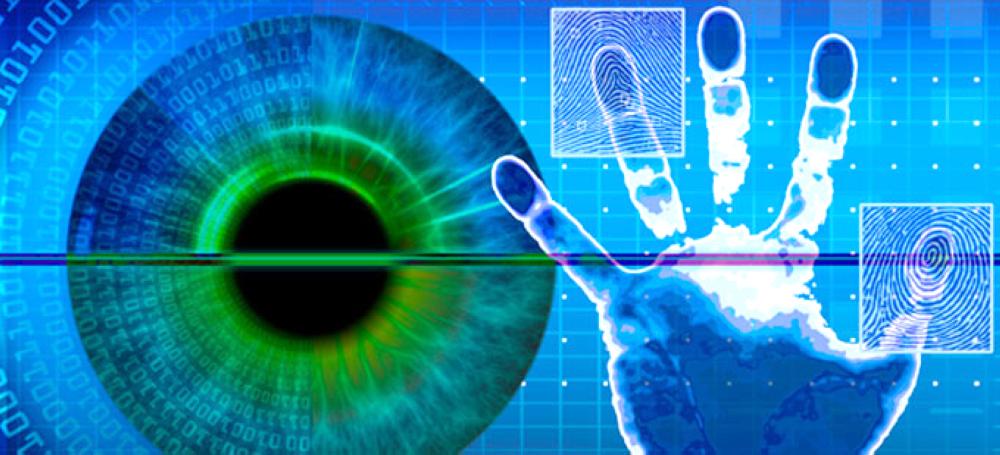
The financial services industry is at the forefront of this transformation. Banks, fintech companies, and non-banking financial companies (NBFCs) are using biometric authentication to simplify customer onboarding, strengthen identity verification, minimize fraud, and improve regulatory compliance. Biometric-enabled ATMs, kiosks, point-of-sale systems, and portable authentication devices are also expanding access to financial services in rural and semi-urban areas.
Meanwhile, advancements in artificial intelligence, cloud computing, and contactless biometric technologies are broadening the potential applications of the technology. As organizations increasingly seek secure authentication without compromising user convenience, biometrics is expected to become a fundamental component of India’s digital ecosystem.
Industry Key Highlights
The India Biometrics Market reached USD 3.24 Billion in 2025.
Market revenue is expected to reach USD 6.39 Billion by 2031.
The market is projected to expand at a CAGR of 11.98% during the forecast period.
BFSI has emerged as the fastest-growing end-use industry.
North India is the fastest-growing regional market.
Fingerprint and facial recognition are gaining widespread adoption across digital authentication applications.
Financial institutions are increasingly deploying biometrics for eKYC, onboarding, transactions, and fraud prevention.
Contactless biometric solutions are gaining momentum because of convenience and hygiene considerations.
AI-powered recognition systems are improving the speed and accuracy of biometric identification.
Government digital identity, e-governance, welfare delivery, and smart-city initiatives are creating additional demand.
Biometrics is increasingly being integrated into smartphones, consumer electronics, healthcare systems, retail platforms, and transportation services.
Request For Sample Copy of Report For More Detailed Market insight
Main Drivers
Expansion of Digital Banking and eKYC
India’s rapidly expanding digital financial ecosystem is one of the strongest contributors to biometric adoption. Banks and fintech companies are increasingly using fingerprint and facial recognition to verify customers remotely and simplify account-opening procedures.
Biometric eKYC enables financial institutions to reduce paperwork and shorten onboarding processes while strengthening identity verification. This is particularly valuable for digital-first financial providers seeking to serve large customer populations quickly.
As financial institutions expand their presence in smaller cities and rural communities, biometric authentication can also help overcome challenges associated with physical documentation and manual verification.
As of the first quarter of 2025, more than 75% of new savings and current accounts in India were opened using biometric-based KYC processes. This demonstrates the growing role of biometrics in mainstream financial onboarding.
Growing Need for Fraud Prevention
Increasing digital transactions have also created new security challenges. Identity theft, account takeover attempts, payment fraud, and unauthorized access are encouraging financial institutions and other businesses to adopt stronger authentication technologies.
Biometric characteristics are difficult to replicate compared with conventional passwords or PINs, making them an attractive component of multi-factor security strategies.
Banks that implemented biometric authentication, particularly at ATMs and point-of-sale terminals, reported a nearly 20% reduction in digital transaction fraud. Such outcomes can strengthen the business case for broader biometric deployment.
Government Digitalization
Government programs and digital public services are another major growth catalyst. Biometric authentication can support identity verification, welfare distribution, public-service access, law enforcement, and administrative processes.
The expansion of digital identity systems has created an ecosystem in which biometric authentication can be integrated into a broad range of citizen-facing services. Government-backed initiatives such as Jan Dhan Yojana and Aadhaar-linked banking have further reinforced the importance of biometric identity verification within financial inclusion programs.
Smartphone and Consumer Electronics Adoption
Fingerprint sensors and facial recognition have become increasingly common in smartphones and other connected devices. Consumers are becoming familiar with using their biometric characteristics to unlock devices, authenticate payments, access applications, and protect personal information.
This everyday exposure is helping normalize biometric authentication and creating opportunities for manufacturers and technology providers to expand biometric functionality across consumer electronics.
Emerging Trends
Shift Toward Contactless Biometrics
The Indian biometrics market is gradually moving beyond traditional contact-based fingerprint systems. Facial recognition, iris scanning, and other contactless technologies are becoming increasingly relevant in environments where speed, convenience, and reduced physical interaction are priorities.
Contactless systems can be deployed in airports, transportation facilities, offices, healthcare environments, retail stores, and public-service centers.
AI-Powered Facial Recognition
Artificial intelligence and machine learning are improving biometric systems by enabling faster identification and more sophisticated pattern recognition. AI can help biometric platforms process complex facial characteristics, adapt to changing environmental conditions, and improve matching performance.
The integration of AI with biometrics is also creating opportunities for applications that require real-time identity verification, automated access control, and intelligent surveillance.
Cloud-Based Biometric Platforms
Cloud computing is changing how biometric infrastructure is deployed and managed. Instead of relying entirely on local systems, organizations can increasingly use centralized platforms to manage authentication services, update algorithms, analyze usage information, and scale deployments across multiple locations.
Cloud-based approaches can be particularly attractive for organizations with distributed branches, retail networks, healthcare facilities, or government service centers.
Hybrid Authentication
Organizations are increasingly combining biometrics with other authentication mechanisms instead of relying on a single security layer. Passwords, PINs, mobile devices, tokens, and biometric characteristics can work together to create stronger authentication frameworks.
This approach is particularly relevant to banking, enterprise IT, healthcare, and other environments where security requirements are high.
Real-World Use Cases
Financial services provide some of the clearest examples of biometric adoption in India. Banks and fintech companies are using fingerprint and facial recognition for customer onboarding, account verification, transaction authorization, and fraud prevention.
Biometric-enabled ATMs can reduce dependence on traditional authentication methods while providing additional security. Similarly, biometric point-of-sale solutions can support merchant and customer verification without requiring extensive paperwork.
In rural financial networks, portable biometric scanners can help microfinance institutions authenticate borrowers in remote locations. This can reduce identity-related fraud while making financial services more accessible to communities with limited access to traditional banking infrastructure.
Government services represent another important application area. Biometric authentication can be used for ration distribution, pension services, municipal programs, welfare delivery, and other citizen-facing services. By linking identity verification to service delivery, organizations can improve transparency and reduce the risk of unauthorized access.
Healthcare providers are also exploring biometric systems for patient identification, access management, and secure medical-record authentication. Accurate patient identification can help reduce administrative errors and improve the management of sensitive healthcare information.
Retail and e-commerce businesses can use facial and fingerprint authentication for payments, customer verification, employee access, and secure account management. As digital commerce expands, secure and convenient identity verification is becoming increasingly important.
In transportation and public infrastructure, biometric systems can support controlled access, passenger identification, employee verification, and smart-city applications.
Competitive Analysis
NEC Corporation
Thales Group
IDEMIA Group
HID Global Corporation
Mantra Softech India Pvt. Ltd.
IriTech, Inc.
Futronic Technology Company Limited
Dahua Technology Co., Ltd.
Segmentation
By Solution Type
The India Biometrics Market is segmented into:
Fingerprint Recognition
Facial Recognition
Iris Scanner
Hand/Palm Recognition
Voice Recognition
Vein Scanner
Others
Fingerprint recognition remains an established biometric modality because of its broad familiarity and extensive use in identity verification. Facial recognition is gaining momentum as smartphones, financial applications, transportation systems, and contactless authentication platforms increasingly adopt camera-based identification.
Iris, palm, voice, and vein recognition technologies are also finding opportunities in specialized applications where organizations require additional authentication options.
By Functionality Type
The market is divided into:
Contact Based
Contact Less
Hybrid
Contact-based systems remain important in applications where fingerprint verification is widely established. However, contactless solutions are gaining momentum because they can provide fast authentication while reducing physical interaction.
Hybrid systems combine different authentication approaches and can offer organizations greater flexibility in balancing security and convenience.
By End-Use Industry
The major end-use industries include:
Government & Defense
BFSI
Consumer Electronics
IT & Telecom
Healthcare & Lifesciences
Retail & E-commerce
Others
BFSI has emerged as the fastest-growing end-use segment, supported by digital banking, eKYC, fraud prevention, mobile banking, and financial inclusion.
Consumer electronics is also an important application area because biometric authentication has become an increasingly familiar feature in smartphones and connected devices.
By Region
The market is segmented into:
North India
South India
West India
East India
North India has emerged as the fastest-growing region, supported by government investment, expanding digital infrastructure, urbanization, and increasing adoption of biometric solutions across public and private sectors.
Delhi, Uttar Pradesh, Haryana, and Punjab are witnessing growing implementation in e-governance, law enforcement, transportation, financial services, and welfare delivery.
The region’s expanding IT-enabled services sector, fintech ecosystem, smartphone penetration, and digital payment infrastructure are creating additional opportunities for biometric technology providers.
FAQ
1. What is the projected size of the India Biometrics Market by 2031?
2. What factors are driving the growth of the India Biometrics Market?
3. Why is BFSI the fastest-growing end-use segment in the India Biometrics Market?
4. Which region is expected to witness the fastest growth in the India Biometrics Market?\
Contact US:
Techsci Research LLC
420 Lexington Avenue, Suite 300,
New York, United States- 10170
Tel: +13322586602
Email: [email protected]
Comments
Log in or sign up to join the conversation.