

According to TechSci Research report, “AR VR Market Size in India– By Region, Competition, Forecast & Opportunities, 2031F, The India Augmented Reality and Virtual Reality Market was valued at USD 60.55 Billion in 2025 and is expected to reach USD 214.05 Billion by 2031 with a CAGR of 23.24% during the forecast period.
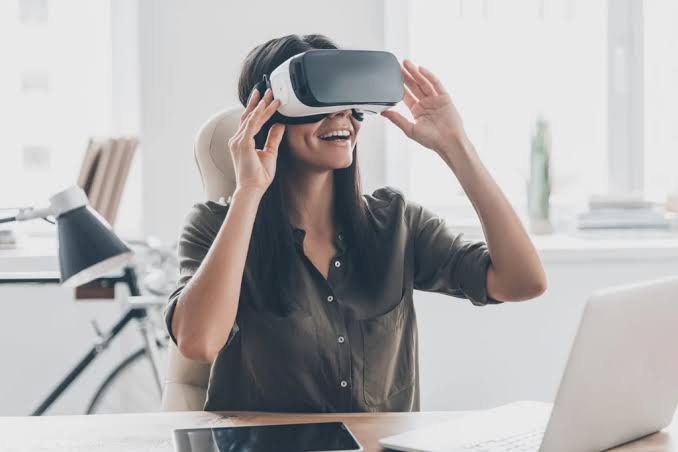
Industry Key Highlights
India Augmented Reality (AR) and Virtual Reality (VR) Market was valued at USD 60.55 Billion in 2025 and is projected to reach USD 214.05 Billion by 2031, registering a CAGR of 23.24% during the forecast period.
Rapid digital transformation across industries is accelerating AR and VR adoption.
Growing smartphone penetration and expanding 5G infrastructure are strengthening market growth.
Consumer Electronics remains the dominant end-user segment owing to increasing demand for immersive digital experiences.
Healthcare, education, manufacturing, retail, and real estate are rapidly adopting immersive technologies.
Artificial Intelligence, Cloud Computing, and IoT integration are enhancing AR/VR capabilities.
North India is emerging as the fastest-growing regional market due to expanding technology infrastructure.
Enterprises are increasingly investing in immersive training, simulation, and remote collaboration solutions.
Rising demand for interactive gaming and digital entertainment continues to create new business opportunities.
Government initiatives supporting digital innovation and smart infrastructure are fostering long-term market expansion.
Request For Sample Copy of Report For More Detailed Market insight: https://www.techsciresearch.com/sample-report.aspx?cid=7632#requestform
India Augmented Reality and Virtual Reality Market Overview
The India Augmented Reality (AR) and Virtual Reality (VR) Market is evolving into one of the country's fastest-growing digital technology sectors. As organizations continue embracing digital transformation, immersive technologies are becoming an integral part of enterprise innovation, customer engagement, workforce training, and intelligent decision-making. AR overlays digital information onto real-world environments, while VR creates fully immersive virtual experiences, enabling organizations to improve efficiency, reduce costs, and deliver highly interactive user experiences.
India's rapidly expanding digital economy has created a favorable environment for the widespread adoption of AR and VR technologies. Increased internet penetration, affordable smartphones, expanding cloud infrastructure, and the nationwide rollout of high-speed 5G networks have significantly enhanced accessibility to immersive solutions. Businesses are increasingly recognizing the value of AR and VR in transforming conventional workflows into intelligent, data-driven ecosystems.
Industries including healthcare, manufacturing, education, retail, automotive, defense, entertainment, and real estate are adopting immersive technologies to improve productivity, enhance customer experiences, and accelerate innovation. As organizations continue investing in next-generation technologies, AR and VR are expected to become fundamental components of India's digital future.
Market Drivers
Accelerating Digital Transformation Across Industries
The rapid pace of digital transformation remains the primary catalyst driving the India AR and VR Market. Enterprises are modernizing business operations through intelligent technologies that improve operational efficiency, automate complex processes, and enhance customer engagement.
Organizations increasingly utilize immersive technologies for virtual collaboration, employee training, product visualization, engineering simulations, and remote maintenance. These capabilities reduce operational costs while improving productivity and decision-making across multiple business functions.
Rising Demand for Enhanced Customer Experience
Modern consumers expect highly personalized and interactive experiences across digital platforms. AR and VR technologies enable businesses to provide immersive shopping, product demonstrations, and virtual experiences that significantly improve customer engagement.
Retailers allow customers to virtually try apparel, furniture, eyewear, cosmetics, and home décor before purchasing, helping reduce uncertainty and improve buying confidence. Real estate companies utilize virtual property tours, enabling buyers to explore projects remotely without physical site visits.
These immersive experiences strengthen customer satisfaction, increase conversion rates, and build long-term brand loyalty.
Growth of Digital Learning and Skill Development
India's education sector is rapidly adopting immersive learning technologies to improve knowledge retention and practical skill development.
Educational institutions utilize AR and VR to create interactive classrooms, virtual laboratories, 3D scientific models, historical recreations, and immersive field trips. Students gain hands-on learning experiences that traditional teaching methods often cannot provide.
Corporate organizations are similarly investing in immersive employee training, particularly within manufacturing, aviation, healthcare, defense, and industrial operations where realistic simulations improve workforce preparedness while reducing training risks.
Expansion of Healthcare Applications
Healthcare has emerged as one of the fastest-growing application areas for AR and VR technologies.
Medical professionals increasingly utilize VR-based surgical simulations, rehabilitation programs, mental health therapies, pain management, and patient education. AR assists surgeons by displaying real-time medical information during complex procedures, improving clinical precision and treatment outcomes.
Telemedicine platforms integrated with immersive technologies are also enhancing healthcare accessibility, particularly in remote and underserved regions.
Emerging Trends
Artificial Intelligence Enhancing Immersive Experiences
Artificial Intelligence is transforming AR and VR platforms into intelligent ecosystems capable of delivering personalized experiences.
AI enables virtual assistants, real-time object recognition, automated environment mapping, natural language interaction, facial recognition, and adaptive learning experiences within immersive environments.
The combination of AI with AR and VR creates highly responsive applications capable of continuously improving user interactions.
5G Connectivity Accelerating Market Growth
The nationwide deployment of 5G networks represents a significant milestone for India's AR and VR ecosystem.
Ultra-low latency, higher bandwidth, and faster data transmission allow immersive applications to operate smoothly without delays. This enables cloud rendering, multiplayer virtual environments, remote collaboration, industrial automation, and real-time simulations.
As 5G coverage expands across India, enterprise and consumer adoption of immersive technologies is expected to accelerate considerably.
Cloud-Based AR and VR Platforms
Cloud computing is making immersive technologies more scalable and affordable.
Cloud-based AR and VR platforms eliminate the need for expensive local hardware by processing complex graphics remotely while streaming experiences directly to users.
Benefits include:
Lower infrastructure costs
Faster deployment
Remote accessibility
Improved collaboration
Easy scalability
Continuous software updates
Cloud-based immersive solutions are becoming increasingly attractive for enterprises of all sizes.
Enterprise Metaverse Development
Organizations are increasingly exploring enterprise metaverse environments for collaboration, training, engineering design, product development, and virtual customer engagement.
Virtual workspaces allow geographically distributed teams to interact within shared digital environments, improving collaboration while reducing travel costs.
As enterprise metaverse platforms mature, demand for AR and VR technologies is expected to expand significantly.
Segment Analysis
By End User
The Consumer Electronics segment continues to dominate the India AR and VR Market due to the widespread availability of smartphones, tablets, wearable devices, smart glasses, and affordable VR headsets.
Improved hardware capabilities including powerful processors, advanced graphics, high-resolution displays, and enhanced sensors have significantly improved immersive experiences.
Consumers increasingly use AR and VR for gaming, entertainment, shopping, fitness, education, social interaction, and virtual tourism.
Gaming remains one of the strongest growth contributors. Increasing participation in e-sports, mobile gaming, and interactive entertainment has fueled demand for immersive devices and applications. Simultaneously, retailers are integrating AR-powered shopping features that allow consumers to visualize products before making purchasing decisions.
Education is another important contributor. Students use affordable mobile devices and VR headsets to access immersive educational content including virtual laboratories, interactive science demonstrations, and historical recreations.
Healthcare applications through consumer electronics—including mental wellness, rehabilitation, guided meditation, and fitness programs—continue expanding, creating new opportunities for market growth.
Regional Insights
North India has emerged as the fastest-growing regional market for Augmented Reality and Virtual Reality technologies.
Major cities including Delhi, Gurugram, and Noida have become important technology hubs with strong concentrations of multinational corporations, software companies, educational institutions, and startup ecosystems.
Growing investments in smart infrastructure, enterprise digitalization, healthcare technology, immersive retail, and industrial automation are accelerating regional adoption.
The availability of skilled professionals, expanding cloud infrastructure, and rapid deployment of 5G services continue strengthening North India's competitive position within the national AR and VR ecosystem.
Competitive Analysis
The India Augmented Reality and Virtual Reality Market is characterized by intense competition among global technology companies, domestic software firms, startup innovators, hardware manufacturers, and immersive content developers.
Market participants are focusing on integrating Artificial Intelligence, Machine Learning, Cloud Computing, Digital Twins, Spatial Computing, and IoT into immersive platforms to deliver advanced enterprise solutions. Companies are investing heavily in research and development to create industry-specific AR and VR applications for healthcare, manufacturing, education, automotive, retail, defense, and entertainment.
Strategic collaborations between technology providers, telecom operators, educational institutions, and enterprise customers are accelerating innovation across the market. Organizations are also emphasizing localized content development, scalable cloud platforms, and affordable immersive hardware to expand customer adoption.
Major Market Players
Tata Elxsi
Infosys Limited
Tech Mahindra
Wipro Limited
HCL Technologies
Zensar Technologies
Reliance Jio (Tesseract Division)
Imaginate Technologies
SmartVizX
PlayShifu
Customers can also request for 10% free customization on this report.
Future Outlook
The future of the India Augmented Reality and Virtual Reality Market is exceptionally promising as immersive technologies become increasingly integrated into both enterprise operations and everyday consumer experiences. Rapid advancements in Artificial Intelligence, spatial computing, extended reality (XR), cloud computing, and 5G connectivity will significantly enhance the capabilities of AR and VR applications.
Growing investments in smart manufacturing, digital healthcare, Industry 4.0, virtual education, intelligent retail, smart cities, defense modernization, and entertainment will continue driving market expansion. Enterprises are expected to increase spending on immersive collaboration platforms, digital simulations, product visualization, remote assistance, and workforce training solutions.
As technology becomes more affordable and user-friendly, small and medium-sized enterprises are also expected to adopt AR and VR at an accelerated pace. With strong government support for digital innovation, expanding technology infrastructure, and increasing consumer awareness, India is well positioned to become one of the leading global markets for immersive technologies over the coming years.
10 Benefits of the Research Report
Provides detailed insights into the current and future structure of the India AR and VR Market.
Identifies key growth drivers, emerging trends, and investment opportunities.
Offers comprehensive segmentation analysis across product type, organization size, end user, and region.
Evaluates the competitive landscape and profiles leading market participants.
Highlights technological innovations shaping the future of immersive technologies.
Assesses major market challenges and growth opportunities.
Supports strategic business planning and expansion decisions.
Delivers regional insights to identify high-growth investment markets.
Helps stakeholders understand evolving customer preferences and technology adoption patterns.
Enables informed investment decisions through comprehensive market intelligence and future growth analysis.
Contact US:
Techsci Research LLC
420 Lexington Avenue, Suite 300,
New York, United States- 10170
Tel: +13322586602
Email: [email protected]
Web: https://www.techsciresearch.com/
Comments
Log in or sign up to join the conversation.