

Introduction
According to TechSci Research report, “India AR and VR Market Trends – By Region, Competition, Forecast & Opportunities, 2031F, The India Augmented Reality and Virtual Reality Market was valued at USD 60.55 Billion in 2025 and is expected to reach USD 214.05 Billion by 2031 with a CAGR of 23.24% during the forecast period.
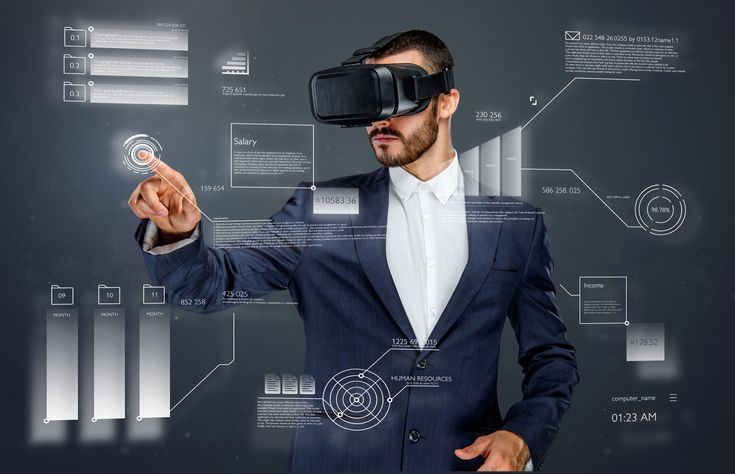
India’s rapidly expanding digital ecosystem is creating favorable conditions for AR and VR adoption. Increasing smartphone penetration, improving device affordability, advances in connectivity, and the integration of immersive technologies with artificial intelligence (AI), cloud platforms, and the Internet of Things (IoT) are widening the range of possible applications.
Businesses are increasingly viewing AR and VR as tools for improving customer engagement, employee training, product visualization, collaboration, and operational efficiency. At the consumer level, immersive entertainment, gaming, e-commerce experiences, and interactive digital content are supporting broader adoption.
Industry Key Highlights
The India AR and VR market was valued at USD 60.55 billion in 2025.
The market is projected to reach USD 214.05 billion by 2031.
The market is expected to expand at a CAGR of 23.24% during the forecast period.
Consumer Electronics accounted for the largest share based on end-user in 2025.
North India is identified as the fastest-growing regional market.
Growing smartphone penetration and affordable immersive devices are expanding consumer access.
5G connectivity is supporting low-latency and real-time AR/VR applications.
Education, healthcare, retail, real estate, manufacturing, automotive, defense, gaming, and entertainment are among the major application areas.
Integration with AI, cloud computing, and IoT is creating additional opportunities for immersive technology solutions.
Request For Sample Copy of Report For More Detailed Market insight
Main Drivers
Rising Demand for Interactive Customer Experiences
Businesses are increasingly using AR and VR to create more engaging and personalized customer journeys. Retailers can use AR applications to allow consumers to visualize products before purchasing, while real estate companies can provide virtual property tours without requiring customers to physically visit a location.
In e-commerce, virtual product trials, furniture visualization, and interactive shopping experiences can help customers make purchasing decisions with greater confidence. These applications can also support customer satisfaction and potentially reduce product returns by providing a better understanding of products before purchase.
Expansion of Digital Learning and Training
Education and professional training are becoming important areas of AR and VR adoption. Interactive AR content and VR simulations can transform conventional learning by enabling students and professionals to experience three-dimensional environments and practical scenarios.
Industries such as healthcare, aviation, and manufacturing can particularly benefit from simulation-based training. Trainees can practice procedures, equipment handling, and operational activities in controlled virtual environments before applying their skills in real-world situations.
Increasing Healthcare Applications
Healthcare is another important growth area for immersive technologies in India. VR can support medical education, surgical training, treatment planning, patient engagement, and therapeutic applications. AR can assist healthcare professionals with visualization and real-time guidance during selected procedures.
The integration of AR and VR with telemedicine and remote healthcare solutions may also expand access to specialized services, particularly in regions where physical healthcare infrastructure is comparatively limited.
Growth of Gaming and Entertainment
India’s expanding gaming and digital entertainment ecosystem is creating additional demand for immersive technologies. AR and VR can provide more interactive gaming experiences while enabling content creators and entertainment companies to experiment with immersive storytelling.
The development of e-sports, interactive media, digital communities, and immersive content is expected to support continued demand for AR/VR hardware and applications.
5G and Digital Infrastructure Development
Connectivity is a key factor in the practical deployment of AR and VR applications. The expansion of 5G networks can support faster data transmission, reduced latency, and smoother real-time interactions.
These capabilities are particularly relevant for cloud-based immersive applications, remote collaboration, interactive entertainment, and enterprise training. As connectivity improves across urban and semi-urban areas, more applications can become accessible to businesses and consumers.
Government Support for Digital Innovation
Government initiatives focused on digitalization, technology innovation, startups, skill development, and smart infrastructure are also supporting the development of an environment favorable to immersive technologies.
Collaboration between technology companies, enterprises, startups, educational institutions, and other organizations can encourage the development of AR/VR solutions designed around India-specific requirements.
Emerging Trends
Integration of AR/VR With AI
The combination of immersive technologies with AI is opening opportunities for more intelligent and personalized digital experiences. AI can support interactive virtual environments, automated content generation, personalized learning, and intelligent virtual experiences.
Expansion of Wearable Devices
Smart glasses, head-mounted displays, and other wearable technologies are becoming increasingly important to the AR/VR ecosystem. Improvements in display quality, processing power, and device design can make immersive experiences more practical for consumers and enterprises.
Immersive E-Commerce
Online retailers are increasingly exploring AR-based product visualization and virtual try-on capabilities. These technologies can bridge the gap between physical and digital shopping by giving customers a better understanding of products before completing a purchase.
Virtual Training and Simulation
Organizations are increasingly exploring simulation-based learning for activities where conventional training can be expensive, difficult, or risky. VR environments can reproduce operational scenarios while allowing learners to practice in a controlled setting.
Cloud-Based Immersive Experiences
Cloud computing can support the delivery and scalability of AR/VR applications by reducing dependence on local processing resources. Combined with improved connectivity, cloud-enabled immersive applications could support more flexible enterprise and consumer experiences.
Competitive Analysis
Tata Elxsi
Infosys Limited
Tech Mahindra
Wipro Limited
HCL Technologies
Zensar Technologies
Reliance Jio (Tesseract Division)
Imaginate Technologies
SmartVizX
PlayShifu
Customers can also request for 10% free customization on this report.
Market Segmentation
The India Augmented Reality and Virtual Reality Market can be segmented by Product Type, Organization Size, End-User, and Region.
By Product Type
Head Mounted Display
Handheld Device Applications
Smart Glass
Head Up Display
Head-mounted displays and smart glasses support hands-free immersive experiences, while handheld applications provide a more accessible entry point through smartphones and other portable devices.
By Organization Size
Small & Medium Sized Enterprises
Large Enterprises
Large enterprises are increasingly exploring immersive technologies for training, collaboration, visualization, and customer engagement, while SMEs can adopt more targeted solutions as technology becomes more accessible and cost-effective.
By End-User
Consumer Electronics
Automotive
Healthcare
Manufacturing
Defense
Others
The Consumer Electronics segment held the largest market share in 2025. Growing adoption of smartphones, tablets, wearables, VR headsets, and AR-enabled applications is making immersive experiences increasingly accessible to Indian consumers.
Entertainment and gaming remain important contributors, while e-commerce, education, healthcare, and wellness applications are expanding the role of AR/VR-enabled consumer devices.
By Region
North India
South India
West India
East India
North India is identified as the fastest-growing region, supported by technology hubs and major business and educational centers in cities such as Delhi, Gurugram, and Noida. Growing investments in digital transformation, smart classrooms, healthcare technology, enterprise training, remote collaboration, and immersive retail are contributing to regional expansion.
Future Outlook
The India AR and VR market is positioned for substantial expansion as immersive technologies become increasingly integrated into digital business and consumer ecosystems. The combination of rising device adoption, improving affordability, advanced connectivity, and growing enterprise awareness is creating a broader foundation for market development.
The projected increase from USD 60.55 billion in 2025 to USD 214.05 billion by 2031, at a 23.24% CAGR, highlights the scale of the market opportunity.
Going forward, demand is expected to remain connected to the development of localized applications, affordable hardware, immersive content, enterprise solutions, and integrations with AI, cloud, IoT, and 5G. Education, healthcare, retail, real estate, manufacturing, automotive, defense, gaming, and entertainment are expected to remain important areas for application development.
Frequently Asked Questions
1. What is the size of the India Augmented Reality and Virtual Reality Market?
The India Augmented Reality and Virtual Reality Market was valued at USD 60.55 billion in 2025.
2. What is the projected size of the India AR and VR Market by 2031?
The market is projected to reach USD 214.05 billion by 2031.
3. What is the CAGR of the India AR and VR Market?
The India AR and VR Market is projected to register a CAGR of 23.24% during the forecast period.
4. Which region is growing fastest in the India AR and VR Market?
North India is identified as the fastest-growing region, supported by technology hubs, educational institutions, enterprise activity, digital transformation initiatives, and expanding connectivity.
Contact US:
Techsci Research LLC
420 Lexington Avenue, Suite 300,
New York, United States- 10170
Tel: +13322586602
Email: [email protected]
Comments
Log in or sign up to join the conversation.