

Introduction
According to TechSci Research report, “India 3D Printer Market – By Region, Competition, Forecast and Opportunities, 2021-2031F”, India 3D Printer Market was valued at USD 15.13 Billion in 2025 and is expected to reach USD 38.94 Billion by 2031 with a CAGR of 17.06% during the forecast period.
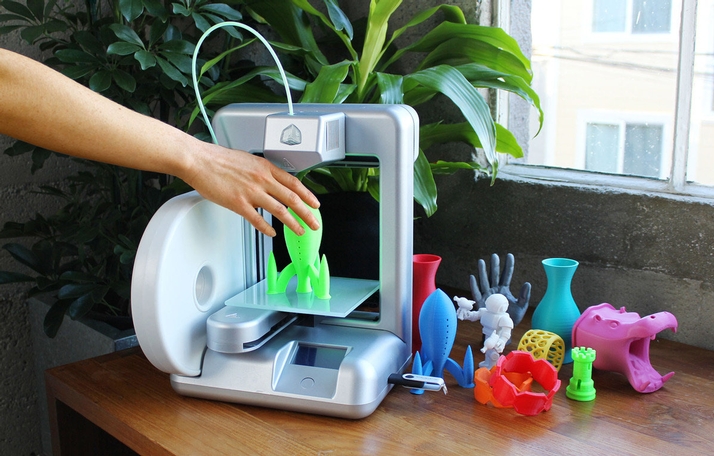
The increasing adoption of digital manufacturing is being supported by the need for faster product development, customized components, localized production, and efficient use of materials. Unlike conventional manufacturing methods that can require expensive molds, tooling, and multiple production stages, 3D printing allows manufacturers to create complex objects directly from digital designs.
India's expanding startup ecosystem, growing manufacturing capabilities, increasing investment in Industry 4.0 technologies, and government emphasis on domestic production are further creating favorable conditions for additive manufacturing. At the same time, declining equipment costs and improvements in printing materials are making the technology increasingly accessible to educational institutions, small businesses, research organizations, and large enterprises.
Education is emerging as another important area of development. Engineering colleges, architecture schools, vocational institutes, and skill-development centers are incorporating 3D printing into practical learning programs. This exposure is helping students develop capabilities in computer-aided design, prototyping, manufacturing, and product development while preparing them for emerging digital manufacturing careers.
Industry Key Highlights
The India 3D Printer Market was valued at USD 15.13 billion in 2025.
The market is projected to reach USD 38.94 billion by 2031.
The market is expected to expand at a 17.06% CAGR during the forecast period.
Medical is the fastest-growing end-user industry.
North India is the fastest-growing regional market.
Engineering, architecture, vocational training, and research institutions are increasing the use of 3D printers.
More than 20,000 students across 200+ colleges in Tamil Nadu, Maharashtra, and Gujarat completed certified 3D printing workshops as of 2024.
These educational programs contributed to more than 850 project prototypes being submitted to national innovation contests and patent applications by first-time student teams.
Automotive, healthcare, aerospace, electronics, defense, and education are among the important application areas.
Industry 4.0 adoption, localized manufacturing, rapid prototyping, and customized production are strengthening market opportunities.
Request For Sample Copy of Report For More Detailed Market insight
Main Drivers
Increasing Adoption of Rapid Prototyping
Rapid prototyping is one of the most important applications supporting the growth of 3D printing in India. Manufacturers can transform digital designs into physical prototypes without investing heavily in molds or specialized tooling.
This significantly shortens product-development cycles and allows engineering teams to identify design problems before beginning large-scale manufacturing. Automotive companies, electronics manufacturers, aerospace organizations, and industrial businesses can therefore test multiple design iterations more efficiently.
For startups and small manufacturers, the ability to produce prototypes internally can also reduce dependence on external suppliers and shorten development timelines.
Growth of Localized Manufacturing
The increasing focus on domestic production is creating additional opportunities for additive manufacturing. 3D printing can support localized production by allowing components and specialized parts to be manufactured closer to their point of use.
This capability can be particularly valuable for low-volume and highly customized products, where traditional mass-production methods may not be economically attractive. It can also support faster replacement of specialized components and reduce reliance on long supply chains.
Industry 4.0 Integration
The expansion of Industry 4.0 technologies is changing how manufacturers approach production. 3D printers can be integrated with digital design platforms, automation systems, data analytics, artificial intelligence, and connected manufacturing environments.
This integration enables manufacturers to move toward digitally controlled production processes. Companies can modify designs quickly, maintain digital inventories, and produce components according to specific requirements rather than maintaining large stocks of physical parts.
Government Support and Manufacturing Initiatives
Government programs focused on strengthening domestic manufacturing and encouraging technological innovation are contributing to the expansion of India's additive manufacturing ecosystem.
Initiatives such as Make in India are encouraging businesses to develop local production capabilities. The growing focus on import substitution is particularly relevant for industries that require specialized components and equipment.
Government-backed skill development and technical education programs are also helping address the shortage of professionals with practical additive manufacturing expertise.
Expansion of Technical Education
Education is becoming an important foundation for the long-term growth of India's 3D printing industry. Universities, engineering colleges, industrial training institutes, and private technology labs are increasingly offering practical exposure to additive manufacturing.
As of 2024, more than 20,000 students across 200+ colleges in Tamil Nadu, Maharashtra, and Gujarat had completed certified 3D printing workshops through university-led initiatives and private technology laboratories.
These programs resulted in more than 850 project prototypes being submitted to national innovation competitions and patent applications by first-time student teams. Such initiatives are helping develop a workforce familiar with 3D modeling, printer operation, material selection, and post-processing.
Emerging Trends
Medical 3D Printing
The Medical segment has emerged as the fastest-growing end-user industry in the India 3D Printer Market. Healthcare organizations are increasingly exploring additive manufacturing for personalized and cost-efficient solutions.
Applications include surgical planning models, prosthetics, dental products, implants, anatomical replicas, and emerging bioprinting applications. Hospitals can use patient-specific anatomical models to better understand complicated procedures and improve surgical preparation.
The technology is particularly relevant to areas such as orthopedics, cardiology, dentistry, and maxillofacial surgery, where customized anatomical structures can provide significant practical value.
AI and Medical Imaging Integration
The convergence of 3D printing with artificial intelligence and advanced medical imaging is creating new opportunities for personalized healthcare. Digital imaging data can be transformed into patient-specific three-dimensional models that support diagnosis, planning, and treatment.
As imaging technologies and additive manufacturing systems become more sophisticated, their combined application could expand the role of 3D printing in precision medicine and surgical innovation.
Development of Advanced Materials
Material innovation is broadening the range of products that can be manufactured using 3D printers. Developments in bioresorbable polymers and biocompatible metals are particularly important for healthcare applications.
In industrial environments, improvements in polymers, metals, composites, and specialized materials are enabling manufacturers to create components with greater strength, durability, and functional complexity.
Expansion of Skill Development
India's additive manufacturing ecosystem increasingly depends on skilled professionals who understand both digital design and physical production. Skill-development centers and ITIs are therefore incorporating additive manufacturing modules into technical training.
Courses covering 3D modeling, machine operation, material handling, and post-processing can help prepare technicians for employment across industries including aerospace, automotive, healthcare, engineering, and even fashion.
Growing Accessibility for SMEs
As equipment becomes more affordable and easier to operate, smaller businesses are gaining opportunities to adopt 3D printing. SMEs can use printers for product development, customized components, tooling, fixtures, and small-batch manufacturing without making the same level of investment required for conventional production infrastructure.
Real-World Use Cases
Automotive Manufacturing
Automotive companies can use 3D printers to develop prototypes, test component designs, create tooling, and produce customized parts. Faster design iterations can help engineers reduce development timelines while minimizing material waste.
Healthcare and Medical Devices
Hospitals and medical device manufacturers can create patient-specific anatomical models, prosthetics, dental components, surgical guides, and specialized medical products. The technology can support more personalized treatment approaches while reducing the complexity of producing low-volume medical components.
Aerospace and Defense
Aerospace and defense organizations require lightweight, complex, and highly specialized components. Additive manufacturing can produce intricate geometries that may be difficult or expensive to manufacture through traditional techniques.
Education and Research
Universities and technical institutes are using 3D printers for student projects, engineering prototypes, research experiments, and design competitions. Students gain practical knowledge by converting digital concepts into physical products.
Electronics
The electronics industry can use additive manufacturing for prototyping, enclosures, fixtures, specialized components, and product-development applications. Rapid iterations allow designers to evaluate physical form factors before final production.
Customized Manufacturing
3D printing is well suited to low-volume production where products need to be adapted to specific customer or application requirements. This is creating opportunities across medical devices, consumer products, industrial equipment, fashion, and specialized engineering.
Competitive Analysis
Imaginarium Pvt Ltd.
Divide By Zero Technologies Pvt Ltd.
Stratasys Ltd.
Brahma3 Pvt Ltd.
TDL Mould Co. Pvt Ltd.
Altem Technologies Pvt Ltd.
Think3D Pvt Ltd.
Customers can also request 10% free customization on this report.
Segmentation
The India 3D Printer Market is segmented based on Type, Process, End Use Industry, Region, and Competition.
By Type
Personal Printer
Industrial Printer
Personal printers are generally associated with educational, hobbyist, design, and small-scale applications, while industrial printers address demanding production, prototyping, engineering, and specialized manufacturing requirements.
By Process
Powder Bed Fusion
Vat Polymerization / Liquid Based
Material Extrusion
Binder Jetting
Material Jetting
Others
Different printing processes serve different applications depending on requirements such as material properties, precision, production volume, surface quality, and component complexity.
By End Use Industry
Automobile
Consumer Electronics / Electronics
Medical
Aerospace
Defence
Education
Others
Among these segments, Medical is the fastest-growing end-user industry, supported by increasing demand for customized healthcare solutions, patient-specific products, anatomical models, and advanced medical devices.
By Region
North India
South India
West India
East India
North India has emerged as the fastest-growing region in the India 3D Printer Market. Delhi, Noida, and Gurugram are developing into important centers for technology innovation and advanced manufacturing.
The region benefits from engineering institutions, research organizations, startups, and growing industrial activity. Automotive, healthcare, electronics, and other industries are increasingly using additive manufacturing for prototyping, design, tooling, and customized production.
States such as Punjab, Haryana, and Uttar Pradesh are also witnessing increasing adoption among small and medium-sized enterprises. Supportive state policies, manufacturing clusters, expanding infrastructure, and greater awareness of digital manufacturing are contributing to regional growth.
Frequently Asked Questions
1. What is the size of the India 3D Printer Market?
The India 3D Printer Market was valued at USD 15.13 billion in 2025 and is projected to reach USD 38.94 billion by 2031.
2. What is the expected CAGR of the India 3D Printer Market?
The market is projected to grow at a 17.06% CAGR during the forecast period from 2025 to 2031.
3. Which end-user industry is growing fastest in the India 3D Printer Market?
The Medical segment has emerged as the fastest-growing end-user industry, driven by demand for customized healthcare solutions, surgical models, prosthetics, implants, and other patient-specific applications.
4. Which region is the fastest-growing market for 3D printers in India?
North India is the fastest-growing region, supported by industrial development, technology hubs in cities such as Delhi, Noida, and Gurugram, research institutions, startups, and increasing adoption across automotive, healthcare, electronics, and other industries.
Contact US:
Techsci Research LLC
420 Lexington Avenue, Suite 300,
New York, United States- 10170
Tel: +13322586602
Email: [email protected]
Comments
Log in or sign up to join the conversation.