

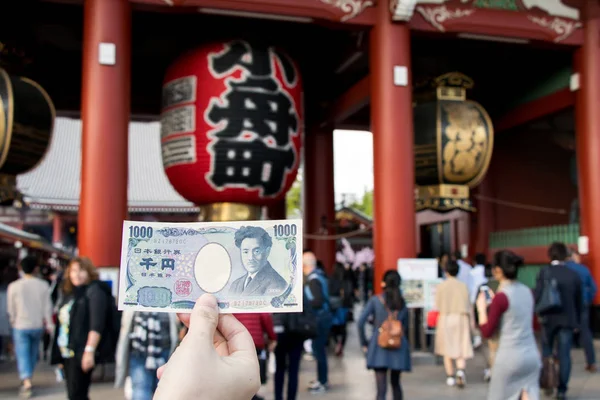
Over the past couple of days, financial headlines have been dominated by Japan. Rising government bond yields, pressure on the yen, and the role of U.S. policymakers in helping stabilize markets have all generated plenty of discussion.
Like many investors, I started reading because I wanted to better understand what was happening in Japan. I ended up asking a completely different question.
Why was it so important that Japan didn’t have to become a forced seller of U.S. Treasuries?
That question sent me down a rabbit hole.
Japan remains one of the largest foreign holders of U.S. government debt. Had it been forced to liquidate significant Treasury holdings to obtain U.S. dollars and support the yen, it could have created additional pressure on a Treasury market that is already digesting an extraordinary amount of new issuance. Instead, the Federal Reserve’s FIMA Repo Facility provides eligible foreign central banks with another option, allowing them to temporarily borrow U.S. dollars using Treasury securities as collateral rather than selling them outright. The facility isn’t a bailout, nor was it created specifically for Japan, but it serves as an important mechanism for reducing unnecessary stress in the Treasury market.
That was the moment the story changed for me. I realized this wasn’t really about Japan. It was about the importance of keeping the Treasury market functioning smoothly.
The United States continues to issue debt at a historic pace, and every Treasury bill, note and bond that comes to market must ultimately find a buyer. For decades, that demand has come from a broad mix of foreign governments, central banks, pension funds, commercial banks, insurance companies and asset managers. As long as those buyers were willing to absorb an ever-growing supply of debt, few people questioned the process.
But what happens if that demand begins to change?
A couple of years ago I wrote an article called How Debt and Gold Are Dancing Together, where I highlighted the remarkably consistent relationship between expanding government debt and rising gold prices. At the time, I focused on the correlation. Looking back, I think I missed the more interesting question.
Why has that relationship been so persistent?
The more I researched, the more I became convinced that the answer may have less to do with debt itself and more to do with who ultimately finances it.
Japan is one example. As Japanese government bond yields rise to levels not seen in decades, domestic investors suddenly have more reason to keep capital at home rather than searching abroad for yield. Japan doesn’t need to become a major seller of Treasuries for this to matter. If one of the world’s largest pools of capital simply becomes a less enthusiastic buyer, the equation begins to change.
That naturally led me to another observation.
According to the Federal Reserve’s July 2026 Monetary Policy Report, the Federal Reserve has resumed purchasing Treasury bills through what it calls “reserve management purchases,” with the report noting that its balance sheet has “ticked up” since those purchases began earlier this year. The Fed is careful to distinguish these operations from quantitative easing, and technically there are important differences. Their stated purpose is to maintain an ample level of reserves in the banking system, not to provide monetary stimulus.
That distinction may matter to economists. Markets, however, tend to focus on outcomes.
If governments continue issuing debt at record levels while traditional buyers become more selective, central banks may find themselves playing an increasingly important role in maintaining orderly markets. Whether those purchases are called quantitative easing, reserve management or something else entirely, the practical question remains remarkably simple.
Who buys the next trillion dollars of debt?
To be clear, I am not suggesting the financial system is on the verge of breaking, nor am I arguing that every central bank purchase amounts to debt monetization. I am suggesting that the composition of Treasury demand deserves far more attention than it receives. When one of the world’s largest holders of U.S. debt becomes headline news, perhaps the more interesting story isn’t what happened to Japan.
Perhaps it’s what Japan revealed.
That is also why I continue to believe precious metals deserve serious attention. Gold has historically performed well not simply because governments borrow more, but because investors begin questioning how that borrowing will ultimately be financed. At the same time that sovereign debt has exploded, central banks have been accumulating gold at the fastest pace in decades. I don’t believe that’s a coincidence. It may be another signal that the world’s monetary authorities recognize the growing importance of assets that carry no counterparty risk.
I started this research trying to understand Japan. I finished it wondering who will finance America’s debt over the next decade.
I suspect that’s the far more important question.


Comments
Log in or sign up to join the conversation.