
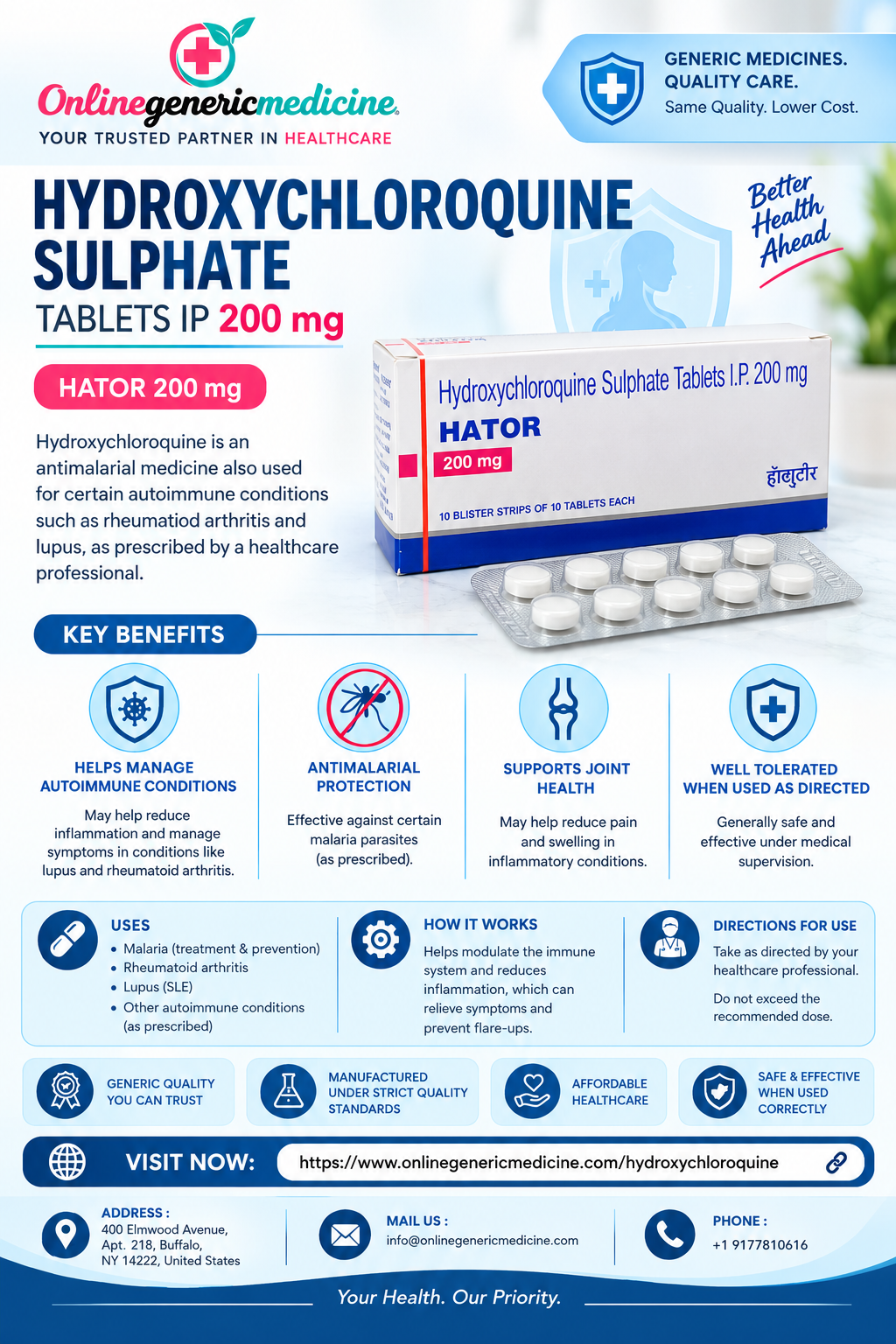
Hydroxychloroquine 200 mg is a prescription medicine that has been used for many years in the treatment and management of certain medical conditions. It is commonly associated with the treatment of specific types of malaria and the management of some autoimmune conditions, including rheumatoid arthritis and systemic lupus erythematosus (SLE).
The way this medicine is prescribed can vary depending on the individual's condition, medical history, and overall health. For this reason, Hydroxychloroquine should always be taken according to the advice of a qualified healthcare professional.
What Is Hydroxychloroquine 200 mg Used For?
Hydroxychloroquine may be prescribed for several conditions, including:
Certain types of malaria
Rheumatoid arthritis
Systemic lupus erythematosus (SLE)
Certain autoimmune or inflammatory conditions when medically appropriate
Each condition is different, and the medicine may work differently depending on why it has been prescribed.
Understanding Autoimmune Conditions
The immune system normally protects the body from harmful bacteria, viruses, and other foreign substances. However, in autoimmune conditions, the immune system may mistakenly react against healthy parts of the body.
This can lead to inflammation and symptoms such as joint pain, swelling, stiffness, fatigue, or skin-related problems.
Hydroxychloroquine may help regulate certain immune system processes. Over time, this may help healthcare professionals manage symptoms associated with some autoimmune conditions.
It is important to understand that the response to treatment can vary. Some medicines used for autoimmune conditions may also take time before their full effects are noticed.
Hydroxychloroquine and Rheumatoid Arthritis
Rheumatoid arthritis is an autoimmune condition that mainly affects the joints. It can cause pain, stiffness, swelling, and difficulty with movement.
Hydroxychloroquine may be included as part of a treatment plan for some people with rheumatoid arthritis. The goal of treatment is to help manage symptoms and support long-term joint health.
Depending on the individual's condition, a healthcare professional may recommend Hydroxychloroquine alone or together with other medicines.
Hydroxychloroquine and Lupus
Systemic lupus erythematosus, commonly called lupus or SLE, is another autoimmune condition in which the immune system can affect different parts of the body.
Symptoms can vary significantly from person to person. Some individuals may experience fatigue, joint problems, skin symptoms, or other health concerns.
Hydroxychloroquine is commonly used as part of medical management for certain people with lupus. Regular medical follow-up is important because treatment plans may need to be adjusted based on symptoms and overall health.
Hydroxychloroquine and Malaria
Hydroxychloroquine has also been used for certain types of malaria. Malaria is caused by parasites transmitted through mosquito bites.
However, malaria treatment is not the same in every situation. The appropriate medicine depends on factors such as the type of malaria parasite and drug-resistance patterns in the region where the infection was acquired.
For this reason, Hydroxychloroquine should only be used for malaria when specifically recommended by a qualified healthcare professional.
How Does Hydroxychloroquine Work?
Hydroxychloroquine works differently depending on the condition being treated.
In autoimmune conditions, it affects certain immune system processes involved in inflammation. By influencing these processes, it may help manage symptoms over time.
For susceptible malaria parasites, the medicine works by interfering with processes necessary for the parasite's survival.
Because the medicine has specific effects within the body, it should only be used at the recommended dose and for the prescribed duration.
How Should Hydroxychloroquine 200 mg Be Taken?
Hydroxychloroquine should be taken exactly as prescribed by your doctor or healthcare professional.
The appropriate dose can depend on several factors, including:
The condition being treated
Age and body weight
Overall health
Other medicines being used
The expected duration of treatment
Do not increase or decrease the dose without professional advice. Taking more medicine does not necessarily improve treatment results and may increase the risk of side effects.
If you miss a dose, follow the instructions provided by your healthcare professional or pharmacist.
Important Precautions Before Using Hydroxychloroquine
Before starting treatment, tell your healthcare professional about your complete medical history.
It is especially important to discuss:
Other medicines or supplements you are taking
Previous allergic reactions to medicines
Existing heart conditions
Liver or kidney problems
Eye or vision problems
Other long-term medical conditions
Some people taking Hydroxychloroquine may require regular medical monitoring, particularly during long-term treatment.
Possible Side Effects
Like all medicines, Hydroxychloroquine may cause side effects in some people.
Possible side effects can include:
Nausea
Stomach discomfort
Headache
Dizziness
Changes in appetite
Skin reactions
Some side effects may require medical attention. If you notice unusual, severe, or persistent symptoms, contact a healthcare professional.
Do not ignore significant changes in vision or other concerning symptoms during treatment. Your healthcare professional can advise you on appropriate monitoring and what symptoms should be reported.
Why Regular Medical Monitoring Is Important
For people taking Hydroxychloroquine for an extended period, regular check-ups may be recommended.
Monitoring helps healthcare professionals evaluate how well the treatment is working and whether any adjustments are needed. Depending on the individual's treatment plan, healthcare providers may recommend specific examinations or tests.
Regular communication with your doctor is an important part of using prescription medicines safely.
Can Hydroxychloroquine Be Taken With Other Medicines?
Hydroxychloroquine may interact with certain medicines. This is why you should inform your doctor and pharmacist about all prescription medicines, over-the-counter medicines, vitamins, and supplements you use.
Do not start or stop another medicine without discussing possible interactions with a healthcare professional.
A Responsible Approach to Treatment
Hydroxychloroquine is not an ordinary over-the-counter medicine. It is a prescription treatment that should be used responsibly and under appropriate medical supervision.
Taking medicines without understanding why they are needed or using someone else's prescription can create unnecessary health risks.
The safest approach is to follow the prescribed dose, attend recommended medical appointments, and discuss any concerns with a qualified healthcare professional.
Final Thoughts
Hydroxychloroquine 200 mg Tablets can play an important role in the management of certain malaria and autoimmune conditions when prescribed appropriately. It may be used as part of a broader treatment plan for conditions such as rheumatoid arthritis and lupus.
Every person's medical needs are different, which is why professional guidance is important before starting or changing treatment.
For more information about Hydroxychloroquine 200 mg Tablets, visit Online Generic Medicine and review the product information carefully before use.
Comments
Log in or sign up to join the conversation.