

According to TechSci Research report, “Engines Market – Global Industry Size, Share, Trends, Competition Forecast & Opportunities, 2031F”, the Global Engines Market is projected to grow from USD 210.18 Billion in 2025 to USD 262.28 Billion by 2031, registering a CAGR of 3.76% during the forecast period. The market is undergoing a significant transformation as manufacturers and end-user industries increasingly focus on fuel efficiency, lower emissions, digital engine management, predictive maintenance, alternative fuels, hybrid technologies, and advanced power solutions.
Engines remain an essential component of the global industrial ecosystem, supporting transportation, power generation, construction, mining, marine operations, agriculture, oil and gas activities, locomotives, and several other applications. While electrification is changing the propulsion landscape, conventional and advanced engine technologies continue to play an important role across applications where high power output, reliability, long operating ranges, and established fueling infrastructure are important.
Request For Sample Report: https://www.techsciresearch.com/sample-report.aspx?cid=27776
Industry Key Highlights
The Global Engines Market is projected to grow from USD 210.18 Billion in 2025 to USD 262.28 Billion by 2031.
The market is expected to register a CAGR of 3.76% during the forecast period.
Internal Combustion Engines held the largest market share by type in 2024.
Asia Pacific is identified as the fastest-growing regional market.
Digital transformation is reshaping engine monitoring, maintenance, and optimization.
AI and machine learning are increasingly being integrated into engine management systems.
IoT-enabled monitoring is improving real-time visibility into engine performance.
Hybrid technologies are creating a transition between conventional and fully electric power systems.
Main Drivers & Trends
Growing Demand for Fuel-Efficient Engines
Fuel efficiency remains an important consideration for engine manufacturers and users. Rising operating costs and increasing environmental requirements are encouraging industries to seek technologies that deliver greater output while using resources more efficiently.
Engine manufacturers are therefore focusing on combustion optimization, improved fuel injection, turbocharging, advanced controls, and other technologies that can enhance overall efficiency.
Expansion of Transportation
The transportation sector remains a major application area for engines. Passenger vehicles, commercial trucks, two-wheelers, freight vehicles, marine vessels, and other transportation equipment continue to require reliable power systems.
Emerging economies are particularly important because increasing vehicle ownership and infrastructure development can support demand for engine-powered transportation.
Infrastructure and Industrial Development
Construction equipment, agricultural machinery, mining vehicles, and industrial equipment depend heavily on engine technologies.
Large-scale infrastructure development requires excavators, loaders, cranes, generators, drilling equipment, and other machinery, creating continued demand for engines in construction and related industries.
Emerging Trends
AI-Powered Engine Optimization
Artificial intelligence is becoming increasingly relevant to engine management. AI-based systems can analyze engine operating conditions and support optimization of fuel injection, ignition, load management, and other parameters.
The use of AI can also support predictive maintenance by identifying patterns that may indicate potential component failures.
IoT-Based Engine Monitoring
IoT sensors are enabling engines to become connected assets. Sensors can collect information about temperature, fuel consumption, vibration, emissions, pressure, and other performance indicators.
This information can be analyzed in real time, enabling operators to monitor engine health and respond more quickly to abnormal conditions.
Digital Twins and Predictive Maintenance
Digital twin technology is emerging as an important tool, particularly in complex applications such as aviation and industrial operations.
A digital representation of an engine can help operators monitor performance, simulate operating conditions, and identify maintenance requirements. Predictive maintenance can potentially extend maintenance intervals while reducing unexpected downtime.
Hybrid Engine Technologies
Hybrid powertrains are gaining attention as a transition technology between conventional internal combustion engines and fully electric systems.
Hybrid configurations can combine the range and power characteristics of combustion engines with electric propulsion capabilities, making them relevant for applications where full electrification remains challenging.
Alternative Fuels
Biofuels and synthetic fuels are emerging as potential options for reducing the environmental impact of combustion-based engines.
The source material also identifies alternative fuel compatibility and research into hydrogen and biofuel-powered systems as areas of future development.
Market Segmentation Analysis
The Global Engines Market is segmented based on Speed Type, Power Rating, Type, End-User, Region, and Competition.
By Speed Type
The market includes High Speed, Medium Speed, and Low Speed engines.
High-speed engines are relevant to applications requiring rapid power delivery, while medium- and low-speed engines are widely associated with heavy-duty industrial, marine, and power-generation applications.
By Power Rating
The market is segmented into Below 100 hp, 101–500 hp, 501–1000 hp, and Above 1000 hp.
Different power ratings serve different operational requirements. Smaller engines can support light-duty applications, while high-power engines are important for mining, marine, industrial, construction, and power-generation applications.
By Type
The market includes Internal Combustion Engine, External Combustion Engine, Reciprocating Engine, Rotary Engine, Air Cooled Engine, and Others.
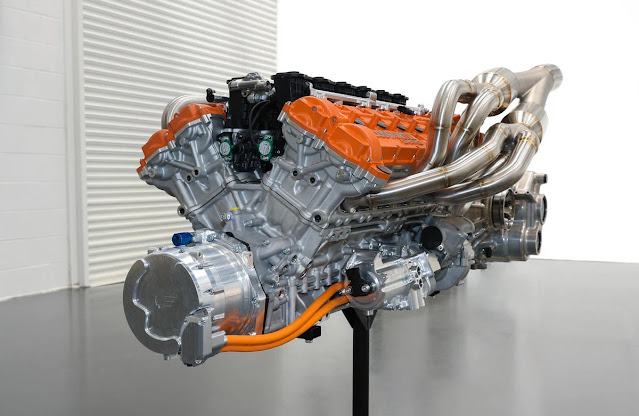
Internal Combustion Engines held the largest market share in 2024. Their established infrastructure, cost-effectiveness, high-power capabilities, and broad applicability continue to support their market position.
ICE engines remain widely used in automotive, industrial, marine, construction, mining, logistics, and power-generation applications.
By End-User
The market covers Power Generation, Marines, Locomotives, Mining, Oil & Gas, Construction, and Others.
Power generation continues to represent an important application because engine-based generators can provide electricity in remote locations and serve as backup power sources.
Construction and mining also depend on high-performance engines for heavy equipment operating in demanding environments.
Competitive Analysis
The Global Engines Market includes established manufacturers and technology companies serving automotive, industrial, marine, construction, mining, power-generation, and other applications.
[Caterpillar Inc.]
Caterpillar is a major participant in heavy equipment and power systems. Its engine-related portfolio supports applications across construction, mining, industrial operations, and power generation.
[Wärtsilä Corporation]
Wärtsilä operates across marine and energy applications, with technologies focused on power generation, propulsion, efficiency, and operational performance.
[Cummins Inc.]
Cummins provides power technologies and engines serving transportation, industrial, construction, mining, and power-generation applications.
[MAN Energy Solutions]
MAN Energy Solutions is active in marine, industrial, and energy applications, including large-scale engine and propulsion technologies.
[Siemens Energy AG]
Siemens Energy operates across energy technologies and supports power-generation applications where advanced engine and energy systems can be relevant.
[Mitsubishi Heavy Industries Ltd.]
Mitsubishi Heavy Industries participates across industrial, energy, transportation, and heavy-engineering applications.
[Kawasaki Heavy Industries Ltd.]
Kawasaki Heavy Industries operates across multiple industrial sectors, including transportation, energy, aerospace, and heavy machinery.
Future Outlook
The future of the Global Engines Market Size is expected to be shaped by the combination of conventional engine technologies, digitalization, hybrid systems, alternative fuels, and increasingly stringent environmental requirements.
Internal combustion engines are expected to remain relevant across several heavy-duty applications because of their established infrastructure, operating range, power capabilities, and suitability for demanding environments.
At the same time, manufacturers are expected to continue investing in technologies that improve fuel efficiency and reduce emissions. Hybrid powertrains, biofuels, synthetic fuels, hydrogen-related technologies, advanced combustion systems, and intelligent engine management can contribute to the industry's ongoing transformation.
Digital technologies are also expected to become more deeply integrated into engine operations. AI, IoT sensors, predictive analytics, remote diagnostics, and digital twins can help operators improve maintenance planning, reduce downtime, and optimize engine performance.
Asia Pacific is expected to remain an important growth region because of industrialization, automotive production, infrastructure expansion, construction activity, and growing demand for power-generation and transportation solutions.
Benefits of the Research Report
The Global Engines Market research report provides valuable insights for manufacturers, investors, technology companies, suppliers, policymakers, and other industry stakeholders.
Provides detailed Global Engines Market size and forecast through 2031.
Examines major factors influencing market growth.
Provides segmentation analysis by speed type and power rating.
Analyzes the market by engine type and end-user application.
Identifies key regional growth patterns and opportunities.
Highlights emerging trends such as AI, IoT, predictive maintenance, and digital twins.
Provides an overview of the competitive landscape and major companies.
Supports strategic planning for product development and market expansion.
Helps businesses understand changing demand for efficient and low-emission engines.
Provides insights into future opportunities associated with hybrid and alternative-fuel technologies.
Frequently Asked Questions (FAQs)
1. What is the projected size of the Global Engines Market by 2031?
The Global Engines Market is projected to reach USD 262.28 Billion by 2031, increasing from USD 210.18 Billion in 2025.
2. What is the CAGR of the Global Engines Market?
The Global Engines Market is expected to register a CAGR of 3.76% during the forecast period from 2025 to 2031.
3. Which engine type held the largest market share in 2024?
The Internal Combustion Engine segment held the largest market share in the Global Engines Market by type in 2024.
4. Which region is the fastest-growing market for engines?
Asia Pacific is identified as the fastest-growing regional market, supported by industrialization, automotive production, infrastructure development, and increasing demand for advanced power solutions.
Comments
Log in or sign up to join the conversation.