

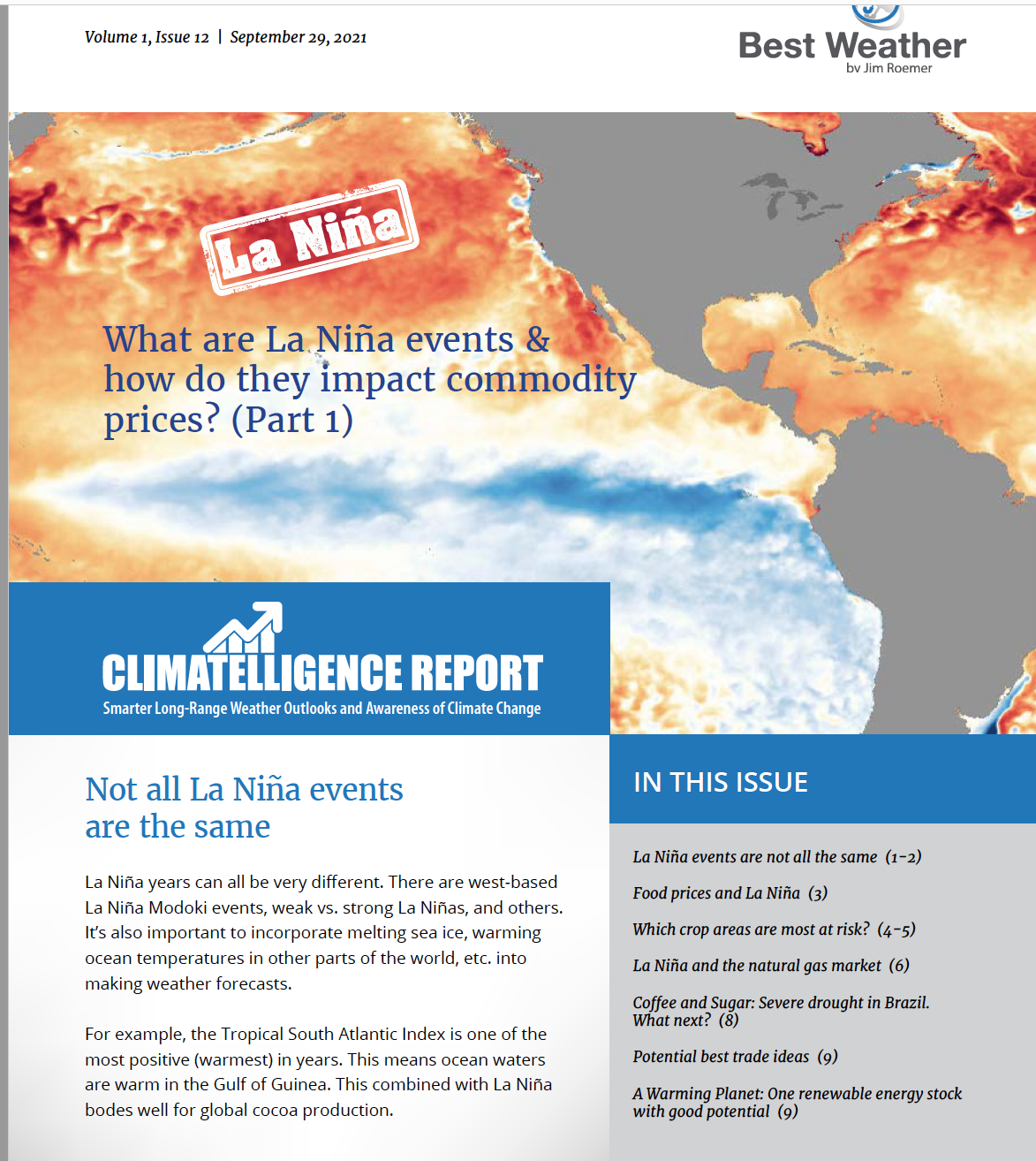
The excerpt from my CLIMATELLIGENCE newsletter above discusses how critical the weather will be for soft and grain commodities from a developing La Nina. It also discusses some trade ideas, as I have some very important updates with respect to South American weather and potential big changes in their drought. But let's discuss the natural gas market for a moment.
The mammoth rally in natural gas prices (UNG) (until the last couple of days) was due to the following: A) Strong LNG exports and incredibly tight supplies in China and Europe; B) The hottest summer on record for the U.S. increasing demand and keeping natural gas stocks, well below the 5-year average; C) The historical drought out west has meant less hydro power available. This caused a switch to natural gas.
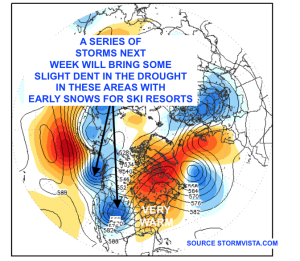
However, notice how some major rains and snows will be hitting the west deeper into October. Historically, if we do not have sustained cold weather to remind traders of winter in October, natural gas prices often fall. This is what happened the last two days. Big early season snows will hit some ski resorts from Colorado to Utah next week. But the late fall will be exceptionally warm for much of the country. Will it continue and how will winter fare?
First of all, the price collapse in natural gas may have been too far too fast given winter has not even started yet and natural gas supplies are extremely tight. This year, more than many in the past 10, weather in Europe and Asia will also influence prices, greatly.
This is what normally happens with La Nina. Cold north and into western Canada and warm in the south and parts of the east. However, not all La Nina events are the same and any little cold scare will send prices soaring.
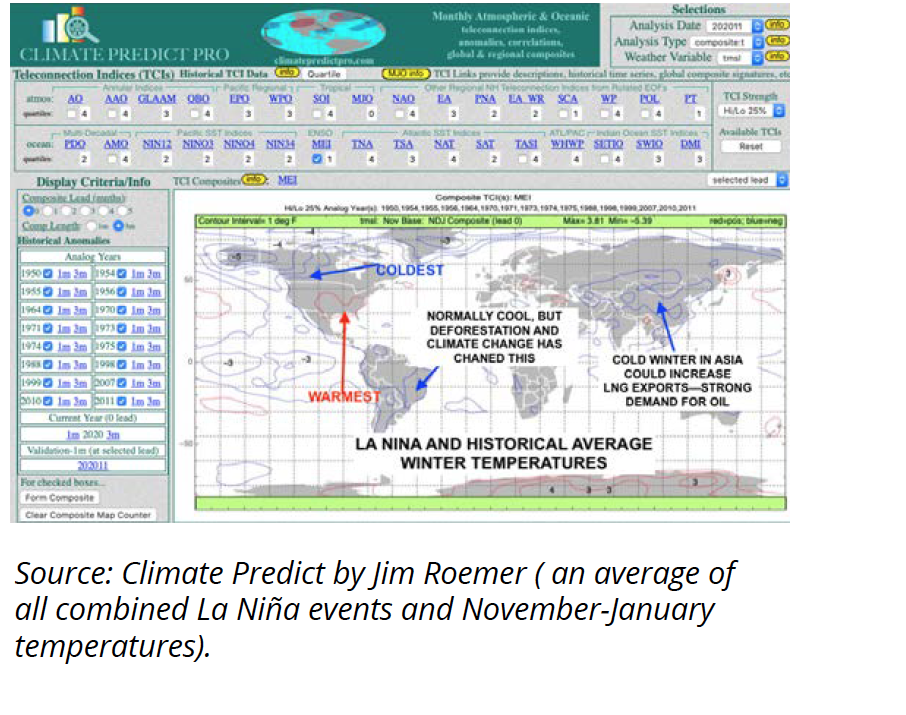
With close scrutiny of my weather model above, one can see all of the La Nina year events since 1950. Some of these years were actually extremely cold, but on average, we had a warm winter over most of the U.S. natural gas regions.
When making a long-range winter forecast, I also look at something I coined--"Weather Weirdos." A Weather Weirdo is a strange weather event. This year, there have been many--A) The historic drought in the western U.S. and Brazil, simultaneously; B) The drought for the northern Plains oats and spring wheat belt, which has helped prices soar; C) Another active hurricane season and record east coast (New York City), flooding.
Interestingly, the analog year of 2010-2011 seems to exhibit many "Weather Weirdo" type of tendencies. Remember hurricane Sandy in New York? How about the similar droughts to Russian spring wheat? That winter went on to be extremely cold for the U.S. and parts of Europe. It was also a La Nina winter!
CONCLUSION:
So does this mean one buys natural gas on expectations of a cold winter? Not so fast. Climate Change and yet other weather forecast techniques will at least be as important to the global winter outlook as La Nina. The first signs I see of extended cold weather (if we do), I will make recommendations to clients to trade certain long option strategies in natural gas, or even heating oil spreads. However, for now, the premium in natural gas options are to hefty and built up, that if we have a warm early winter, selling out of the money call options may make sense down the road.


Comments
Log in or sign up to join the conversation.