
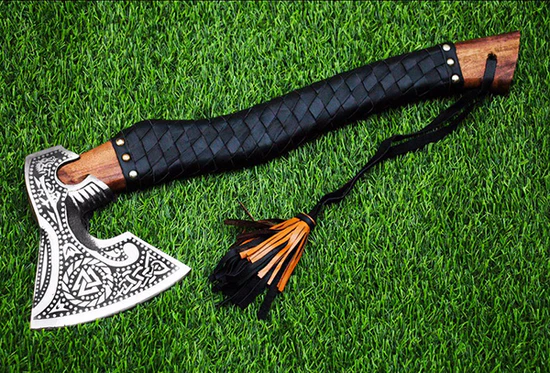
The Viking axe was more than just a weapon—it was an essential tool used for building, farming, hunting, and warfare. Its effectiveness came not only from its design but also from the skill of the blacksmiths who crafted it. Through a combination of quality materials, practical forging techniques, and careful craftsmanship, Viking axe smiths created axes that were both durable and versatile.
Materials Used in Viking Axes
The primary material used for Viking axe heads was iron. During the Viking Age, iron was produced from bog ore and smelted in small furnaces. Because steel was more difficult and expensive to make, most axe heads were forged from iron with a steel edge added to improve sharpness and durability.
The handles were usually made from strong hardwoods such as ash, oak, or birch. These woods provided the strength needed to withstand heavy use while remaining flexible enough to absorb the shock of impact.
The Forging Process
Creating a Viking axe required considerable skill. The blacksmith first heated a piece of iron in a charcoal-fired forge until it became soft enough to shape. Using hammers and anvils, the metal was formed into the desired Norse axe shape.
A hole, known as the eye, was created to hold the wooden handle. The blade was then carefully shaped and thinned to achieve the proper balance between weight and cutting ability.
To improve performance, many smiths forge-welded a strip of high-carbon steel onto the cutting edge. This process combined the toughness of iron with the hardness of steel, producing an axe that could hold a sharp edge while resisting breakage.
Finishing and Craftsmanship
After forging, the blade was sharpened and heat-treated to increase its strength. The wooden handle was carved to fit securely into the axe head and often shaped for a comfortable grip.
Some axes were simple working tools, while others featured decorative engravings or metal inlays. Wealthy warriors and chieftains sometimes owned finely crafted axes that reflected their status and skill in battle.
Conclusion
The quality of Viking axes was the result of skilled craftsmanship and practical design. By combining iron, steel, and durable hardwoods, Viking axe for sale blacksmiths created tools and weapons capable of handling everyday tasks as well as the demands of warfare. Their techniques helped make the Viking axe one of the most effective and enduring symbols of the Viking Age.
Comments
Log in or sign up to join the conversation.