
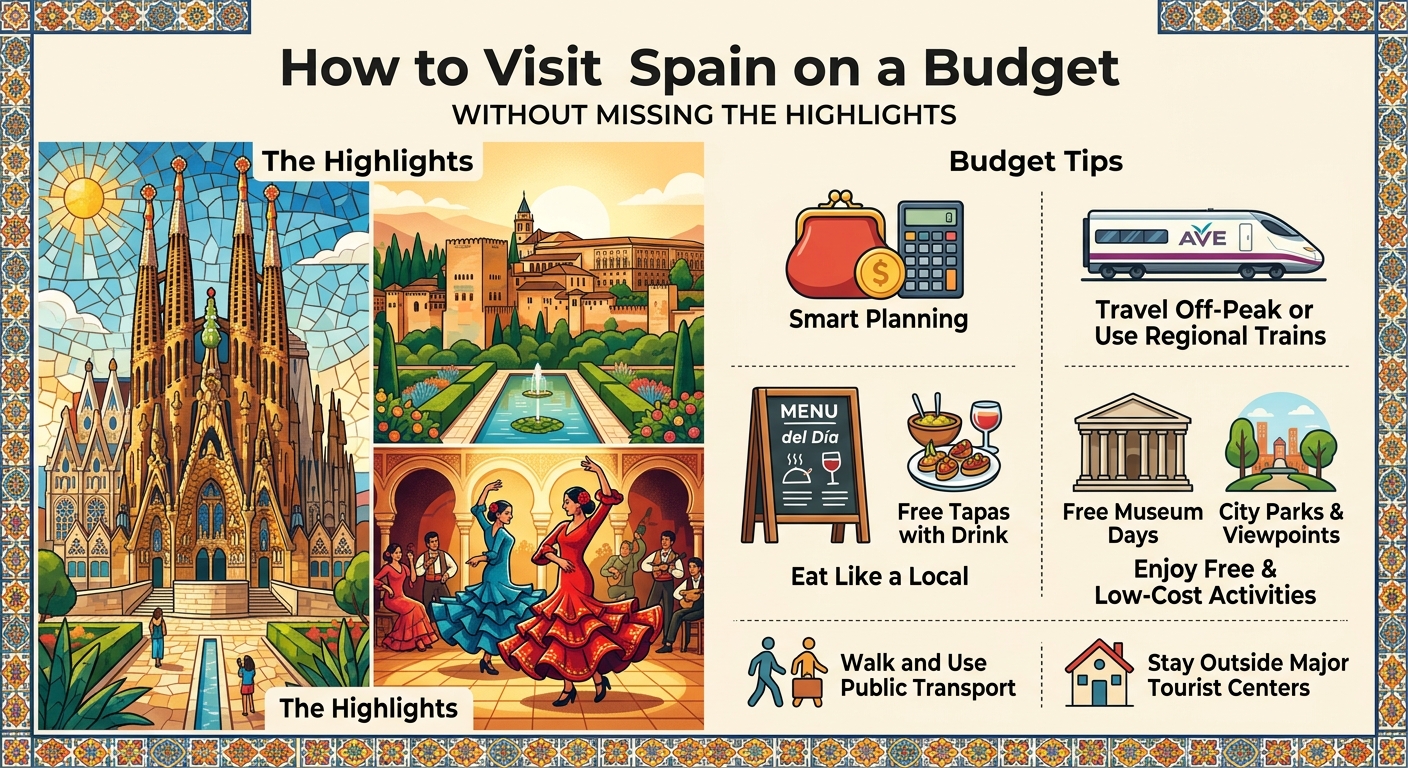
Spain has a reputation as one of Western Europe's more affordable destinations, and for the most part that holds up — but costs vary significantly depending on which cities and regions make it onto the itinerary. Here's how to keep a Spain trip affordable without sacrificing the experience.
Choosing Cities Matters More Than People Expect
Madrid and Barcelona, Spain's two biggest draws, also carry the highest prices for lodging and dining. Smaller cities and secondary destinations often deliver comparably strong experiences at a noticeably lower cost. Best Cities to Visit in Spain breaks down what each city is actually known for, which makes it easier to build an itinerary around less expensive destinations without missing the experiences that matter most.
Where Budget Travelers Save the Most
Food: Skipping sit-down restaurant lunches in favor of markets and bakeries can cut daily food costs substantially. Many bars also offer free tapas with a drink order, particularly in Granada — ordering a beer or wine effectively becomes a cheap meal.
Lodging: Hostels and budget guesthouses in Spain tend to be well-reviewed and centrally located, unlike some countries where budget lodging means a long commute. Booking a few weeks ahead, rather than last-minute, typically secures noticeably better rates.
Transportation: Spain's regional bus networks (ALSA being the largest) are significantly cheaper than the high-speed AVE trains, and for shorter regional hops the time difference is often minor.
Free and Low-Cost Activities
Many of Spain's major museums offer free entry during specific hours or days — the Prado in Madrid and the Reina Sofía both have free evening windows several days a week. Simply walking through historic neighborhoods, plazas, and markets costs nothing and often delivers as much atmosphere as paid attractions.
A Sample Budget Day
Morning: Free walking tour (tip-based) through the historic center
Lunch: Market food stall or bakery instead of a restaurant
Afternoon: Free museum entry window or a low-cost cultural site
Evening: Tapas bar with a drink-inclusive small plate
Seasonal Timing for Savings
Traveling during shoulder season (April–May or September–October) offers a double benefit: lower prices on flights and lodging compared to peak summer, plus more comfortable weather for walking-heavy sightseeing days.
Final Thought
A budget-conscious Spain trip doesn't mean a lesser one — smart city selection, market-based eating, and free museum windows can cut costs substantially without cutting the experience short. Travel resources like ToperNews regularly cover destination-specific budget breakdowns like this one, useful for comparing cost-saving strategies across different countries.
Comments
Log in or sign up to join the conversation.