
Overthinking can quietly damage even the healthiest relationships. A delayed text, a change in tone, or a small misunderstanding can quickly spiral into anxiety, self-doubt, and emotional exhaustion. If you constantly analyze conversations, fear rejection, or imagine worst-case scenarios, you may be struggling with relationship anxiety.
The good news is that overthinking is a habit, not a permanent personality trait. With awareness and consistent emotional practices, you can train your mind to feel calmer, safer, and more secure in your relationships.
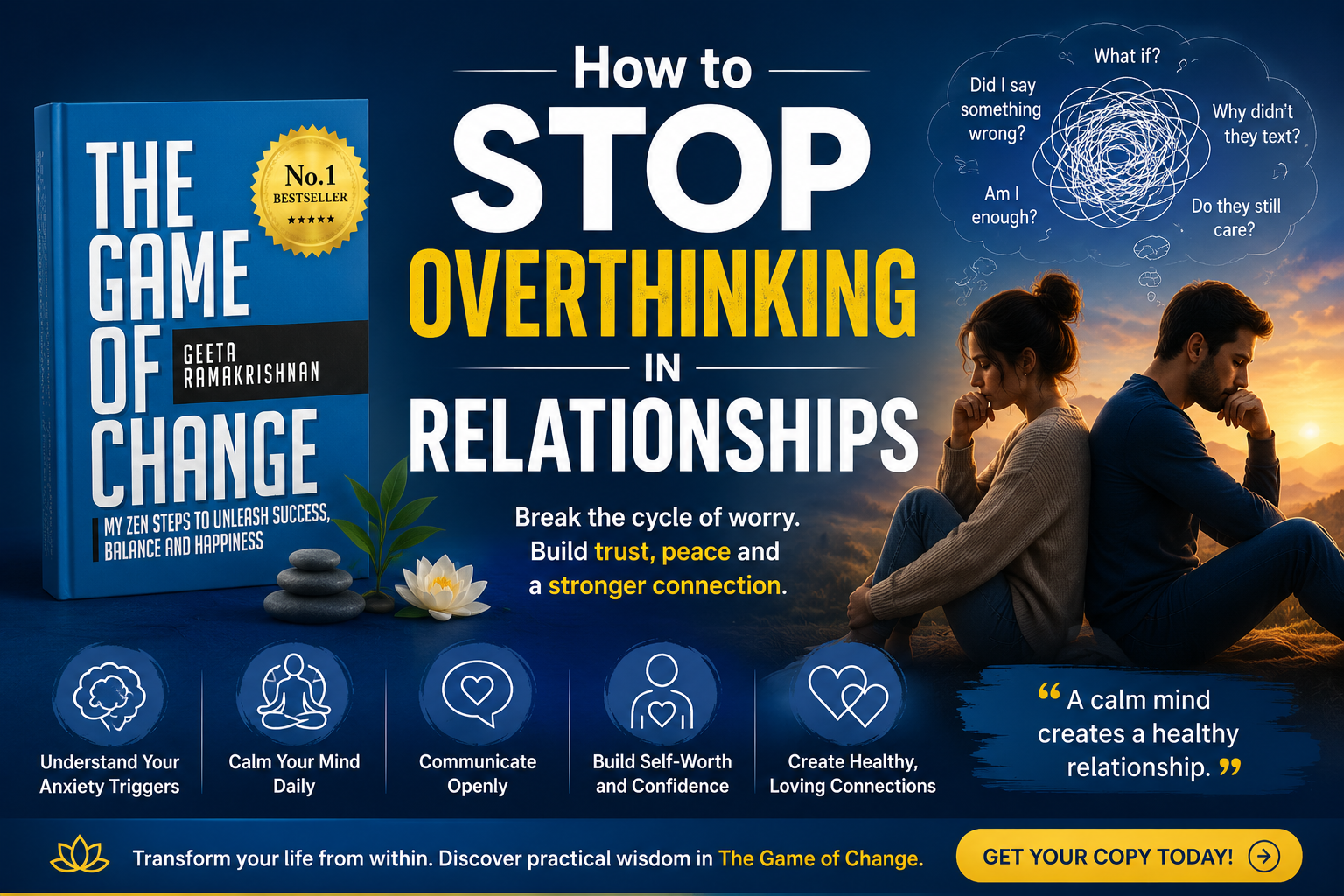
Why We Overthink in Relationships
Relationship overthinking often comes from fear—fear of rejection, abandonment, betrayal, or not being enough. According to mental health research, anxiety activates the brain’s threat response, making the mind search for problems even when there is no real danger.
This can lead to:
Replaying conversations repeatedly
Seeking constant reassurance
Misinterpreting small behaviors
Feeling emotionally overwhelmed
Struggling to trust your partner
If these patterns feel familiar, understanding relationship anxiety can help you identify the emotional triggers behind your thoughts.
1. Pause Before Reacting
Overthinking often creates emotional reactions based on assumptions instead of facts. Before responding impulsively, pause and ask yourself:
“Do I have evidence for this fear?”
“Am I reacting from anxiety or reality?”
This simple habit can prevent unnecessary conflict and emotional stress.
2. Calm Your Nervous System
An anxious mind needs calming, not constant analysis. Practices such as deep breathing, mindfulness, journaling, and physical movement help regulate stress responses.
Building habits that calm an anxious mind can improve emotional stability and reduce repetitive negative thinking.
3. Stop Seeking Constant Reassurance
While reassurance may provide temporary comfort, depending on it too often can strengthen anxiety over time. Emotional security grows when you learn to trust yourself instead of constantly searching for validation.
4. Focus on Communication, Not Assumptions
Healthy relationships rely on honest communication, not mind-reading. Instead of assuming the worst, express your feelings calmly and clearly.
Open conversations reduce misunderstandings and strengthen emotional connection.
5. Practice Daily Anxiety Reduction
Managing relationship anxiety also requires caring for your overall mental health. Exercise, sle
Comments
Log in or sign up to join the conversation.