
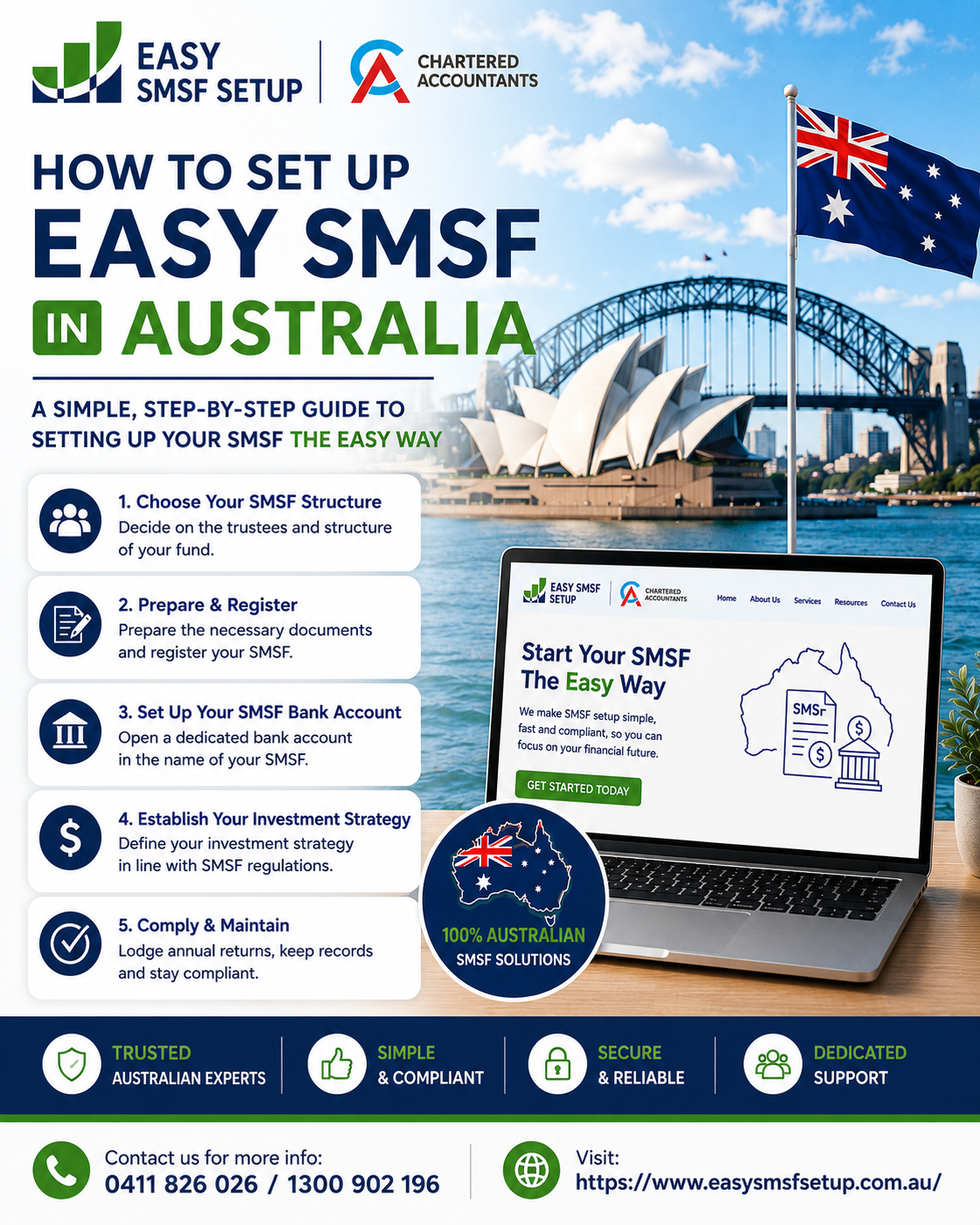
Planning for a secure financial future requires smart decisions, and many Australians are choosing a Self-Managed Super Fund (SMSF) to gain greater control over their retirement savings. If you are wondering how to set up SMSF in Australia, understanding the process and compliance requirements is essential.
What is an SMSF?
A Self-Managed Super Fund (SMSF) is a private superannuation fund that allows up to six members to manage their own retirement investments. Unlike traditional super funds, SMSFs give trustees greater flexibility and control over investment decisions.
Benefits of Setting Up an SMSF
An SMSF offers several advantages, including:
Greater control over investment choices
Flexibility to invest in property, shares, and managed funds
Potential tax benefits
Ability to tailor retirement planning strategies
Opportunity to manage family wealth more effectively
However, with these benefits come legal and compliance responsibilities.
How to Set Up SMSF in Australia
The process generally involves the following steps:
1. Establish the SMSF Structure
Choose whether your fund will have:
Individual trustees, or
A corporate trustee.
Many professionals recommend a corporate trustee structure for improved flexibility and administration.
2. Prepare the Trust Deed
The trust deed outlines how the SMSF will operate and forms the legal foundation of the fund.
3. Appoint Trustees and Obtain Consent
Every trustee must understand and accept their legal obligations under Australian superannuation law.
4. Register with the ATO
The SMSF must be registered with the Australian Taxation Office (ATO) and obtain an Australian Business Number (ABN) and Tax File Number (TFN).
5. Open a Dedicated Bank Account
A separate bank account is required to manage fund transactions and member contributions.
6. Develop an Investment Strategy
Trustees are legally required to create and regularly review an investment strategy that reflects the objectives of the fund.
Ongoing SMSF Compliance
Managing an SMSF does not end after setup. Trustees must also meet annual obligations, including:
Financial statements
Income tax returns
Independent SMSF audits
Record keeping
Regulatory compliance
Failure to meet these obligations may result in penalties.
Why Professional SMSF Administration Matters
Many trustees prefer professional assistance to reduce administrative burdens and ensure compliance with changing regulations.
A specialist SMSF administration provider can assist with:
SMSF establishment
Corporate trustee setup
Annual accounts preparation
Tax return lodgement
Independent audit coordination
Ongoing compliance support
Choosing the Right SMSF Partner
When selecting an SMSF service provider, consider:
Industry experience
Transparent pricing
Secure online document management
Responsive customer support
Independent audit processes
Professional support can help trustees focus on long-term financial goals while meeting statutory obligations.
Final Thoughts
Understanding how to set up SMSF in Australia is the first step towards taking greater control of your retirement planning. While an SMSF offers flexibility and investment opportunities, it also requires careful administration and ongoing compliance.
For trustees seeking professional SMSF setup and administration support, Easy SMSF Setup provides assistance with fund establishment, compliance management, annual financial statements, tax returns, and independent audit coordination across Australia.
Learn more about SMSF setup and administration services at:
https://www.easysmsfsetup.com.au/
Comments
Log in or sign up to join the conversation.