
Macarons have a magic to them. They're delicate, colorful, and just a little fancy. People love giving them as gifts, serving them at parties, and treating themselves on a quiet afternoon. That love is exactly why selling macarons online can be such a rewarding business. But here's the honest truth: making beautiful macarons is only half the job. Selling them well online takes planning, smart packaging, and a real understanding of your customers.
I've worked with bakers and small food brands long enough to know what separates a hobby from a thriving shop. This guide walks you through everything, step by step, in plain language. By the end, you'll know how to pick your niche, price your products, ship fragile treats safely, and build a brand people come back to again and again.
Let's get into it.
Why Selling Macarons Online Works So Well
Before the how, let's talk about the why. Macarons sell beautifully online for a few simple reasons:
They're a "treat" purchase. People buy them for celebrations, gifts, and small luxuries, so they're happy to pay a premium.
They photograph incredibly well. Their bright colors and clean shapes are made for social media.
They travel reasonably well when packed right. Unlike cakes, they're sturdy enough to ship if you prepare carefully.
They have strong gifting potential. Custom flavors and pretty boxes make them perfect presents.
This combination means you can build a loyal customer base without needing a physical storefront. But success depends on getting the details right.
Step 1: Choose a Clear Niche
Trying to be everything to everyone is a common trap. A focused niche helps you stand out, attract the right buyers, and charge what your work is worth.
Here are a few directions you might choose:
Luxury gifting macarons with elegant packaging and premium flavors
Custom event macarons for weddings, birthdays, and corporate orders
Dietary-friendly macarons such as vegan, dairy-free, or lower-sugar options
Seasonal and themed collections tied to holidays and trends
Subscription boxes delivering fresh flavors monthly
Pick a lane that fits your skills and your local market. A clear niche makes your marketing simpler and your brand more memorable.
How to Test a Niche Before Committing
You don't have to guess. Try these quick checks:
Search social media for hashtags in your niche to see demand.
Offer a small batch to friends, coworkers, and local groups.
Ask buyers what they'd pay and why they chose you.
Watch which flavors and styles sell out fastest.
Real feedback beats assumptions every time.
Step 2: Nail Your Product Quality First
No amount of marketing can rescue a bad macaron. Quality is the foundation of your entire business. Customers notice the smooth shells, the gentle "foot" at the base, the chewy center, and the balanced filling.
Focus on consistency. A great macaron once is luck. A great macaron every single time is a business.
Tips that make a real difference:
Weigh your ingredients instead of using cups for reliable results.
Age your egg whites and master your macaronage (folding) technique.
Control humidity in your kitchen, since moisture ruins shells.
Keep flavor notes so every batch tastes the same.
Test shelf life so you know how long they stay fresh.
Quality also builds trust, which is the heart of any food business. When people know your product is reliable, they reorder and recommend you.
Step 3: Build a Brand People Remember
Your brand is more than a logo. It's the feeling people get when they think of you. For macarons, that feeling should match your niche, whether that's playful, elegant, or wholesome.
Strong branding includes:
A clear name that's easy to spell and search
A consistent color palette that shows up on your site, packaging, and social media
A simple logo that looks good small (think phone screens and stickers)
A brand voice that sounds like a real person, not a corporate robot
A story that explains why you started and what makes you different
People connect with people. Share your journey, your kitchen, and your passion. That authenticity is part of what makes small food brands so lovable.
Step 4: Price for Profit, Not Just Sales
Underpricing is one of the fastest ways to burn out. Many new sellers price just above their ingredient cost and forget everything else. Real pricing covers all your costs plus a healthy profit.
Here's a simple breakdown of what your price should include:
Cost Category | Examples | Often Forgotten? |
|---|---|---|
Ingredients | Almond flour, sugar, eggs, fillings | No |
Packaging | Boxes, inserts, labels, ribbon | Sometimes |
Labor | Your time mixing, baking, packing | Very often |
Overhead | Electricity, equipment, kitchen rent | Often |
Shipping supplies | Mailers, ice packs, padding | Often |
Marketing | Ads, samples, photography | Often |
Profit margin | Money to grow and pay yourself | Very often |
A common approach is to add up your total cost per unit, then multiply by 2.5 to 3 for retail pricing. This gives room for discounts, waste, and growth.
Don't Be Afraid to Charge More
Macarons are a premium product. Customers expect to pay more than they would for a basic cookie. If your quality and presentation are excellent, confident pricing signals value. Cheap pricing can actually make people doubt your product.
Step 5: Packaging That Protects and Delights
Packaging does two jobs at once. It keeps fragile macarons safe, and it creates that exciting "unboxing" moment that customers love to share. Get both right and your packaging becomes free marketing.
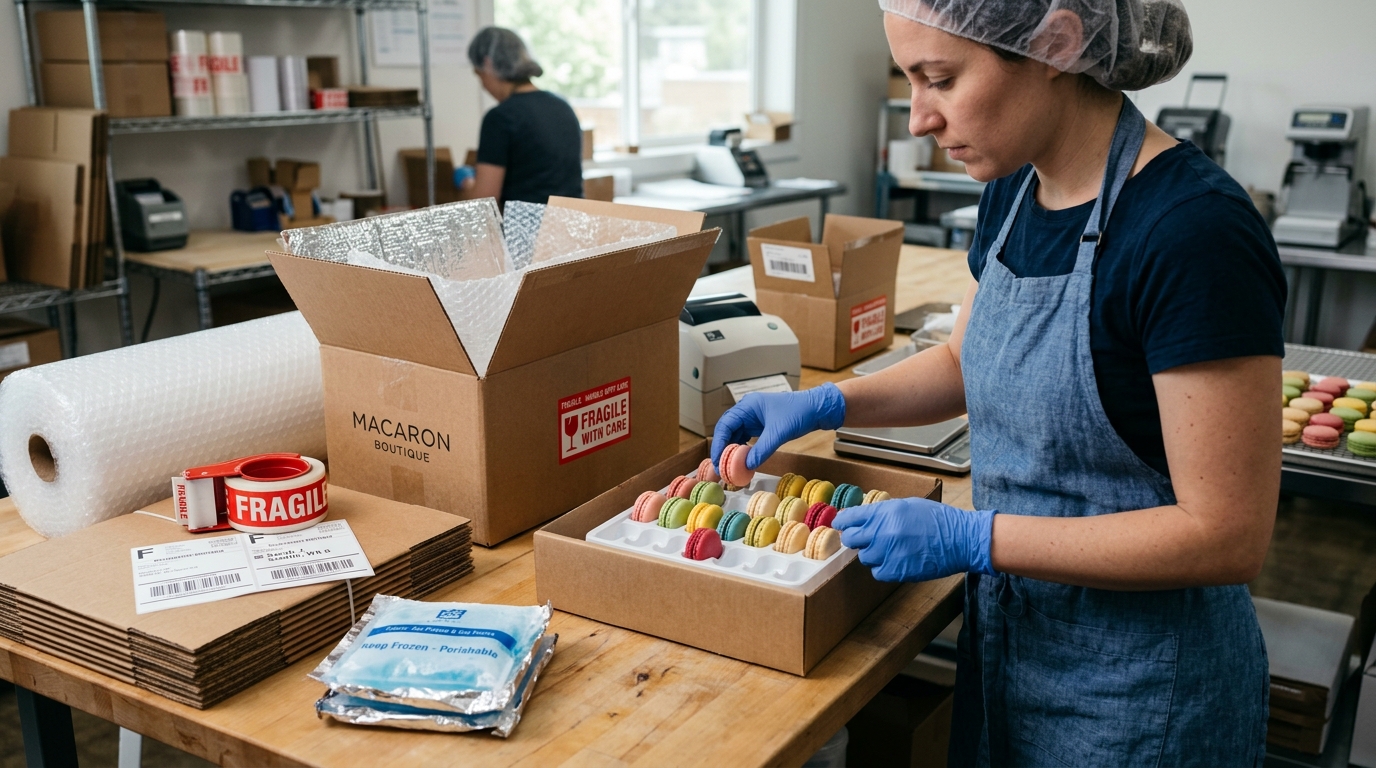
Good macaron packaging usually includes:
A sturdy outer box that resists crushing
Fitted inserts or trays that hold each macaron in place
Branded touches like tissue paper, stickers, or thank-you cards
Clear labeling with flavors, ingredients, and allergens
When you're ready to buy in bulk, sourcing Macaron Boxes Wholesale can dramatically lower your per-unit cost and keep your branding consistent across every order. Buying in larger quantities also means you're less likely to run out during busy seasons.
Think of packaging as part of the product experience, not an afterthought. A beautiful box turns a simple treat into a gift worth remembering.
Step 6: Handle Legal and Food Safety the Right Way
This part isn't glamorous, but it protects your business and your customers. Skipping it can lead to fines or worse, harm to someone's health.
While rules vary by location, most regions require some of the following:
A food business license or registration
Compliance with cottage food laws if you bake from home
A food handler or safety certificate
Proper allergen labeling (almonds, eggs, dairy, etc.)
Liability insurance for added protection
Clean, inspected kitchen standards
Always check your local health department's requirements before you sell. Being transparent about ingredients and handling builds trust and keeps you on the right side of the law.
Allergen Honesty Matters
Macarons contain almonds and eggs, which are common allergens. Be crystal clear about what's in your products and whether they're made in a shared kitchen. Honesty here isn't just ethical, it's essential for safety.
Step 7: Ship Fragile Macarons Without Disaster
Shipping is where many macaron sellers struggle. These treats are delicate and sensitive to heat and movement. But with the right method, you can ship them across the country successfully.
Here's a reliable shipping approach:
Element | Best Practice | Why It Matters |
|---|---|---|
Inner packaging | Fitted trays holding each macaron | Stops shifting and cracking |
Cushioning | Bubble wrap or padding around the box | Absorbs shocks |
Temperature control | Ice packs in warm weather | Prevents melting fillings |
Outer box | Strong corrugated mailer | Protects against crushing |
Speed | 1–2 day shipping when possible | Keeps macarons fresh |
Labeling | "Fragile" and "This side up" | Encourages careful handling |
A few extra tips from experience:
Ship early in the week so packages don't sit in a warehouse over the weekend.
Freeze macarons before shipping if your recipe allows, since they're sturdier when cold.
Test your packaging by mailing a box to yourself first.
Reliable shipping protects your reputation. One smashed order can turn into a bad review, so it's worth investing time here.
Step 8: Set Up Your Online Store
Now let's get you selling. You have a few solid options depending on your budget and goals:
Hosted platforms like Shopify or Square Online are beginner-friendly and quick to launch.
Marketplaces like Etsy give you built-in traffic but charge fees.
Social shops on Instagram and Facebook let you sell where people already scroll.
Your own website offers full control and stronger branding.
For most new sellers, starting with a simple hosted store or marketplace makes sense. You can always grow into a custom site later.
Make Buying Easy
Whatever platform you choose, keep the buying process smooth:
Use clear product titles and descriptions
Show prices, flavors, and quantities upfront
Offer secure, familiar payment options
Display shipping times and costs early
Make your site mobile-friendly
Every extra click or moment of confusion costs you sales. Simplicity wins.
Step 9: Take Photos That Sell
People eat with their eyes first, and online they can only eat with their eyes. Great photos can be the difference between a scroll-past and a sale.
You don't need fancy gear. A smartphone and good light go a long way. Try these basics:
Use natural light near a window for soft, even tones.
Keep backgrounds simple so the macarons stand out.
Show scale and texture with close-ups.
Capture the colors accurately without heavy filters.
Include lifestyle shots like a hand holding a box or a styled table.
Show your macarons from a few angles, and always include at least one photo of your packaging. Buyers want to know what will actually arrive at their door.
Step 10: Use Content Marketing to Build Authority
Content marketing means sharing helpful, interesting posts that draw people to your brand. It builds trust and keeps you top of mind, even when people aren't ready to buy yet.

Ideas that work well for macaron sellers:
Behind-the-scenes baking videos
Flavor inspiration and pairing tips
Gift guides for holidays and events
Customer stories and reviews
Simple "how it's made" posts
Content shows your expertise and your personality. Over time, it positions you as the go-to macaron expert in your niche, which is exactly the kind of authority that earns loyal customers.
Step 11: Learn SEO Basics
Search engine optimization (SEO) helps people find your shop when they search online. You don't need to be a tech wizard. A few basics make a real difference.
Start with these:
Use keywords naturally in titles, descriptions, and blog posts (like "vegan macarons online" or "macaron gift box").
Write clear product descriptions that answer common questions.
Add alt text to your images describing what they show.
Create helpful blog content that targets what your buyers search for.
Earn links by partnering with food bloggers and local sites.
SEO is a slow but steady source of free traffic. The earlier you start, the better your results over time.
Step 12: Win With Social Media
Social media and macarons are a perfect match. Visual platforms let your products shine and help you connect directly with buyers.
Tips for steady growth:
Post consistently rather than in random bursts.
Use short videos to show texture, color, and packaging.
Engage with comments and messages quickly.
Partner with local micro-influencers for honest reviews.
Use relevant hashtags to reach new audiences.
Focus on one or two platforms you can manage well, rather than spreading yourself thin. Quality and consistency beat being everywhere at once.
Step 13: Try Paid Ads Carefully
Paid ads can speed up your growth, but only when your foundation is strong. If your product, photos, and store are ready, ads can bring new customers fast.
A smart approach:
Start with a small budget to test what works.
Target your ideal customer by location, interests, and occasions.
Promote your best-selling products rather than everything at once.
Track results so you know what's actually paying off.
Retarget visitors who viewed your store but didn't buy.
Don't pour money into ads before your store is converting visitors into buyers. Fix the leaks first, then turn up the traffic.
Step 14: Keep Customers Coming Back
Getting a new customer is great. Keeping them is even better, because repeat buyers are cheaper to reach and spend more over time.
Retention strategies that work:
Include a thank-you note in every order.
Offer a discount on the next purchase.
Start a loyalty or rewards program.
Send email updates about new flavors and seasonal boxes.
Ask for reviews and respond to feedback.
Surprise loyal buyers with a free macaron now and then.
Small, thoughtful touches build emotional connections. People remember how you made them feel, and they come back for more.
Step 15: Avoid These Common Mistakes
Learning from others' mistakes saves you time and money. Here are the slip-ups I see most often:
Underpricing and working for almost nothing
Skipping proper packaging and shipping smashed orders
Ignoring food safety rules
Posting inconsistent or low-quality photos
Trying every platform at once and burning out
Promising delivery times you can't keep
Not tracking costs and profit
Avoiding these alone puts you ahead of many sellers. Slow down, plan ahead, and protect your reputation.
Step 16: Scale Your Business Smartly
Once orders are steady and your systems work, you can think about growing. Scaling too early can crush you, so wait until your basics are solid.
Ways to grow:
Add new product lines like gift sets or seasonal collections.
Offer wholesale to cafes and gift shops.
Hire help for baking, packing, or social media.
Upgrade your kitchen or move to a commercial space.
Automate orders and emails to save time.
Expand shipping areas as your packaging proves reliable.
As you scale, packaging consistency becomes even more important. Working with a reliable Custom Packaging Manufacturer ensures your boxes look professional at higher volumes and reflect your brand at every step. Consistency builds trust, and trust drives growth.
Grow at a pace you can manage. Sustainable growth beats fast burnout every time.
Putting It All Together
Selling macarons online successfully comes down to a simple loop: make an excellent product, present it beautifully, ship it safely, and treat your customers well. Do that consistently, and word spreads. Add smart marketing, honest food safety practices, and confident pricing, and you've got a real business.
Start small, stay focused on your niche, and improve a little every week. You don't need to be perfect on day one. You just need to begin, learn from real feedback, and keep refining. The bakers who succeed aren't always the most talented. They're the ones who stay consistent, care about their customers, and treat every order like it matters.
Your macarons deserve to be loved by people far beyond your kitchen. With the steps in this guide, you have everything you need to get them there.
Frequently Asked Questions
How long do macarons stay fresh for shipping?
Most macarons stay fresh for about three to five days at room temperature and up to a week in the fridge. Many sellers freeze them, which can extend freshness for several weeks. Always ship as fast as possible so they arrive at their best.
Do I need a license to sell macarons from home?
In most areas, yes. Many regions allow home baking under cottage food laws but still require registration, food safety training, or inspections. Check your local health department before you start selling.
How much should I charge for macarons?
Add up all your costs, including ingredients, packaging, labor, and overhead, then multiply by about 2.5 to 3. Prices commonly range from $2 to $4 or more per macaron, depending on quality, flavors, and your market.
What's the best way to ship macarons in hot weather?
Use ice packs, insulated liners, and fast shipping options. Ship early in the week to avoid weekend delays, and consider pausing shipments during extreme heat to protect quality.
Which platform is best for beginners?
Hosted platforms like Shopify or marketplaces like Etsy are great starting points. They're easy to set up and help you start selling quickly. You can move to a fully custom website as you grow.
How do I get my first customers?
Start with friends, family, and local groups. Share high-quality photos on social media, offer samples to potential buyers, and ask happy customers for reviews and referrals. Word of mouth is powerful in the early days.
How do I keep macarons from breaking during delivery?
Use fitted trays that hold each macaron in place, cushion the inner box well, and choose a strong outer mailer. Label packages as fragile and test your packaging by shipping a box to yourself first.
Comments
Log in or sign up to join the conversation.