
Anxiety can feel like your brain is constantly scanning for danger. Even when life appears calm, your mind may race with worries, overthinking, and worst-case scenarios. The encouraging truth is that your brain is capable of change.
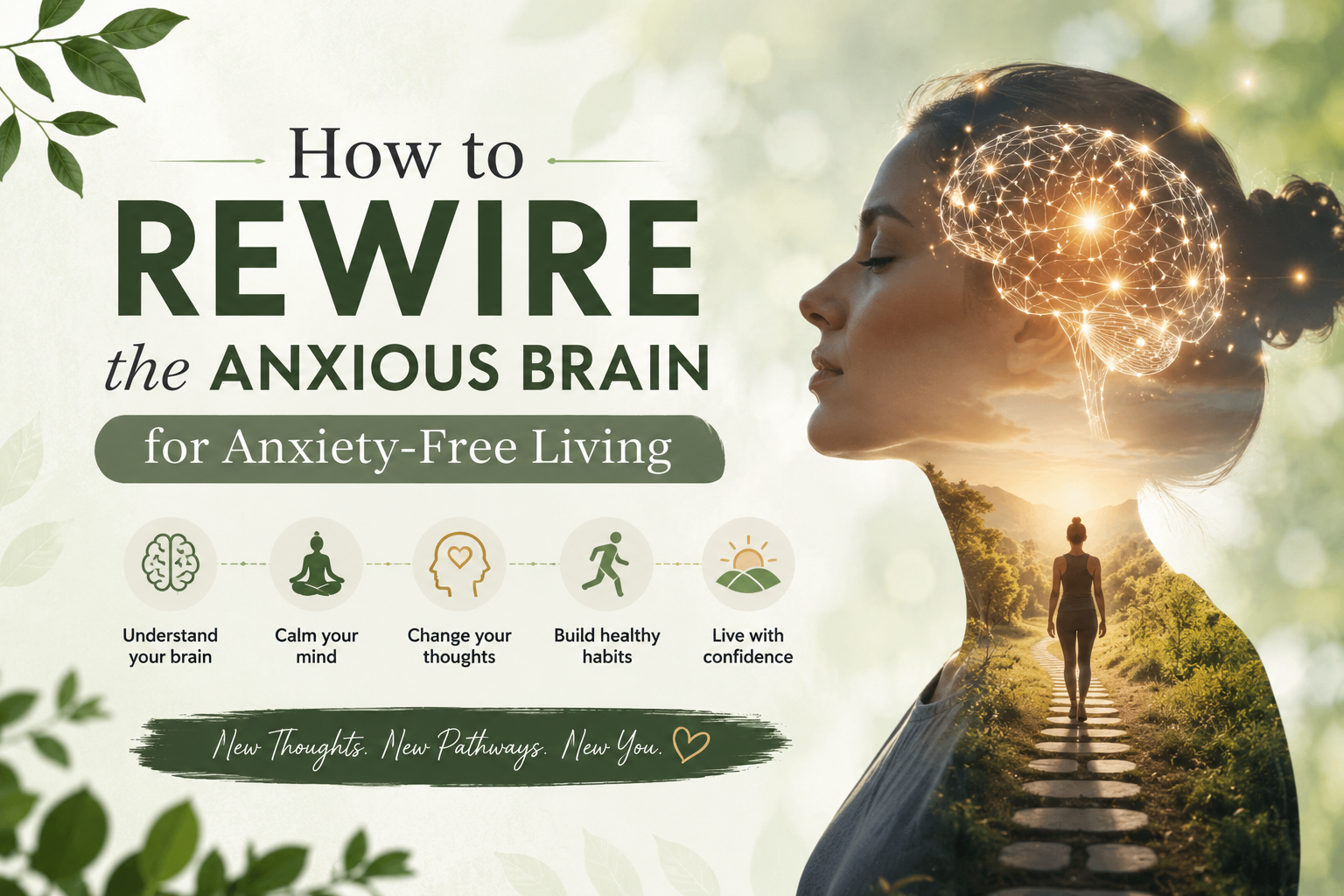
Thanks to neuroplasticity , the brain’s ability to form new neural pathways—you can rewire the anxious brain and move toward anxiety-free living. Research published in Nature Reviews Neuroscience confirms that repeated thoughts and behaviors reshape the brain over time. This means the habits that fuel anxiety can be replaced with healthier patterns that promote calm and resilience.
What Happens in the Anxious Brain?
When you experience anxiety, the amygdala—the brain’s fear center—becomes overactive. It sends signals that trigger a stress response, increasing heart rate, muscle tension, and racing thoughts.
Over time, chronic anxiety trains the brain to interpret harmless situations as threats. According to the World Health Organization, anxiety disorders affect more than 300 million people worldwide, making them among the most common mental health conditions.
The good news is that these patterns are learned, and learned patterns can be changed.
1. Practice Mindfulness Daily
Mindfulness helps retrain the brain to stay in the present moment instead of anticipating future problems.
Studies from Harvard University show that regular meditation can reduce activity in brain regions associated with stress and increase emotional regulation.
Even five to ten minutes of mindful breathing each day can begin the process of rewiring the anxious brain.
2. Challenge Anxious Thinking
Anxiety often thrives on distorted thoughts such as “Something bad will happen” or “I can’t handle this.”
Question these beliefs and replace them with balanced alternatives. This simple cognitive practice weakens fear-based pathways and strengthens more realistic thinking patterns.
3. Build Consistent Calming Habits
Daily routines create a sense of safety and predictability for the brain.
Simple habits such as exercise, journaling, deep breathing, and quality sleep are powerful tools for emotional regulation. If you are looking for a step-by-step approach, explore this guide on rewiring the anxious brain
4. Reduce Avoidance Behaviors
Avoiding situations that trigger anxiety may feel protective, but it reinforces fear. Gradual exposure teaches the brain that discomfort is manageable and temporary.
Each time you face a fear, your brain learns a new message: you are safe.
5. Focus on the Journey, Not Perfection
Healing anxiety is a process. Progress often comes in small but meaningful steps.
If you need encouragement and practical tools, this article on your journey to anxiety-free living offers valuable insights and support.
Lifestyle Habits That Support Brain Rewiring
To accelerate anxiety recovery:
Exercise for 20–30 minutes most days
Prioritize seven to nine hours of sleep
Limit caffeine and excessive screen time
Practice gratitude and self-compassion
Stay connected with supportive people
These habits strengthen neural pathways associated with calm and emotional resilience.
How Long Does It Take to Rewire the Brain?
Brain change takes time and repetition. Some people notice improvements within a few weeks, while deeper transformation may take several months. Consistency is more important than perfection.
Every calming habit you practice teaches your brain to respond with confidence instead of fear.
Ready to Transform Your Mind?
You do not have to live in survival mode. Anxiety can be unlearned, and your brain can be trained to feel safe again.
For practical strategies to create lasting change, explore Geeta’s inspiring book, The Game of Change.
👉https://coachingwithgeeta.com/book/
Your journey toward a calmer mind, emotional resilience, and anxiety-free living can begin today.
Comments
Log in or sign up to join the conversation.