
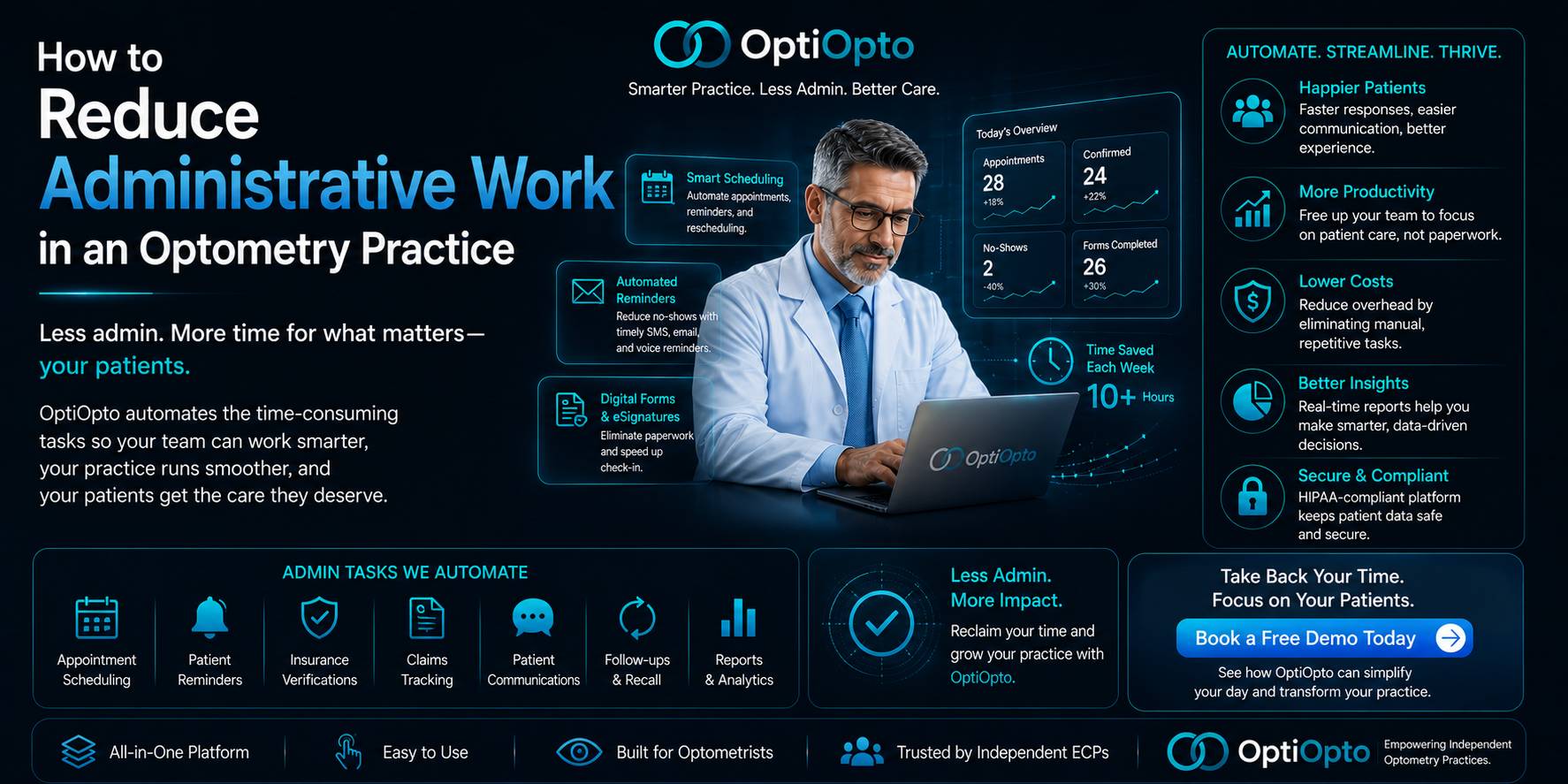
Running an optometry practice is more than just eye exams and patient care. Behind the scenes there are many administrative tasks that are necessary to keep everything running smoothly, such as scheduling appointments, billing, insurance claims, managing inventory, communicating with vendors, sending patient reminders, and much more.
These are essential tasks, but they can easily become too much. Many owners and staff are spending more time on paperwork and processes than they are with patients,” he said. The best news? With the right systems and tools in place you can make your practice much more efficient and profitable and reduce the administrative burden on you greatly. Visit OptiOpto for the best AI tools for eye care professionals.
Automate Repetitive Tasks
Automation is one of the easiest ways to cut down on admin work. Many daily chores are repetitive and don’t need to be manually attended to.
Automated appointment reminders, online scheduling, patient intake forms and follow up communications can save you hours each week. Technology can do it for you automatically, instead of wasting valuable time by having staff to make reminder calls or send reminder emails manually.
“Automation reduces the workload, but also improves the patient experience by making the experience quicker and easier,”
Streamline Vendor Management
Dealing with multiple vendors can be surprisingly time consuming. Administrative hours can fly by quickly between placing orders, tracking invoices, making payments and managing relationships with multiple suppliers.
Wherever possible, consider bundling vendors or working with organizations that bundle vendor relationships. A centralized ordering and billing process reduces confusion and paperwork and helps keep your team organized.
And the less time you spend managing vendor logistics, the more time your staff has to spend on patient care and growing your practice.
Transition to Digital Documentation
Paper processes create unnecessary administrative headaches. “Paperwork, searching for files and entering data manually can take up a lot of the work day.
Digital records allow your team to access patient information instantly, reduce errors and improve workflow efficiency. Electronic forms, digital signatures, and storing documents in the cloud eliminate much of the manual work of old-fashioned paperwork.
The paperless, or partially paperless, practice is often faster, more organized and easier to manage.
Simplifying Insurance and Billing Procedures
Insurance verification and billing are two of the most time-consuming tasks in any eye care practice. Even small inefficiencies can lead to delays, denials of claims and extra work for staff.
Integrated practice management software can help automate insurance verification, claim submissions, payment tracking and reporting. Standardized workflows also help to ensure that each claim is processed the same way, minimizing errors and speeding up reimbursement.
If billing works well, the administrative stress is much lower.
Provide patients with self-service options
Convenience is what today’s consumers want. Self-service options not only meet those expectations, but also reduce the workload of your front desk team.
Online appointment scheduling, online forms, patient portals and automated billing systems allow patients to complete many routine tasks on their own.
This minimizes phone calls, shortens wait times and frees staff members to spend their time on higher-value interactions that require a personal touch.
Leverage Data to Find Bottlenecks
Many practices still run inefficient processes simply because they haven’t identified where time is being lost.
Examine your workflows closely. Are you spending too much staff time on data entry? Are you processing invoices manually? Are confirmation of appointments putting more load on the phone call?
Monitoring key operational metrics can expose bottlenecks and opportunities for improvement. Even small changes can add up to significant time savings over the course of a year.
Invest in the Right Technology
Technology is supposed to make things easier, not harder. The right practice management tools can help you centralize scheduling, billing, patient communication, reporting, and inventory management all in one place.
When systems are integrated, staff spend less time moving back and forth between platforms, more time caring for patients.
Before you jump on the new technology bandwagon, look for solutions that address your biggest administrative challenges and offer measurable efficiency gains.
Key Takeaways
Certainly, the administrative work involved in running a successful optometry practice will always be a part of it, but it should not consume most of your team’s time and energy.
Practices can significantly reduce administrative burdens through automating routine tasks, streamlining vendor management, adopting digital workflows, and investing in efficient technology. What’s the result? Improved operations, happier staff and more time to focus on what matters most: delivering world-class patient care.
Small improvements, consistently made, can make a big difference. Identify a process or two where your team spends a lot of administrative time, and then put in place some solutions to streamline those processes. Those efficiencies will add up over time and help create a more profitable, productive practice.
Comments
Log in or sign up to join the conversation.