

Quick Answer
To lighten dark friction marks, first reduce the rubbing or irritation causing them, then use a gentle skincare routine that supports skin turnover and prevents further pigmentation. Ingredients such as niacinamide, azelaic acid, vitamin C, and carefully selected exfoliating acids may help with certain forms of hyperpigmentation. Sun protection is also important because UV exposure can make post-inflammatory pigmentation darker.
If the skin is becoming thicker, velvety, rapidly darker, itchy, painful, or spreading, it's better to have it evaluated rather than assuming friction is the only cause.
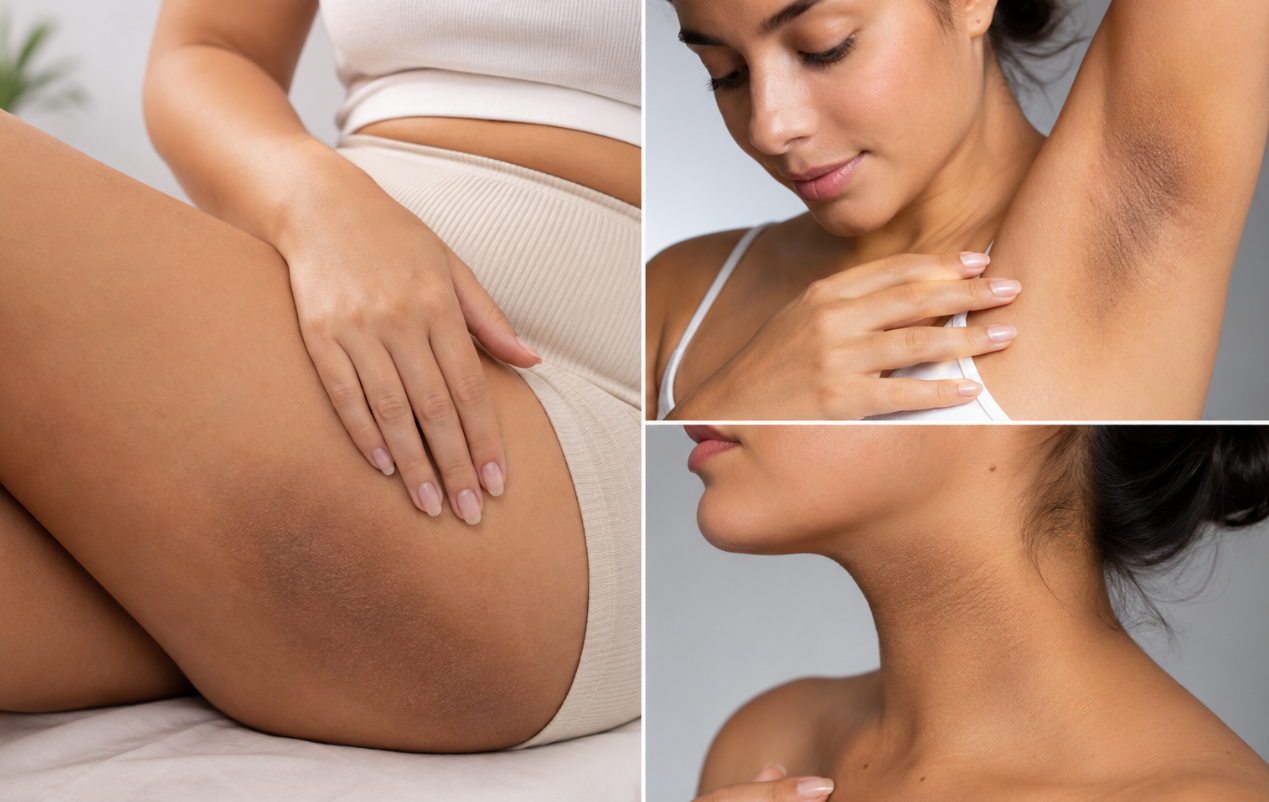
What Causes Dark Friction Marks?
Friction marks develop when skin repeatedly experiences mechanical rubbing or irritation.
Common triggers include:
thighs rubbing together while walking
tight clothing
synthetic or rough fabrics
frequent shaving
waxing
sweating
repeated scratching
deodorant irritation
skin-to-skin friction
exercise
prolonged moisture in skin folds
The friction itself doesn't necessarily create permanent pigmentation immediately.
Instead, repeated friction can irritate the skin. Inflammation can then stimulate melanocytes—the cells responsible for producing melanin.
Once the irritation settles, the area may remain darker.
This is one reason why simply applying a "dark spot cream" without addressing friction may produce disappointing results.
What Are Friction Marks?
Friction marks are areas of discoloration that develop after repeated rubbing or irritation.
They can appear:
brown
reddish-brown
gray-brown
darker than your natural skin tone
The exact appearance depends on your skin tone, the severity of irritation, and how long the friction has been occurring.
Some marks are relatively flat.
Others may occur alongside:
dryness
roughness
irritation
thickened skin
If the area is only mildly discolored and the skin otherwise feels normal, it may be straightforward post-inflammatory pigmentation.
But if the skin is significantly thickened or velvety, another condition may need to be considered.
Why Are the Inner Thighs So Prone to Dark Marks?
The inner thighs are particularly susceptible because they experience frequent skin-to-skin contact.
The problem can become more noticeable during:
summer
exercise
walking
running
hot weather
increased sweating
Moisture can increase friction, while tight clothing can add additional rubbing.
If the cycle continues:
friction → irritation → inflammation → pigmentation → more visible marks
you may feel like the dark patches are getting darker despite using skincare products.
Breaking that cycle is an important part of treatment.
Why Do Underarms Become Dark?
Underarm discoloration can have several causes.
Friction is one possibility, but other contributors include:
shaving
waxing
deodorant irritation
ingrown hairs
inflammation
post-inflammatory hyperpigmentation
hormonal or metabolic conditions
Frequent shaving can cause tiny amounts of irritation, particularly when using a dull razor or shaving without sufficient lubrication.
Over time, repeated irritation may contribute to pigmentation.
That's why treating dark underarms isn't always about finding the strongest brightening product.
Sometimes the first step is changing the hair-removal routine.
Why Can the Neck Become Darker?
Darkening around the neck deserves a little more attention because it isn't always caused by friction.
Collars, jewelry, sweat, and repeated rubbing can contribute to irritation.
However, dark, thickened, velvety skin around the neck can also be a feature of acanthosis nigricans, which can be associated with insulin resistance and other medical conditions.
If the skin is noticeably:
thickened
velvety
darker than surrounding skin
spreading gradually
don't assume that scrubbing or exfoliation is the answer.
A healthcare professional or dermatologist can help determine the cause.
Friction Marks vs. Acanthosis Nigricans
These conditions can look similar at first, but they aren't the same.
Friction-Related Pigmentation
Often:
occurs exactly where rubbing happens
follows shaving or irritation
appears as flat discoloration
improves gradually when the trigger is removed
Acanthosis Nigricans
Often:
appears darker and thicker
has a velvety texture
commonly affects the neck, underarms, or groin
may be associated with insulin resistance
If you're uncertain, professional evaluation is worthwhile.
Can Friction Cause Permanent Dark Skin?
Not necessarily.
Post-inflammatory pigmentation can gradually fade, but the process can take time.
The duration depends on factors including:
depth of pigmentation
skin tone
severity of inflammation
how long the irritation continues
sun exposure
whether new irritation keeps occurring
Post-inflammatory pigmentation tends to be more pronounced and persistent in darker skin types.
This is why preventing new inflammation is just as important as treating existing pigmentation.
Step 1: Stop the Friction
This is the most important step.
If the underlying trigger continues, pigmentation may keep returning.
For Inner Thighs
Try:
looser clothing
breathable fabrics
anti-chafing products
keeping the area dry
reducing prolonged rubbing during exercise
For Underarms
Consider:
using a fresh razor
avoiding dry shaving
reducing aggressive exfoliation
switching products if deodorant causes irritation
For the Neck
Avoid:
tight collars
abrasive jewelry
aggressive scrubbing
repeatedly rubbing the area
The objective is simple:
Stop creating new inflammation.
Step 2: Don't Scrub the Marks Away
One of the biggest mistakes people make is aggressively exfoliating dark friction marks.
A rough body scrub may temporarily make the skin feel smoother, but repeated physical irritation can cause more inflammation.
And more inflammation can mean more pigmentation.
If you're dealing with post-inflammatory hyperpigmentation, the goal should be controlled exfoliation—not aggressive abrasion.
Step 3: Moisturize Consistently
Moisturization is important because irritated, dry skin is more vulnerable to further friction.
A good body moisturizer can help:
support the skin barrier
reduce dryness
improve softness
make rough areas feel more comfortable
Apply moisturizer after bathing while the skin is still slightly damp.
For friction-prone areas, choose a formula that is comfortable enough to use consistently.
Step 4: Consider Brightening Ingredients
Once the source of irritation is under control, targeted ingredients can help improve the appearance of some types of pigmentation.
Niacinamide
Niacinamide is commonly used in products targeting uneven skin tone.
It can be a useful option for people who want a relatively gentle ingredient to incorporate into their routine.
Azelaic Acid
Azelaic acid has both anti-inflammatory and pigment-modulating properties and can be useful for certain forms of hyperpigmentation.
It may be particularly useful when pigmentation follows inflammation.
Vitamin C
Vitamin C is commonly used in pigmentation-focused skincare because of its antioxidant properties and role in melanin production pathways.
It can be incorporated into a broader brightening routine.
Exfoliating Acids
Ingredients such as:
lactic acid
glycolic acid
salicylic acid
may help improve certain types of uneven texture and pigmentation.
However, more exfoliation isn't necessarily better.
If the area is already irritated from friction, introducing strong acids too aggressively may make the problem worse.
Step 5: Protect the Area From Sun Exposure
Sun exposure can make post-inflammatory pigmentation darker.
This is especially important if the affected area is exposed—for example, the neck or thighs when wearing shorts.
Broad-spectrum sunscreen can help minimize UV-related darkening. Dermatology references recommend broad-spectrum high-SPF protection for pigmentation affecting exposed skin.
For exposed areas, choose at least SPF 30, apply adequately, and reapply as directed, particularly after sweating or swimming.
How Long Does It Take for Friction Marks to Fade?
This is one of the most important expectations to set.
Pigmentation doesn't disappear as soon as the irritation stops.
Depending on the cause and depth of pigmentation, improvement may take:
several weeks
several months
longer in persistent cases
If you continue experiencing friction, shaving irritation, or inflammation, new pigmentation can develop while older pigmentation is fading.
That's why consistency matters.
Can You Lighten Dark Inner Thighs Naturally?
There are safe habits that can support improvement without relying on aggressive treatments.
Focus on:
reducing friction
keeping the skin moisturized
wearing breathable clothing
avoiding harsh scrubs
protecting exposed skin from UV
using gentle skincare consistently
However, "natural" doesn't automatically mean "better."
Lemon juice, baking soda, undiluted vinegar, and other viral DIY remedies can irritate the skin and potentially worsen pigmentation.
Why Lemon Juice Isn't a Good Solution
Lemon juice is frequently recommended online as a natural skin-lightening remedy.
It's not a good choice for friction marks.
Applying irritating substances to already pigmented or sensitive skin can create additional inflammation.
And additional inflammation can result in more post-inflammatory pigmentation.
A gentle, controlled skincare routine is a safer approach.
Can Body Scrubs Lighten Friction Marks?
Body scrubs can remove some superficial dead skin cells, but they aren't a reliable solution for deeper pigmentation.
More importantly, aggressive scrubbing can cause irritation.
If the goal is to improve pigmentation, consider using carefully formulated topical ingredients instead of relying on physical abrasion.
What About Chemical Exfoliation?
Chemical exfoliation can be useful when appropriately formulated.
Lactic Acid
Can help improve:
rough texture
surface buildup
uneven appearance
Glycolic Acid
Can support:
skin-cell turnover
smoother texture
improvement in some superficial pigmentation
Salicylic Acid
Is especially useful when pigmentation occurs alongside:
clogged follicles
ingrown hairs
rough follicular texture
The correct choice depends on what is actually causing the dark marks.
Friction Marks and Strawberry Skin Can Overlap
If you're dealing with dark marks on your thighs, you may also notice:
visible follicles
small bumps
rough texture
ingrown hairs
That's where strawberry skin can overlap with friction-related pigmentation.
For example, repeated shaving may cause follicular irritation, while thigh friction creates additional inflammation.
The result can be a combination of:
bumps + visible follicles + pigmentation + rough texture
In this situation, treating only the pigmentation may not be enough.
What Is Strawberry Skin?
Strawberry skin is a descriptive term commonly used for the appearance of small dark dots or prominent hair follicles, particularly on the legs.
It can be associated with:
shaving
clogged follicles
keratin buildup
ingrown hairs
dry skin
keratosis pilaris
This is different from flat friction-related pigmentation.
However, both concerns can exist at the same time.
How to Prevent New Friction Marks
Prevention is often easier than treating established pigmentation.
Choose Breathable Clothing
Especially during hot weather, breathable fabrics can help reduce moisture and rubbing.
Keep Skin Hydrated
Dry, rough skin may be more susceptible to irritation.
Reduce Shaving Irritation
Use:
a clean, sharp razor
shaving cream or gel
gentle pressure
Avoid repeatedly going over the same area.
Don't Pick at Ingrown Hairs
Picking can increase inflammation and potentially leave darker marks.
Address Chafing Early
If your thighs regularly rub together, use a suitable anti-chafing product before exercise or prolonged walking.
A Simple Routine for Dark Friction Marks
You don't need a complicated 10-step routine.
Morning
1. Gentle cleanse
Avoid stripping the skin.
2. Brightening or barrier-supporting product
Choose an ingredient appropriate for your skin.
3. Moisturizer
Keep the skin hydrated.
4. Sunscreen
Use broad-spectrum SPF 30+ on exposed areas.
Evening
1. Cleanse
Remove sweat and product buildup.
2. Targeted treatment
Use your selected brightening or exfoliating ingredient.
3. Moisturize
Support the skin barrier overnight.
A Smarter Approach When Friction Marks and Rough Texture Occur Together
Sometimes dark marks aren't the only problem.
You may also have:
rough follicles
keratin buildup
strawberry skin
keratosis pilaris
ingrown hairs
In those situations, a routine focused only on pigmentation may leave the underlying texture unchanged.
A targeted exfoliating product can help address rough, follicular texture while moisturization supports the skin barrier.
TryStrawberry's Advanced Triple-Acid Complex for Keratosis Pilaris is designed for concerns such as rough, bumpy skin, keratin buildup, and the appearance of strawberry skin.
It can be incorporated into a broader routine when the concern includes strawberry skin or follicular roughness alongside pigmentation.
However, it should not be considered a treatment for every cause of dark skin. If the pigmentation is caused by a medical condition or persistent inflammation, identifying and treating that cause remains important.
Ready for Smoother, More Even-Looking Skin?
If friction has left your skin rough, bumpy, or uneven-looking, a consistent routine can help address the buildup and texture behind strawberry skin.
Try TryStrawberry's Advanced Triple-Acid Complex to gently exfoliate and improve the appearance of rough, follicular skin as part of a consistent body-care routine.
Target rough, bumpy texture with gentle, consistent exfoliation.
Common Mistakes That Can Make Friction Marks Worse
Scrubbing Every Day
Daily abrasive exfoliation can create additional irritation.
Using Too Many Acids
Combining several exfoliating products can overwhelm the skin.
Ignoring the Friction
A brightening serum won't stop pigmentation from recurring if the original irritation continues.
Shaving Without Lubrication
Dry shaving can increase irritation and follicular inflammation.
Picking Ingrown Hairs
This can cause additional inflammation and pigmentation.
Skipping Sunscreen
UV exposure can make existing pigmentation more noticeable.
When Should You See a Dermatologist?
Not every dark patch should be treated at home.
See a dermatologist if:
pigmentation is spreading
the area is becoming thicker
the skin feels velvety
there is persistent itching or pain
pigmentation develops without an obvious cause
the neck or underarms become significantly darker
you have tried a consistent routine without improvement
the area changes rapidly
This is particularly important for darkened neck or underarm skin because conditions such as acanthosis nigricans can resemble friction-related pigmentation.
Frequently Asked Questions
How do I lighten dark friction marks on my thighs?
Start by reducing friction and irritation. Then use gentle moisturization and, if appropriate for your skin, targeted ingredients such as niacinamide, azelaic acid, vitamin C, or carefully selected exfoliating acids. Consistent sun protection is important for exposed areas.
Why are my inner thighs getting darker?
Repeated friction, sweating, shaving, inflammation, and post-inflammatory hyperpigmentation can contribute to dark inner thighs. However, other conditions can also cause pigmentation, so persistent or unusual changes should be evaluated.
Can friction permanently darken skin?
Friction-related pigmentation can persist for months or longer, particularly when inflammation continues. Post-inflammatory pigmentation can be more persistent in darker skin types.
How can I prevent dark marks between my thighs?
Reduce skin-to-skin friction, keep the area comfortable and dry, wear breathable clothing, and use an appropriate anti-chafing product when needed.
Can shaving cause dark underarms?
Yes. Shaving can irritate the skin, and repeated inflammation may contribute to post-inflammatory hyperpigmentation.
Does scrubbing lighten dark underarms?
Aggressive scrubbing isn't recommended. It can irritate the skin and potentially worsen pigmentation.
Can I use exfoliating acids on my inner thighs?
Some exfoliating acids may be appropriate for body pigmentation and texture, but sensitive areas should be approached cautiously. Start with a low frequency and stop if significant irritation develops.
Why is my neck dark even though I wash it every day?
Dark neck skin isn't necessarily caused by inadequate washing. Friction and irritation can contribute, but dark, thickened, velvety skin may also be associated with acanthosis nigricans and should be evaluated.
How long does it take for friction marks to fade?
There is no fixed timeline. Some marks gradually improve over several weeks, while deeper or persistent post-inflammatory pigmentation can take months or longer.
Can moisturizer remove friction marks?
Moisturizer can improve dryness and support the skin barrier, but it generally isn't enough by itself to treat established hyperpigmentation.
Final Thoughts
Dark friction marks on the thighs, underarms, and neck can be frustrating, but the solution isn't necessarily a stronger bleaching cream or a harsher scrub.
The first step is understanding why the skin became darker.
If friction or irritation is responsible, stop the cycle by reducing rubbing, improving shaving habits, managing sweat, and supporting the skin barrier.
Once the trigger is controlled, gentle pigment-focused skincare can help improve the appearance of the remaining discoloration. Ingredients such as azelaic acid, niacinamide, vitamin C, and selected exfoliating acids may have a role depending on the type of pigmentation.
And if your dark patches are accompanied by thickened or velvety skin, especially around the neck or underarms, don't assume they're simply friction marks. Getting the right diagnosis is the most important step.
Ultimately, treating dark marks successfully isn't about attacking the skin harder.
It's about reducing inflammation, preventing new irritation, supporting the skin barrier, and giving pigmentation time to fade.
Comments
Log in or sign up to join the conversation.