

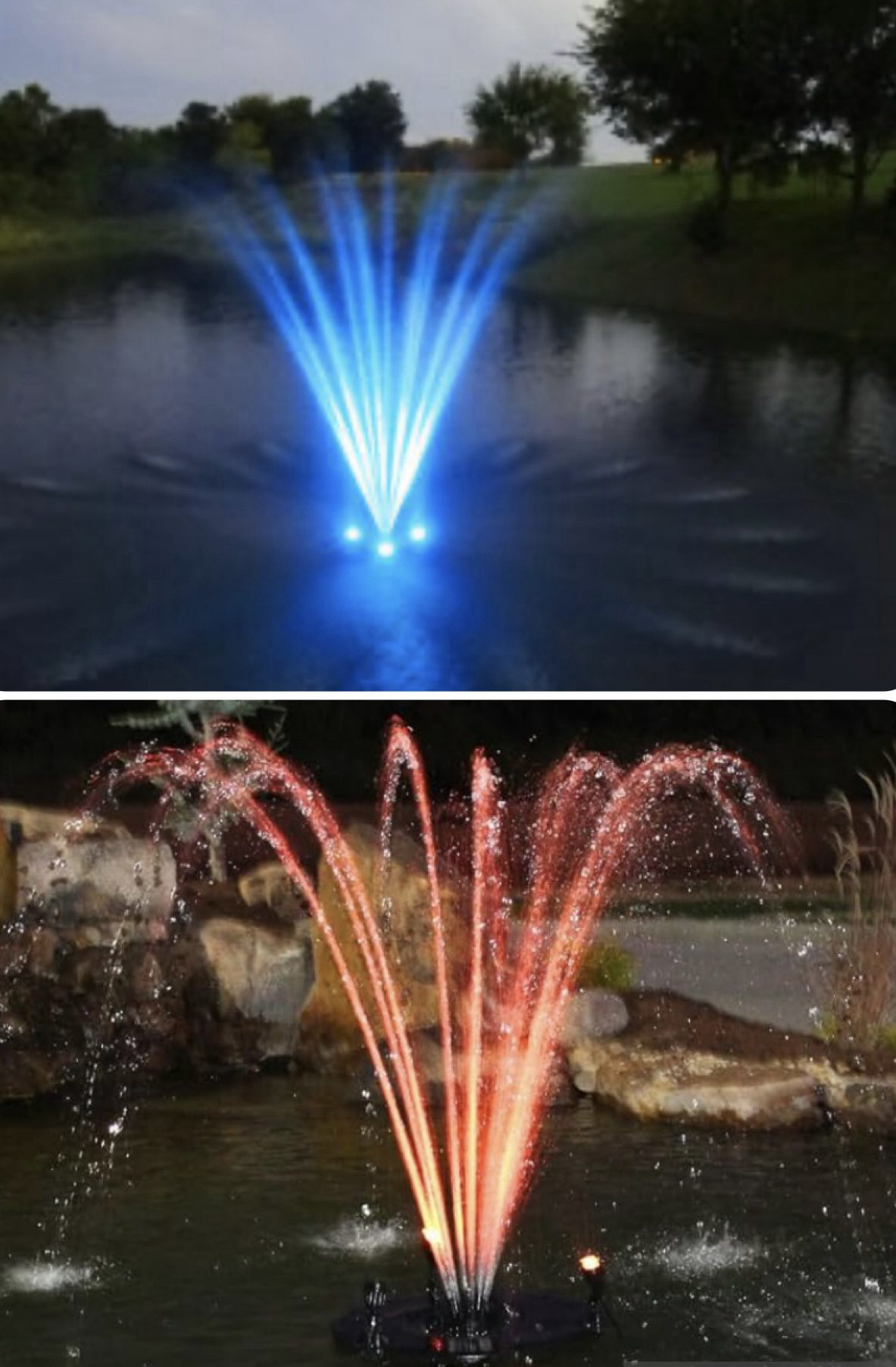
Pond fountains can serve both functional and decorative purposes, improving water movement while creating a focal point within a landscape. After sunset, however, much of a fountain's visual impact can disappear without appropriate illumination. Lighting the spray pattern can make the water feature easier to see while adding depth and atmosphere to the surrounding area.
For property owners considering water fountain LED lights, the right choice depends on more than brightness. Fountain size, spray height, pond depth, water clarity, power requirements, fixture placement, and the desired visual effect all influence how well a lighting system performs. Understanding these factors can help homeowners choose lighting that complements their fountain without creating unnecessary glare or excessive energy consumption.
What Are Water Fountain LED Lights?
Water fountain LED lights are light fixtures designed to illuminate fountains, ponds, and other outdoor water features. LED technology is widely used for these applications because it can provide strong illumination while using relatively little electrical power.
Fountain lighting may use white LEDs for a natural appearance or color-changing LEDs for a more decorative display. Fixtures are commonly positioned around or directly on a floating fountain assembly so the light follows the movement of the water.
The goal is to illuminate the fountain spray rather than simply brighten the surrounding pond. Correct positioning can make individual streams and droplets more visible after dark.
How Do LED Fountain Lights Work?
A fountain lighting system typically consists of LED fixtures, electrical cables, and a suitable power connection. Submersible or water-rated fixtures are positioned where they can direct light toward the fountain spray.
For example, floating fountain systems may use several LED fixtures mounted directly to the fountain base. One current 1/3-horsepower lighted configuration uses three 12-volt, 6-watt LED lights designed to illuminate the fountain display.
Because the lights are positioned close to the spray, the illumination can move with the fountain rather than remaining fixed on the shoreline.
Why Choose LED Lighting for a Pond Fountain?
LED technology offers several practical advantages for outdoor water features. LEDs generally have lower energy requirements than traditional incandescent lighting and can provide long operating life.
Another advantage is design flexibility. White LEDs can provide a clean, understated appearance, while color-changing systems can create different visual effects for holidays, celebrations, or landscape events.
Water fountain LED lights can also improve nighttime visibility of the fountain itself. A fountain that is prominent during daylight hours may become difficult to distinguish after sunset without strategically positioned illumination.
Should You Choose White or Color-Changing Lights?
The appropriate color depends on how the fountain will be used.
White lighting generally provides clearer definition of the water spray and can create a more natural appearance. It may be preferable when the goal is to highlight the fountain without making it overly decorative.
Color-changing lighting offers greater flexibility. Different colors can be selected for seasonal displays, special events, or changes in outdoor décor.
For everyday use, white illumination may provide a more subtle appearance, while multicolor lighting can create a stronger visual effect during evening gatherings.
How Does Fountain Size Affect Lighting?
Fountain size is one of the most important factors when selecting water fountain LED lights. A larger fountain with a taller or wider spray pattern may require broader light coverage than a smaller water feature.
The pump's horsepower and flow rate also influence the spray pattern. A 1/3-horsepower fountain configuration, for instance, is listed with a 4,000-gallon-per-hour pump and is designed for smaller to mid-sized pond applications.
The lighting system should therefore be selected alongside the fountain rather than independently. A light that is appropriate for a compact spray may not provide enough coverage for a larger fountain.
What Is a 1/3 HP Pond Fountain?
A 1/3 HP pond fountain uses a motor rated at one-third horsepower to circulate and spray pond water. One available configuration operates at 120 volts, provides 4,000 gallons per hour of flow, and uses a floating platform with interchangeable nozzles.
The pump's flow rate affects the height, shape, and volume of the fountain spray. These characteristics are important when determining where lights should be positioned and how much illumination is required.
Lighted versions can combine the fountain pump with a three-light LED system, providing both water movement and nighttime illumination from the same floating assembly.
Where Should Fountain Lights Be Installed?
Light placement can significantly affect the final appearance. Fixtures should generally be positioned so that they illuminate the water spray without shining directly toward people viewing the fountain.
Mounting lights around the fountain base can provide more even coverage. The angle should be adjusted according to the nozzle pattern, spray height, and viewing direction.
Pond depth and water clarity should also be considered. Murky water or sediment can reduce the effectiveness of underwater illumination, while clear water may allow light to travel more effectively through the fountain display.
What Safety Factors Should You Consider?
Electrical safety is particularly important around water. Fountain lighting should use fixtures and connections specifically rated for the intended outdoor or submerged environment.
Low-voltage lighting systems are commonly used for fountain applications. Appropriate electrical protection, waterproof connections, and installation practices are essential to reduce the risk of electrical faults.
Before installation, homeowners should verify that the lighting system, power supply, transformer if required, cables, and outlets are compatible with the fountain and local electrical requirements.
How Can You Maintain Fountain LED Lights?
Regular maintenance can help preserve both fountain and lighting performance. Debris, algae, mineral deposits, and sediment can accumulate around fixtures and reduce illumination.
The fountain pump should also be checked periodically because blocked intake areas can reduce water flow. Friendly Fountains recommends cleaning its fountain pumps every four to six weeks to help maintain water flow and reduce clogging.
Lights should be inspected for damaged cables, loose connections, corrosion, or changes in brightness. Any electrical problem around water should be addressed using appropriate professional procedures.
Conclusion
Illuminating a pond fountain can extend its visual appeal into the evening while making its spray pattern easier to see. Water fountain LED lights provide an energy-conscious and flexible option for highlighting water movement, with white and color-changing configurations offering different aesthetic possibilities. When selecting a lighting system, consider fountain dimensions, spray height, pump capacity, pond conditions, electrical compatibility, and fixture placement. A 1/3 HP pond fountain can be paired with an appropriately configured LED lighting system when its flow rate and spray characteristics match the intended pond application. A well-designed setup balances brightness, coverage, safety, and energy use so that the lighting enhances the fountain rather than overwhelming the surrounding landscape.
Comments
Log in or sign up to join the conversation.