

Chewing is a natural part of canine behavior, and an appropriate chew can provide an engaging activity while adding variety to a dog's treat routine. However, selecting a chew requires more than looking at its appearance or marketing claims.
Ingredients, size, texture, firmness, calories, preparation, and your dog's individual chewing style all matter. The right product should fit your dog's age, body size, dietary needs, and chewing habits while being offered with appropriate supervision.
What Makes Safe Healthy Dog Chews a Good Choice?
Safe healthy dog chews should have characteristics that match the individual dog's needs. A suitable chew may contain recognizable ingredients, provide an appropriate texture, and be sized correctly for the dog.
The word “healthy” does not automatically mean a product is suitable for every pet. A nutritious ingredient can still be inappropriate if the chew is too small, too hard, or unsuitable for a dog's dietary requirements.
For this reason, owners should read product labels carefully and consider how their dog actually handles a chew rather than relying solely on packaging claims.
Why Do Dogs Enjoy Chewing?
Chewing is a normal behavior that allows dogs to interact with different textures. Providing an appropriate chew can give them an acceptable outlet for this natural instinct.
Some dogs enjoy slowly working on a chew for an extended period, while others immediately attempt to break it apart. These differences are important because a product that lasts for one dog may disappear quickly for another.
Chewing can also provide mental engagement and an activity that may help occupy dogs during quiet periods. It should still be combined with exercise, play, training, and other forms of enrichment.
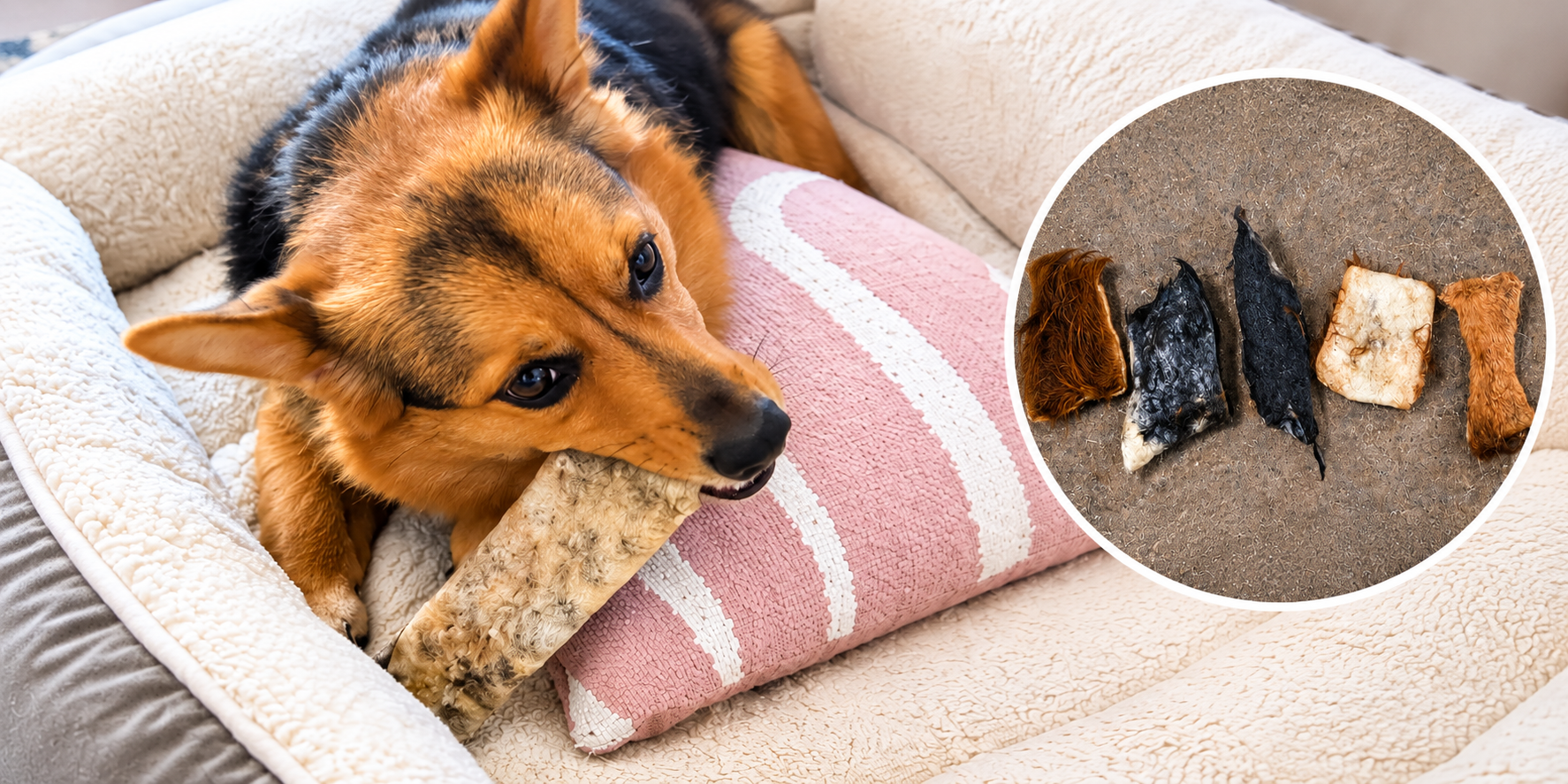
What Types of Dog Chews Are Available?
Pet owners can choose from numerous chew categories.
Beefhide chews: Made from cattle hide, these can come in rolls, bones, strips, chips, and other shapes. Thickness influences the chewing experience.
Dried meat chews: Dehydrated or air-dried meat products offer natural flavor and varying firmness levels.
Freeze-dried organ treats: Liver and other organ treats can provide concentrated flavor and nutrients but should be offered in moderation.
Collagen chews: These offer another texture option and are available in various shapes and sizes.
Dental chews: Some are designed specifically to encourage chewing as part of an overall dental-care routine.
Every category has different characteristics, so owners should consider the specific product rather than assuming all chews have the same properties.
How Do You Choose the Right Chew?
Selecting a chew begins with understanding your dog's individual characteristics.
Size: Choose a product appropriate for your dog's body size and mouth. Avoid products that could be swallowed whole.
Chewing strength: A powerful chewer may require a different size or format than a gentle chewer.
Texture: Consider whether the product's texture matches your dog's chewing style.
Firmness: Very hard products may not be appropriate for dogs with dental sensitivity or existing dental concerns.
Ingredients: Check the ingredient list for known allergens and ingredients you prefer to avoid.
Calories: Treats and chews should fit within your dog's overall daily calorie intake.
Preparation: Look for clear information about sourcing and processing.
Dogs with allergies, digestive sensitivities, dental problems, or special nutritional requirements may benefit from individualized veterinary guidance.
Can Healthy Chews Support Dental Health?
Some chew products provide mechanical contact with the teeth as dogs work on their surfaces. Depending on the product and the dog's chewing behavior, this may help reduce some surface buildup.
However, chews are not a substitute for regular dental care. Tooth brushing, veterinary examinations, and professional cleaning when recommended remain important.
If your dog has loose teeth, damaged teeth, gum disease, or mouth discomfort, consult a veterinarian before offering firm chew products.
Are Safe Chews Suitable for Puppies?
Puppies have developing teeth and different nutritional requirements from adult dogs. Their main food should provide the balanced nutrition needed for growth, while treats should remain a limited addition.
When selecting a puppy chew, consider age, size, texture, firmness, and chewing behavior. Products that are excessively hard or too small may not be appropriate.
Introduce new treats gradually and monitor your puppy. If your puppy has dietary restrictions or health concerns, ask your veterinarian about suitable options.
How Can You Give Dog Chews More Safely?
Supervision is one of the most important aspects of chew time. Watch your dog while chewing and observe how the product changes during use.
Remove a chew when it becomes small enough to swallow whole or develops loose, sharp, or damaged sections. If your dog repeatedly breaks off and swallows large pieces, consider a different product or size.
Fresh drinking water should be available, and owners should follow the manufacturer's feeding and storage instructions.
How Often Should Dogs Receive Chews?
The appropriate frequency depends on the product, dog's size, diet, activity level, and overall calorie requirements. Chews should complement a complete diet rather than replace regular meals.
Remember to count all treats, chews, snacks, and training rewards when considering daily food intake. Dogs with weight-management requirements may need particularly careful portion control.
Moderation also helps prevent treats from becoming an excessive part of the dog's diet.
Why Consider Natural Ingredient Chews?
Many owners prefer products made with recognizable ingredients and straightforward labels. Single-ingredient options can make it easier to identify what a dog is receiving.
Ugly Chews offers natural chew options with different textures and formats for owners considering simple ingredient choices. When comparing products, look at the complete ingredient list, sizing guidance, preparation details, and recommended use.
Conclusion
Choosing safe healthy dog chews involves considering the entire product rather than focusing on one feature. Ingredients, size, texture, firmness, calories, preparation, and chewing behavior all contribute to whether a particular chew is appropriate.
Owners should supervise chewing sessions, remove damaged or small pieces, and select products that suit their dog's individual needs. Ugly Chews provides natural chew options for pet parents interested in straightforward ingredient choices and different chewing textures.
Frequently Asked Questions
1. What are safe healthy dog chews?
They are appropriately sized chews with suitable ingredients, texture, and firmness for an individual dog. Supervision and proper feeding practices remain important during use.
2. Are healthy dog chews safe for puppies?
Some may suit puppies, but age, size, texture, and firmness matter. Choose puppy-appropriate products and consult your veterinarian when uncertain about suitability.
3. Can dog chews improve dental health?
Chewing may provide mechanical contact with teeth, but chews should not replace brushing, veterinary dental examinations, or professional oral-care recommendations for your dog.
4. How do I choose the right chew size?
Select a product appropriate for your dog's body size and chewing strength. Avoid chews that could become small enough to swallow whole.
5. Can dogs have chews every day?
Some dogs may receive suitable chews regularly, but frequency depends on the product and overall diet. Always consider calories, portions, and feeding recommendations.
Comments
Log in or sign up to join the conversation.