

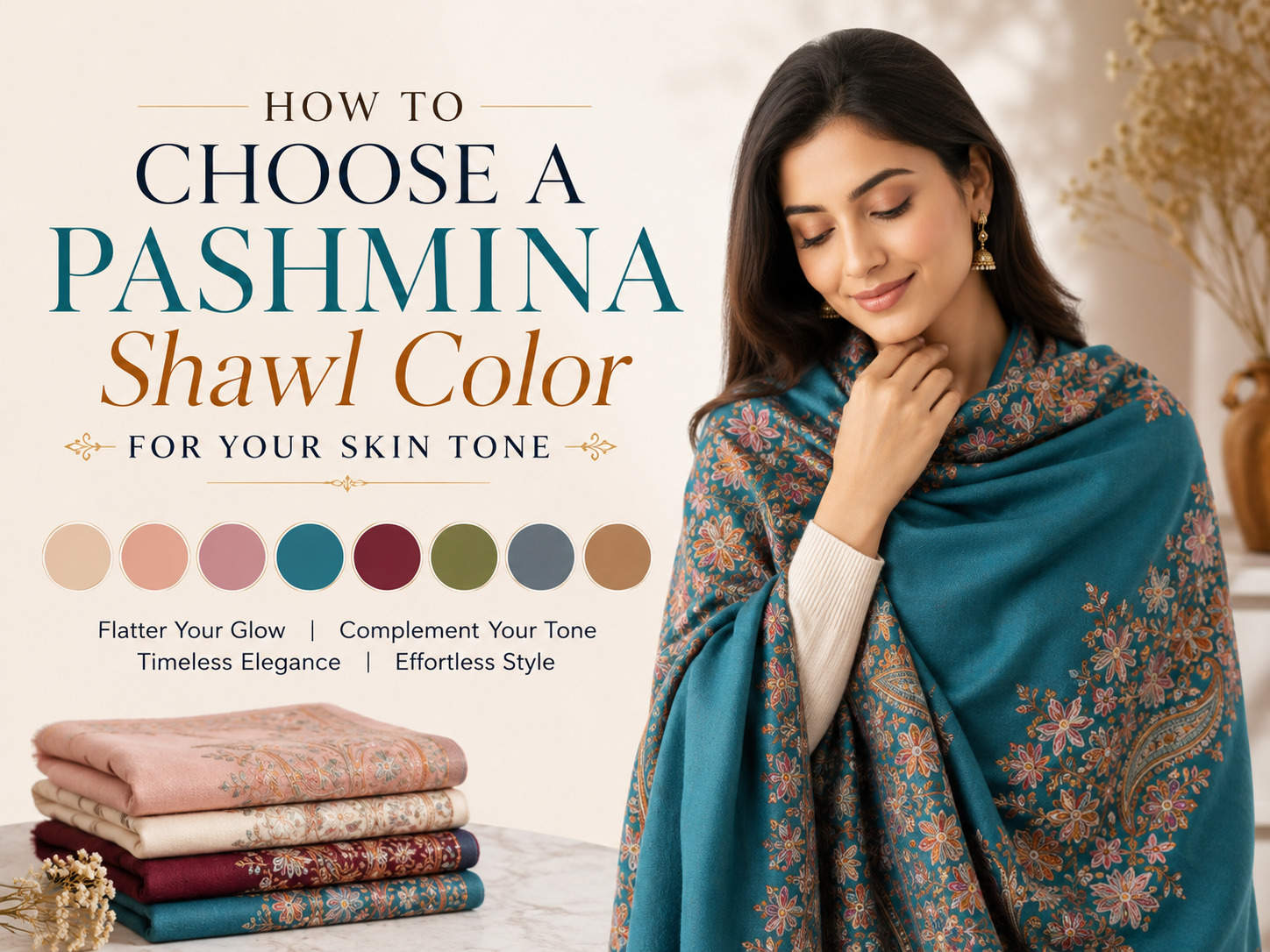
Choosing the right Pashmina shawl colour can transform the overall appearance of an outfit, bringing out natural complexion, adding warmth to the face, and creating a more balanced look. Because Pashmina is available in an extensive range of shades, selecting the most flattering colour depends on understanding undertones as well as personal style.
A thoughtfully chosen shawl can work as an elegant everyday layer, a statement accessory for celebrations, or a refined addition to formal attire. Learning how to Choose a Pashmina Shawl Color for Your Skin Tone makes it easier to select colours that complement rather than overpower the complexion.
Understanding Skin Undertones Before Choosing a Shawl
Skin tone generally refers to the visible depth of the complexion, while undertone describes the subtle hue beneath the surface. Undertones are commonly understood as warm, cool, or neutral, and they remain relatively consistent even when the outer skin tone changes with sunlight or seasonal variations.
Warm undertones often have golden, peach, or yellow characteristics, while cool undertones may appear pinkish, rosy, or bluish. Neutral undertones have a balance between warmer and cooler characteristics. Understanding this distinction is useful when selecting Pashmina because certain shades naturally harmonise with particular undertones.
The goal is not to follow rigid colour rules but to identify shades that enhance the natural appearance of the face. Pashmina's soft texture and elegant drape make colour especially noticeable, particularly when the shawl is worn around the shoulders or neckline.
Best Pashmina Colours for Warm Undertones
Warm undertones are often complemented by colours that contain earthy, golden, or rich warm elements. Beige, camel, mustard, warm ivory, terracotta, peach, olive, rust, and warm brown can create a harmonious appearance.
Golden yellow Pashmina can add brightness without appearing excessively sharp, while earthy greens and warm beige shades can create a sophisticated and understated effect. Rich burgundy and deep maroon can also complement warm complexions beautifully, especially during autumn and winter styling.
For formal occasions, warm-toned Pashmina paired with neutral clothing can create a polished appearance without excessive contrast. Soft embroidery or restrained traditional detailing can further enhance the colour while maintaining an elegant finish.
When selecting kashmiri handmade shawls, warm shades can be particularly effective because they highlight the depth and texture of traditional handcrafted textiles without requiring overly dramatic styling.
Best Pashmina Colours for Cool Undertones
Cool undertones tend to work beautifully with shades that contain blue, lavender, pink, grey, or jewel-like characteristics. Powder blue, icy blue, soft lavender, dusty rose, mauve, cool grey, emerald, and deep blue can provide an elegant contrast against cooler complexions.
A soft blue Pashmina can create a fresh and graceful appearance, while plum, berry, and muted purple shades can offer greater depth for evening styling. Cool grey is another highly versatile option, particularly for professional wardrobes because it works well with formal tailoring and monochromatic outfits.
For weddings and festive events, a cooler-toned embroidered shawl can add sophistication without appearing overly bright. The combination of intricate craftsmanship and carefully selected colour allows the shawl to become a focal point while keeping the overall outfit balanced.
Colours That Suit Neutral Undertones
Neutral undertones offer greater flexibility because both warm and cool colours can complement the complexion. This makes shades such as beige, ivory, soft pink, muted blue, taupe, olive, burgundy, and classic grey particularly versatile.
Neutral undertones can also accommodate stronger colours when the rest of the outfit is kept simple. A richly coloured shawl paired with understated clothing can create a sophisticated contrast, while a soft neutral shawl can provide a more refined everyday appearance.
This flexibility is especially useful when building a collection of womens shawls and wraps. A combination of neutral and statement colours can provide styling options for workwear, festive dressing, travel, weddings, and formal occasions.
Matching Pashmina Colours with Different Outfits
Skin tone is an important consideration, but clothing colour should also influence the final choice. A shawl should ideally create harmony between the complexion and the outfit rather than competing with either.
Neutral outfits provide an excellent foundation for colourful Pashmina. A cream or beige dress can be paired with burgundy, emerald, blue, or plum, while darker clothing can be softened with ivory, blush, beige, or muted grey. Printed clothing generally works best with a solid-colour shawl, whereas a detailed shawl can add interest to a simple outfit.
The occasion also matters. Subtle neutrals are ideal for professional settings, while richer colours can work beautifully for celebrations and evening events. A carefully embroidered shawl may be especially appropriate for weddings and formal gatherings.
Choosing the Right Colour for Embroidered Pashmina
Embroidery can significantly influence how a Pashmina colour appears. A hand embroidered kashmiri shawl often contains multiple colours within its decorative motifs, making the base shade particularly important.
If the embroidery is highly detailed, a softer or more neutral base can create balance and allow the craftsmanship to remain visible. For simpler embroidery, a deeper base colour can add richness and make the decorative elements more prominent.
Traditional gold, silver, floral, and multicoloured embroidery can each create a different effect depending on the base fabric. A warm golden pattern may look especially striking on plum, burgundy, ivory, or mustard, while silver-toned details can complement soft blue, grey, white, or deeper cool colours.
How Tilla Pashmina Colours Create a Distinctive Look
Colour selection becomes especially interesting with handwoven tilla pashmina, where metallic threadwork adds another visual dimension to the shawl. The relationship between the base colour and decorative detailing influences whether the overall look appears subtle, dramatic, traditional, or contemporary.
Deep shades such as burgundy, forest green, navy, plum, and black can provide a rich background for metallic detailing, while ivory, beige, and softer shades create a more delicate and luminous effect. The choice should depend on the occasion, personal style, and the degree of contrast desired.
For formal occasions, a deeper base with restrained embellishment can create a sophisticated appearance. For daytime events, lighter colours can provide softness while keeping the craftsmanship visible.
Seasonal Colour Choices for Pashmina Shawls
Season can also influence colour preferences. Winter wardrobes often benefit from deeper shades such as burgundy, plum, navy, forest green, chocolate, and charcoal. These colours create visual warmth and work naturally with coats, dresses, and structured winter clothing.
Spring and transitional seasons are well suited to softer colours such as blush, beige, ivory, powder blue, lavender, sage, and pastel yellow. These shades bring freshness to layered outfits without looking overly heavy.
A year-round Pashmina wardrobe can include a balance of neutral, warm, cool, and statement shades. This approach makes it easier to choose a shawl according to complexion, outfit, occasion, and season.
Choosing a Pashmina Colour That Reflects Personal Style
While skin undertone provides a helpful starting point, personal preference should remain equally important. A colour that makes the wearer feel confident and comfortable can often become more useful than a theoretically perfect shade.
A timeless wardrobe may benefit from one versatile neutral, one rich seasonal colour, and one distinctive statement piece. This gives enough variety for everyday wear and special occasions without creating an unnecessarily large collection.
Pashmina Vogue offers handcrafted styles that allow colour, texture, and traditional artistry to work together naturally. The right shade can enhance the complexion while also expressing individual taste and complementing the occasion.
Final Thoughts
Selecting the ideal Pashmina shawl colour involves more than following simple complexion rules. Undertone, outfit colour, embroidery, occasion, season, and personal preference all influence how a shawl looks when worn. Warm undertones often pair beautifully with earthy and golden shades, cool undertones can benefit from blue, lavender, and jewel-inspired colours, while neutral undertones offer exceptional flexibility.
Whether choosing a simple wrap, an intricately embroidered design, or a handcrafted statement piece, the most effective colour is one that creates harmony between the wearer and the shawl. Pashmina Vogue brings together traditional craftsmanship and a diverse colour palette, making it easier to find a timeless piece suited to both personal style and occasion.
Frequently Asked Questions
How do I know which Pashmina colour suits my skin tone?
Identify whether your undertone is warm, cool, or neutral. Warm undertones often suit earthy and golden shades, cool undertones work well with blue and purple-based colours, while neutral undertones can complement both.
Is beige Pashmina suitable for every complexion?
Beige can be highly versatile, but the exact shade matters. Warmer beige generally complements warm undertones, while cooler beige and taupe can work particularly well with cool or neutral undertones.
Which Pashmina colours are best for weddings?
Rich burgundy, plum, emerald, deep blue, ivory, blush, and elegant pastel shades can work beautifully for weddings. The final choice should also coordinate with the outfit and embroidery.
Can embroidered Pashmina be worn with patterned clothing?
Yes, but balance is important. A highly detailed embroidered shawl usually pairs best with simpler clothing, while a more restrained shawl can work with subtle prints.
Is skin tone the only factor when choosing a Pashmina shawl?
No. Skin undertone is one factor among several. Outfit colour, season, occasion, embroidery, personal preference, and styling all influence which Pashmina shade will look most effective.
Pashmina Vogue continues to highlight the beauty of handcrafted Pashmina through colours and designs that bring together traditional Kashmiri artistry, timeless elegance, and versatile modern styling.
Comments
Log in or sign up to join the conversation.