
Preparing a nursery for your new baby is one of the most joyful, and anxious, times in a parent’s life. You want everything to be perfect, but you also know that a baby’s developing body is more vulnerable to chemicals and pollutants than an adult’s. The conventional advice focuses on choosing the right crib and the softest sheets. But what about the air your baby will breathe for eighteen hours a day? What about the surfaces your baby will touch, crawl on, and probably put in their mouth? Building a truly non-toxic nursery means looking beyond the obvious. It means considering the crib mattress, the paint on the walls, the carpet on the floor, and the invisible microbial community that will surround your child. This guide walks you through creating a nursery that is safe, healthy, and balanced, from the air down to the surfaces.
Choosing a Crib Mattress Without Flame Retardants
Standard crib mattresses are required to meet flammability standards, and many manufacturers meet those standards by adding chemical flame retardants. These chemicals, including polybrominated diphenyl ethers and organophosphates, have been linked to hormone disruption and developmental delays. They off-gas into the air your baby breathes and migrate into the dust your baby touches. The non-toxic alternative is a crib mattress made from natural materials that meet flammability standards without chemical additives. Look for mattresses made from organic cotton, wool, or natural latex. Wool is naturally flame-resistant. Organic cotton is grown without pesticides. Natural latex is harvested from rubber trees without synthetic additives. These mattresses cost more than conventional ones, but they are a worthwhile investment. Your baby will spend more time on that mattress than anywhere else for the first two years.
Painting and Finishing Walls Without VOCs
Fresh paint smells like new beginnings, but that smell is actually a cloud of volatile organic compounds. VOCs include formaldehyde, benzene, and other chemicals that can irritate a baby’s developing lungs and nervous system. Conventional paints continue off-gassing for months after application. For a nursery, choose zero-VOC or low-VOC paints. These are widely available from major brands and cost only slightly more than conventional paints. Look for certifications from Green Seal or Greenguard Gold, which test for low chemical emissions. Paint the nursery at least two weeks before the baby arrives, and keep the window open and a fan running during that time. For wall finishes, avoid vinyl wallpaper, which can trap moisture and grow mold behind it. Stick with paint or with natural wallpaper made from paper or grass cloth.
Flooring Choices That Minimize Dust and Chemicals
Carpet is cozy, but it is also a reservoir for dust, dander, mold spores, and chemical residues. Babies spend hours on the floor, crawling, playing, and putting their hands in their mouths. Carpet fibers trap allergens that are difficult to remove completely, even with HEPA vacuuming. If you choose carpet, select wool or natural fiber carpet with a felt or natural rubber backing rather than synthetic backing that contains adhesives and flame retardants. Even better, choose hard flooring. Solid hardwood sealed with a zero-VOC finish, natural linoleum made from linseed oil and cork, or tile with natural stone or ceramic are all excellent choices. Add a washable cotton or wool rug on top of the hard floor for softness. You can take the rug outside to beat it, and you can wash it in hot water. Hard floors with a washable rug are far easier to keep truly clean than wall-to-wall carpet.
Cleaning the Nursery Without Harsh Chemicals
You will clean the nursery often. Spit-up, diaper changes, and general baby mess are facts of life. What you clean with matters. Standard disinfectant wipes and sprays contain quaternary ammonium compounds, bleach, or alcohol, all of which leave residues that babies can ingest through hand-to-mouth contact. For daily cleaning, plain soap and water on a microfiber cloth is sufficient. Soap lifts dirt and bacteria, and the microfiber captures them. Rinse the cloth thoroughly between uses. For deeper cleaning, white vinegar diluted with water works well on hard surfaces. For disinfecting when someone in the home is sick, use hydrogen peroxide or seventy percent rubbing alcohol, which break down into harmless byproducts. Avoid antibacterial soaps and any product that claims to kill ninety-nine percent of bacteria. Those are overkill for a nursery and contribute to chemical resistance.
Air Quality Ventilation and Probiotic Protection
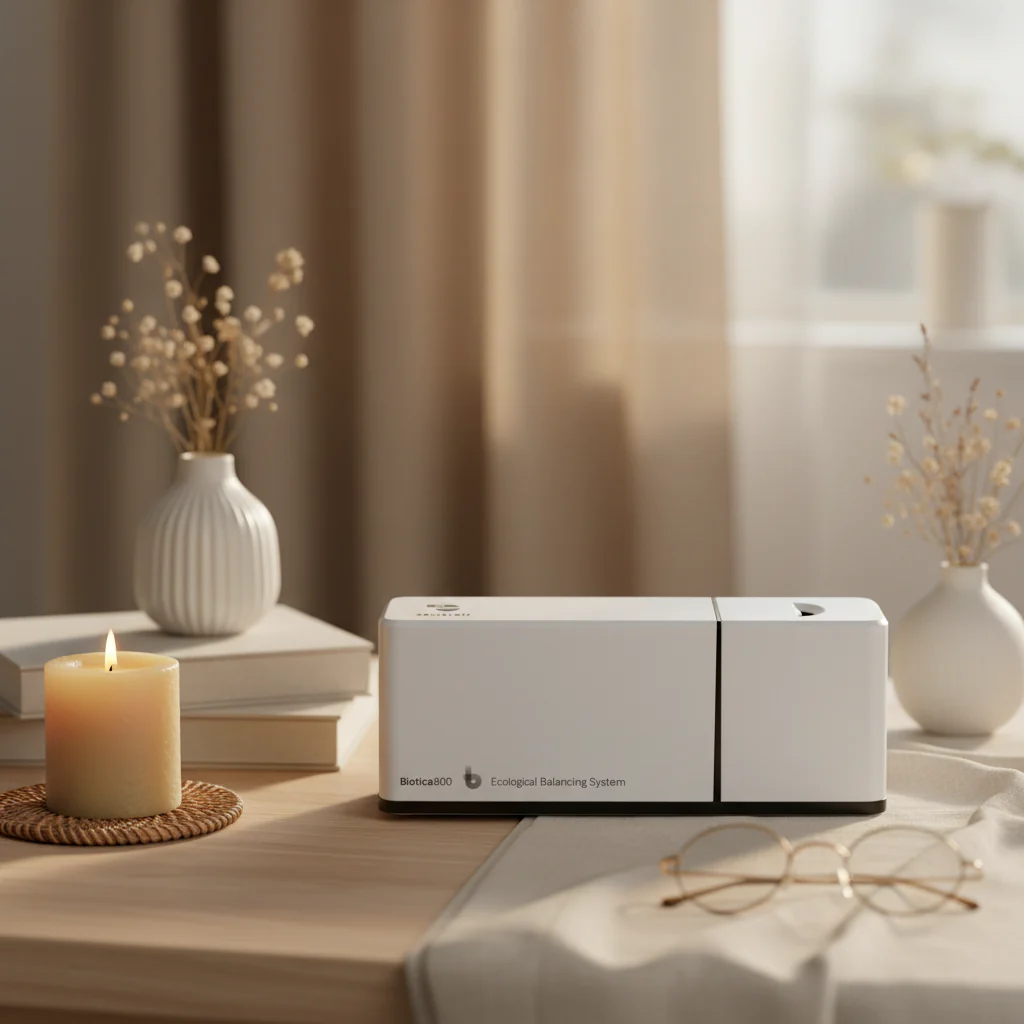
A baby’s lungs are still developing, and they breathe more air per pound of body weight than adults. Air quality matters enormously. The simplest and most effective strategy is ventilation. Open a window in the nursery for five to ten minutes every day, even in winter, to exchange stale indoor air for fresh outdoor air. Use a HEPA air purifier to capture airborne particles like dust and pollen. But consider adding a probiotic air purifier as well. The beneficial Bacillus spores settle on nursery surfaces and break down organic matter before it can accumulate. They outcompete mold and digest allergens. Unlike chemical disinfectants, probiotics are completely non-toxic and safe for a baby to touch and even mouth. A small unit like the BioLogic Mini is perfect for a nursery. It runs silently, draws little power, and works continuously to keep the nursery’s ecology balanced.
Creating a Low-Dust Environment
Dust is not just dirt. It contains skin cells, pet dander, dust mite droppings, mold spores, and chemical residues from furniture and electronics. Babies inhale dust and ingest it through hand-to-mouth behavior. To minimize dust in the nursery, choose washable cotton or wool curtains over Venetian blinds, which collect dust on every slat. Keep stuffed animals to a minimum, and wash the ones you keep monthly in hot water. Vacuum floors and rugs weekly with a HEPA vacuum, and damp-wipe hard surfaces with a microfiber cloth. Dry dusting just launches dust into the air. Leave shoes at the nursery door to avoid tracking in outdoor pollutants. And consider a probiotic surface spray on carpets and upholstery. The probiotics digest the organic component of dust, reducing the total dust load over time. These steps together create a nursery that is not just clean, but genuinely healthy for your baby’s first years of life.
Comments
Log in or sign up to join the conversation.