

Harvesting is rarely simple and sometimes unpredictable due to the potential for lodged or downed crops, which can present challenges to the cutting assembly as it attempts to engage and gather the material. It is precisely for more demanding conditions that a Harvester Grain Lifter could be introduced to facilitate the gathering process.
Harvesting Mechanisms and Enhancer Components
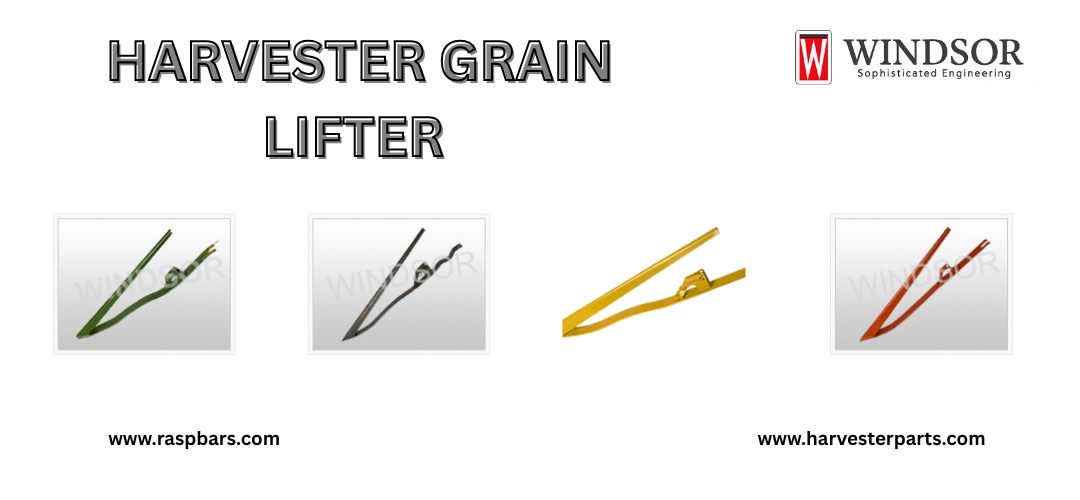
A combine harvester has a range of mechanisms within the working unit for cutting, feeding, and gathering the crop once engaged by the machine. This process can be a relatively straightforward task when the stalks are upright and presenting themselves as expected. There may also be periods where the crop matter becomes lodged, presenting complications for engaging the cutting mechanism. The correct addition to a harvesting machine includes the use of a Harvester Grain Lifter in such circumstances in order to elevate the crop into a more favourable position.
Harvesting Conditions and Challenges Presented by Lodged Crops
There are several reasons why the crops may become lodged beyond field or crop variations, although the most common is the weather. Other factors influencing lodging include the chosen crop variety, the plant height, and the grain bulk weight, as well as the field layout or size. Once lodged, it has been noted that the gathering and cutting mechanism efficiency is reduced significantly, especially in instances of irregular lodging where each plant falls in a different direction.
Such conditions can be overcome to an extent using other crop enhancer mechanisms in proximity to the cutter bar within the harvesting machine. In this capacity, a Harvester Grain Lifter would prove to be a valuable addition to facilitate the engagement and gathering mechanism when working in less than perfect conditions.
Grain Lifter Selection Considerations
Harvesting replacements should always be selected with the machine type in mind, although there are a number of potential components which could be used. Although a Harvester Grain Lifter may appear simple enough, the dimensions, shape, configuration, and other factors are all relevant to the suitability and application for use. When shopping for a new component, it is advisable to cross reference against the existing piece for potential dimensional discrepancies ahead of purchasing. In both cases, the attachment points should be examined to ensure that the mounting configurations are identical.
As the cutter bars experience a range of working conditions during the harvesting process, from dust and crop matter to vibration, moisture, and even contact with the ground or other materials. With these factors in mind, it is possible to source a manufacturing quality component which would endure these conditions for longer, thus presenting fewer issues during the harvesting season.
Inspection and Maintenance: When Replacement is Required
The correct harvesting strategy is the first step towards achieving successful outcomes from the combine harvester as a whole. In this respect, a Harvester Grain Lifter may be included as part of a wider strategy to address field conditions or crop issues.
A Harvester Grain Lifter will require replacement when it experiences bending or breakage, excessive wear and tear, or if it loosens in the mounting configuration during use. A diminished ability to lift the crop matter is another symptom suggesting that the current mechanism may be past its lifetime. When noticing reduced lifting performance, it is advisable to consider the entire cutting unit as a potential contributor, rather than jumping to the conclusion that the problem is a broken Harvester Grain Lifter. A Harvester Grain Lifter should also be inspected and replaced when any other cutting component is replaced. Inspection allows the operator to confirm that the grain lifter is not subject to unusual wear and is in the correct orientation.
Maintenance and Annual Preparation Recommendations
It is easy to focus solely on the immediate challenge presented by the combine harvester, especially when dealing with field conditions which require the assistance of a Harvester Grain Lifter. In order to ensure that such components remain fit for purpose, it is also necessary to devote time to their maintenance and even storage in readiness for the next use or the upcoming harvesting season.
The cutter bar unit is ideally suited to an inspection prior to the start of the season to ensure that all components are in optimal condition to withstand the demands of the harvesting schedule. Units should be cleaned and inspected with a particular focus on those which are subject to the ongoing motion, engagement with crop matter, or similar sources of abrasion. Loose, worn, or broken elements should be replaced according to the machine specifications to ensure full functionality.
Having replacement components in readiness for the annual maintenance period enables more efficient scheduling and is preferable to the alternative of waiting until a break in the harvesting season for a repair. Replacement grain lifter units will also assist with a planned maintenance schedule to manage wear and tear to ensure ongoing productivity.
Considerations Regarding Field and Cutting Conditions
The ability for the combine harvester to remain fit for purpose depends upon its individual characteristics, from the cutting components to the other mechanisms for feeding and gathering. Each element within the harvesting chain plays a part and will influence overall outcomes to some degree. In turn, the presence of a Harvester Grain Lifter to influence the position of lodged crop matter plays a part to allow engagement with the remaining mechanisms.
There will always be conditions in the field which require a greater challenge than the capabilities of a standard combine harvester. Within the same field, there may be areas of normal crop height or stalks, but adjacent to patches of lodged matter which will see the need for a Harvester Grain Lifter as part of the cutting solution. This would be in conjunction with the other mechanisms at the operator’s disposal, and the correct machine configuration, speed, positioning, and ongoing maintenance as per the manufacturer’s recommendations.
Agricultural Machinery: Quality Replacement Components
Components included in agricultural machinery are expected to maintain quality despite the conditions experienced during the harvesting season. Windsor provides a range of replacement components designed with harvesting applications in mind in order to assist operators with prolonging the life of the machine itself.
In selecting the appropriate replacement component, the user must evaluate any application considerations which may impact functionality, including the suitability with the existing machine specifications. Factors must be taken into account when selecting a replacement for combine harvester grain lifter in terms of the dimensions, build and materials, intended use and potential conditions affecting the device. In addition, the correct price must also accompany the functional suitability.
Comments
Log in or sign up to join the conversation.