
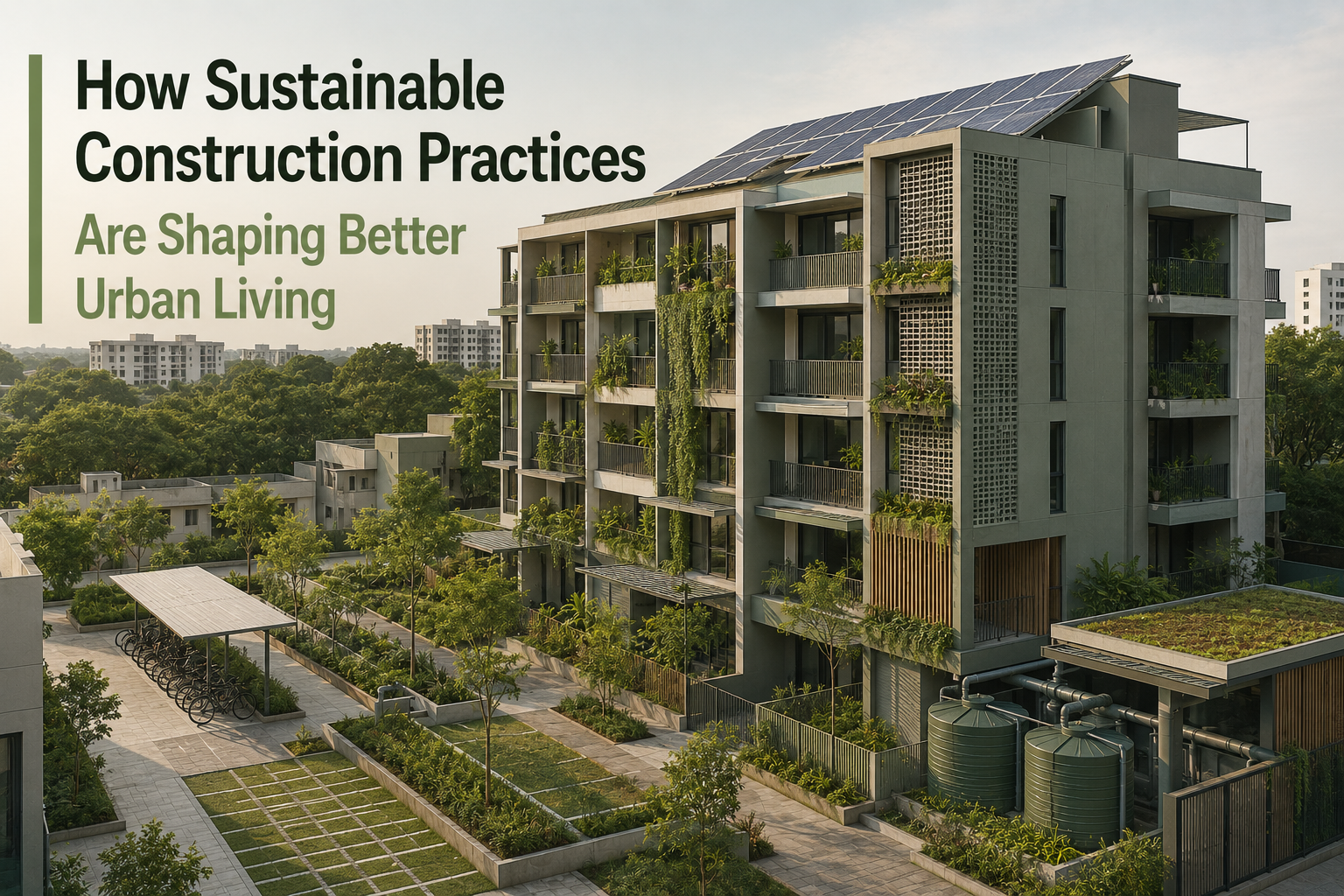
As cities grow, the way buildings are designed and constructed has a direct impact on everyday life. Rising energy use, limited resources, increasing temperatures, and growing waste have encouraged the construction industry to adopt more responsible approaches. Architects in Chennai are increasingly considering sustainability as part of modern building design, focusing on energy efficiency, resource conservation, healthier indoor environments, and long-term performance.
What Is Sustainable Construction?
Sustainable construction involves designing and building structures while reducing their environmental impact throughout their lifecycle. It considers factors such as energy consumption, water usage, material selection, waste management, indoor comfort, and the long-term durability of a building.
The objective is not simply to use environmentally friendly products. A genuinely sustainable building combines efficient planning, appropriate materials, responsible construction methods, and systems that reduce resource consumption over time.
Energy-Efficient Buildings
Energy efficiency is one of the most important aspects of sustainable urban development. Buildings that receive adequate daylight and natural ventilation can reduce dependence on artificial lighting and mechanical cooling during suitable conditions.
Window placement, shading devices, building orientation, insulation, reflective surfaces, and efficient appliances can all contribute to better energy performance. Solar panels and other renewable energy systems can further reduce dependence on conventional electricity sources where practical.
Better Use of Natural Resources
Urban construction requires significant quantities of materials and water. Sustainable practices aim to use these resources more efficiently.
Selecting durable materials, reducing unnecessary material consumption, reusing suitable components, and managing construction waste can help lower the environmental impact of building projects. Water-efficient fixtures, rainwater harvesting, and responsible water management can also support conservation.
Sustainable Materials and Local Sourcing
Material selection has a significant role in sustainable construction. Durable products that require less frequent replacement can contribute to longer building lifecycles. Where suitable, locally sourced materials can also reduce transportation requirements. Recycled, reclaimed, renewable, and responsibly manufactured materials are increasingly being considered for different parts of modern buildings.
However, sustainability should always be evaluated according to the specific project. A material being marketed as environmentally friendly does not automatically make it the best choice for every application.
Reducing Construction Waste
Construction and demolition activities can generate substantial waste. Better planning can reduce the amount of material that ends up being discarded.
Accurate measurements, efficient cutting plans, material reuse, proper segregation, and responsible disposal can make construction processes more resource-efficient. Digital planning and improved project coordination can also help reduce errors and unnecessary rework.
Water Conservation in Urban Homes
Water management is becoming increasingly important as cities face growing demand. Sustainable buildings can incorporate low-flow fixtures, efficient plumbing systems, rainwater collection, and wastewater management solutions. Landscape design can also support water conservation by selecting suitable plants and reducing unnecessary irrigation. These measures can lower water consumption while maintaining comfortable and attractive outdoor spaces.
Healthier Indoor Environments
Sustainable construction is not only about protecting the environment. It can also improve the quality of indoor spaces. Natural ventilation, daylight, low-emission materials, appropriate thermal comfort, and good moisture management can contribute to healthier living environments. Thoughtful design can reduce dependence on artificial systems while creating spaces that feel comfortable throughout the day.
Green Spaces in Urban Areas
As cities become denser, greenery can become an important part of sustainable development. Rooftop gardens, balconies with planting areas, courtyards, vertical gardens, and landscaped open spaces can introduce vegetation into built-up environments.
Green spaces can improve visual comfort and provide opportunities for relaxation while contributing to a more pleasant urban environment. Carefully planned landscaping can also provide shade and help manage rainwater.
Designing for Long-Term Performance
Sustainability should extend beyond the construction stage. Buildings need to remain efficient and functional for many years.
Durable materials, accessible service systems, adaptable layouts, efficient lighting, and maintainable equipment can reduce the need for frequent repairs or replacements. Designing for longevity can therefore provide both environmental and practical benefits.
Technology Supporting Sustainable Construction
Modern technology is making sustainable building practices easier to implement. Energy monitoring systems, smart lighting, automated controls, efficient HVAC systems, and building-management technologies can help occupants understand and manage resource consumption.
Digital modelling can also improve coordination during the design and construction stages, helping identify potential problems before they become costly on-site issues.
Sustainability and Urban Growth
Sustainable construction becomes especially important as cities expand. Instead of treating environmental considerations as an optional feature, modern development increasingly needs to consider how buildings interact with their surroundings.
Well-planned buildings can use resources more efficiently, provide better indoor comfort, reduce operating costs, and contribute positively to the broader urban environment.
The Role of Construction Execution
Sustainable ideas need to be implemented correctly to deliver their intended benefits. Material handling, waste management, installation quality, waterproofing, insulation, plumbing, electrical work, and other construction details can all influence a building's long-term performance.
Working with experienced building contractors in Chennai can help ensure that sustainable design principles are properly translated into construction. Careful execution and coordination can improve durability, efficiency, and overall building performance.
Conclusion
Sustainable construction is becoming an important part of creating better urban environments. From energy-efficient planning and water conservation to responsible materials and healthier interiors, these practices can influence both environmental performance and everyday comfort.
As cities continue to grow, the focus should not be simply on constructing more buildings but on creating buildings that use resources responsibly and remain useful for generations. Sustainable construction offers a practical path toward urban spaces that are more efficient, comfortable, resilient, and environmentally responsible.
Comments
Log in or sign up to join the conversation.