
Web3 is expanding beyond digital ownership toward decentralized identity, credentials, and reputation. Soulbound Tokens (SBTs) are emerging as a practical way to represent achievements, memberships, certifications, and other identity-based records on blockchain. Unlike transferable NFTs, SBTs are designed to remain associated with a specific wallet, making them useful for identity and reputation-focused applications.
What Are Soulbound Tokens?
Soulbound Tokens are non-transferable blockchain-based assets that can represent verified credentials or affiliations. They are designed to stay linked to the recipient rather than being bought, sold, or transferred like conventional digital assets.
For example, an educational institution could issue an SBT for a completed certification, while a professional community could use one to represent membership or verified achievements. This creates a persistent digital record that can be referenced across compatible Web3 applications.
How Do Soulbound Tokens Work?
SBTs use smart contracts to define how tokens are issued, stored, and managed on a blockchain network.
Non-Transferable Token Architecture
Unlike standard NFTs, SBTs are designed with transfer restrictions, keeping the credential connected to its original wallet.
Blockchain-Based Identity
The blockchain provides a verifiable record that can support digital identity without relying entirely on traditional databases.
Credential Verification
Organizations can issue tokens representing qualifications, memberships, achievements, or completed programs.
On-Chain Reputation
Relevant contributions and credentials can build a verifiable reputation record over time, depending on how the system is designed.
Key Use Cases of Soulbound Tokens
Soulbound Tokens can support several identity-focused applications across Web3.
Education and Certifications
Universities, training providers, and professional organizations can issue SBTs as digital certificates that recipients can verify through blockchain records.
Professional Credentials
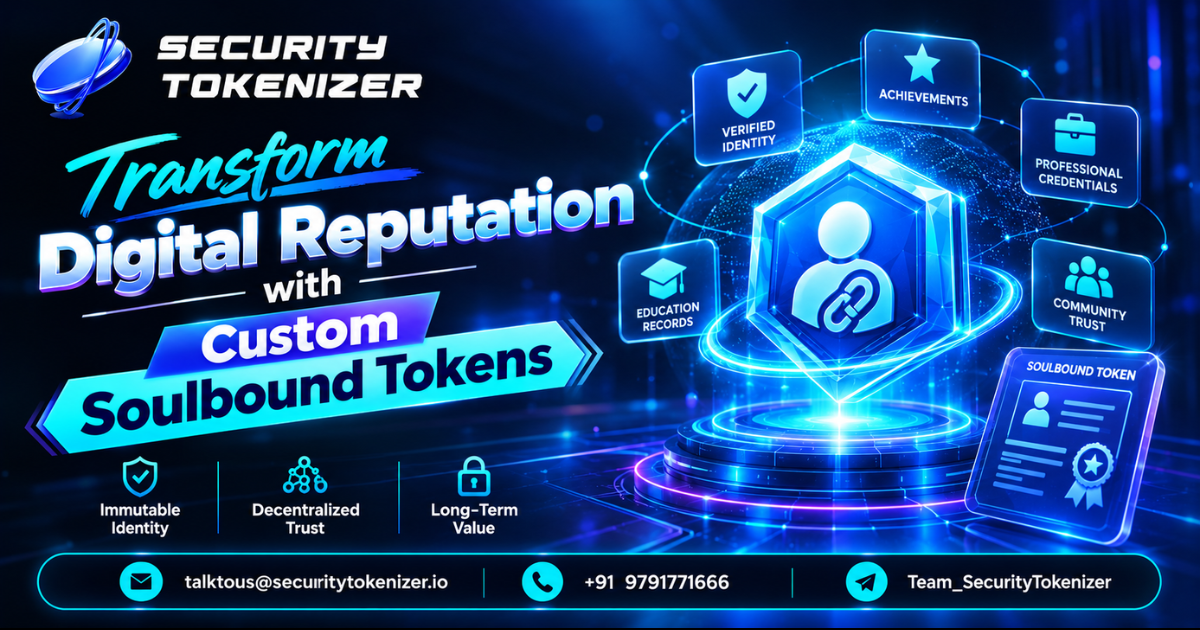
Businesses and professional communities can use SBTs to represent skills, qualifications, memberships, and verified achievements.
DAO and Community Membership
DAOs can issue SBTs to recognize contributors, community participation, governance involvement, or specific roles.
Digital Reputation
SBTs can help establish reputation records based on verified credentials and participation, creating useful identity signals for decentralized applications.
Benefits of Soulbound Token Development
SBT solutions can offer transparent credential verification, persistent identity records, and easier access to verifiable achievements. They can also reduce dependence on physical certificates and fragmented records.
For businesses exploring blockchain identity solutions, an experienced token development company can help with smart contract architecture, token standards, wallet integration, metadata, security testing, and application integration.
Why Choose a Soulbound Token Development Company?
Building an SBT solution requires more than creating a non-transferable token. The development process may involve identity architecture, credential logic, smart contract development, security considerations, and integration with Web3 applications.
A specialized Soulbound Token Development Company can create customized solutions based on specific credential, membership, identity, and reputation requirements.
Businesses planning to build identity-focused Web3 solutions can explore customized development with Security Tokenizer, from SBT architecture and smart contracts to integration and deployment.
Comments
Log in or sign up to join the conversation.