


Solar PV panels reduce your electric bills through the generation of power using free sunlight. After installation of solar panels, the amount of electricity purchased from the utility company decreases each month. With net metering and subsidy schemes in place, an effective solar panel system will greatly reduce the monthly bills to nearly nothing. At Inter Solar, we assist Indian households in making this transition easy.
Key Takeaways
Solar PV panels reduce your electric bills through the generation of power using free sunlight. After installation of solar panels, the amount of electricity purchased from the utility company decreases each month. With net metering and subsidy schemes in place, an effective solar panel system will greatly reduce the monthly bills to nearly nothing. At Inter Solar, we assist Indian households in making this transition easy.
Key Takeaways
Solar PV Panels use sunlight to generate electricity, thereby reducing grid dependence by 70 to 90%.
Net metering gives you the option of feeding excess electricity back into the grid for bill credits.
The PM Surya Ghar Yojana scheme gives subsidies of up to ₹78,000 for home installation.
On average, a solar panel system takes 3 to 5 years to pay itself off.
Quality panels last 25 to 30 years, giving decades of near-free electricity.
Choosing the right panel type and size matters as much as installing one.
Inter Solar guides you to make the correct selection to reduce home electricity bills.
Why Are Home Electricity Bills Rising So Fast?
The electricity tariff structure in India has a slab system, which means that the more electricity you consume, the higher the charge per unit is. Generally, the tariff stands somewhere between ₹3 and ₹8 per unit. And during the summer months, the tariff increases further. Increasing prices of fuel, the cost of transmission, and the growing number of appliances are some reasons behind this scenario. This is exactly why more households now look at solar energy to reduce electricity costs month after month.
What Are Solar PV Panels and How Do They Work?
Solar PV Panels consist of photovoltaic cells that capture the sun's rays and convert them into direct current form of electricity. As most household appliances function using alternating current, an inverter is used to transform DC into AC. This electricity drives your fans, lights, refrigerator, and other household appliances. The more sun rays falling on your panels, the more electricity is generated by your solar panel system.
There are two common setups. Grid-tied systems stay connected to the utility grid and use net metering. Off-grid systems store energy in batteries and work independently. Indian households mostly use grid-tied systems due to their cost-effectiveness and low initial cost.
How Do Solar PV Panels Actually Reduce Electricity Costs?
Do You Really Stop Buying Power From the Grid?
Not entirely, but you definitely purchase much less electricity. The solar panels provide electricity on a regular basis during the day, and you consume the electricity directly. On average, a 3 to 5 kW solar panel system will be able to generate 12 to 20 units of electricity per day. That covers most household needs, which directly cuts what you draw from the grid each month.
What Is Net Metering and How Does It Help?
It refers to the method of getting paid for excess generation of solar energy supplied to the grid. Usually, your panels will produce more energy than your house needs during the daytime. The surplus is then transmitted to the grid rather than being wasted. But at night time, when your panels produce zero energy, you consume from the grid and pay for the balance. Some months you could see your bills reduced to almost ₹0.
Does Solar Protect You From Future Tariff Hikes?
Absolutely, and this is perhaps the most overlooked advantage of using solar energy. Once your solar system is in place, your solar energy will not incur any additional expenses for fuel. The prices for grid energy tend to increase yearly, while your cost of producing solar energy remains the same. This predictability protects your household budget for many years ahead.
How Long Do Solar Panels Last and What Do They Cost to Run?
A high-quality panel lasts for up to 25 to 30 years with minimal maintenance. The panels require only cleaning on rare occasions and once-a-year maintenance by a technician. However, inverters require replacement after 8 to 12 years. Despite the above expenditure, operational costs remain considerably cheaper compared to grid power bills.
What Government Support Is Available for a Solar Panel System?
The PM Surya Ghar Muft Bijli Yojana makes home solar far more affordable for Indian families. Additionally, households will have the option of getting free electricity units up to 300 per month, based on their system capacity.
Here is how the subsidy breaks down:
Up to 2 kW: ₹30,000 subsidy per kW installed
For the 3rd kW: an additional ₹18,000 subsidy
Maximum subsidy: ₹78,000 for systems above 3 kW
This payment goes directly into your bank account after the installation and connection to the grid. It greatly reduces the initial investment needed for a solar energy system and helps families reduce electricity costs faster.
How Much Can You Realistically Save Each Month?
Savings depend on your system size, sunlight hours, and daily consumption pattern. The table below gives a realistic idea based on typical Indian households.
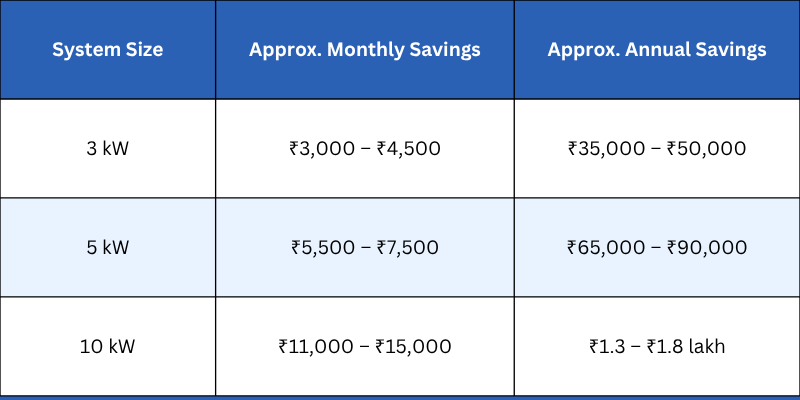
Figures differ depending on the place, orientation of the roof, and shading. However, a properly sized system will pay for itself in a few years anyway. These solar energy benefits become clear once you compare bills before and after installation.
What Types of Solar PV Panels Should You Choose?
Solar PV panel type affects your long-term savings directly. Here is a quick comparison to help you decide.
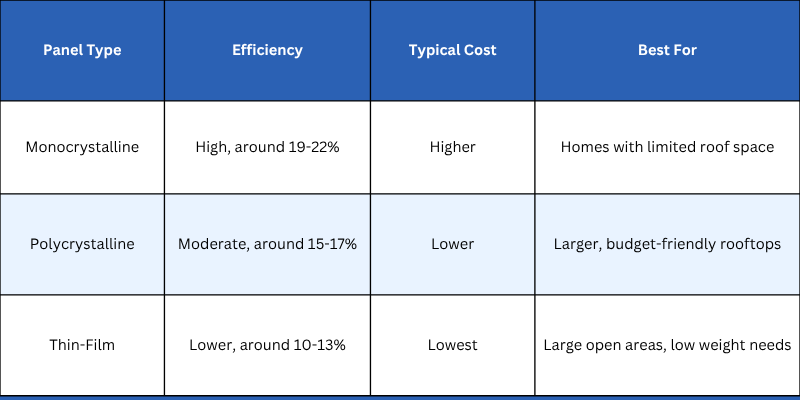
For most Indian homes with limited roof space, monocrystalline Solar PV Panels offer better output and durability.
What Should You Check Before Installing a Solar Panel System?
There are some basic things that you should check to avoid future problems.
Make sure that the installation company is DISCOM-approved for net metering in your state.
Find out the annual degradation percentage of the panels, which ideally must be less than 1 percent per year.
Check warranty details for panels, inverters, and installation separately.
Consider solar loans and EMIs from nationalised banks before making the down payment.
Decide if you want battery backup to protect yourself against blackouts.
Make sure that your roof receives unobstructed sunshine throughout the day.
Net metering rules and subsidy caps also vary by state. Check your local DISCOM norms before finalising a system. |
How Does Inter Solar Help You Reduce Electricity Costs?
At Inter Solar, we provide and install highly efficient Solar PV Panels for Indian weather conditions. We analyse your roof, sun exposure, and consumption pattern before suggesting any system. Thus, we make sure that your solar panel system is perfectly sized right from the beginning. We assist you with the subsidy forms and net metering procedures as well. Curious to know how much you can save per month? Request a quote from Inter Solar now!
Final Words
Solar PV Panels offer one of the most reliable ways to reduce electricity costs for Indian homes. Thanks to net metering, government incentives, and several years of inexpensive power, it all accumulates into a lot of savings. The only thing that really matters is the right choice of panels and their appropriate capacity. Inter Solar helps you plan a system that fits your roof, budget, and daily electricity needs. Request a call and start saving sooner.
Comments
Log in or sign up to join the conversation.