
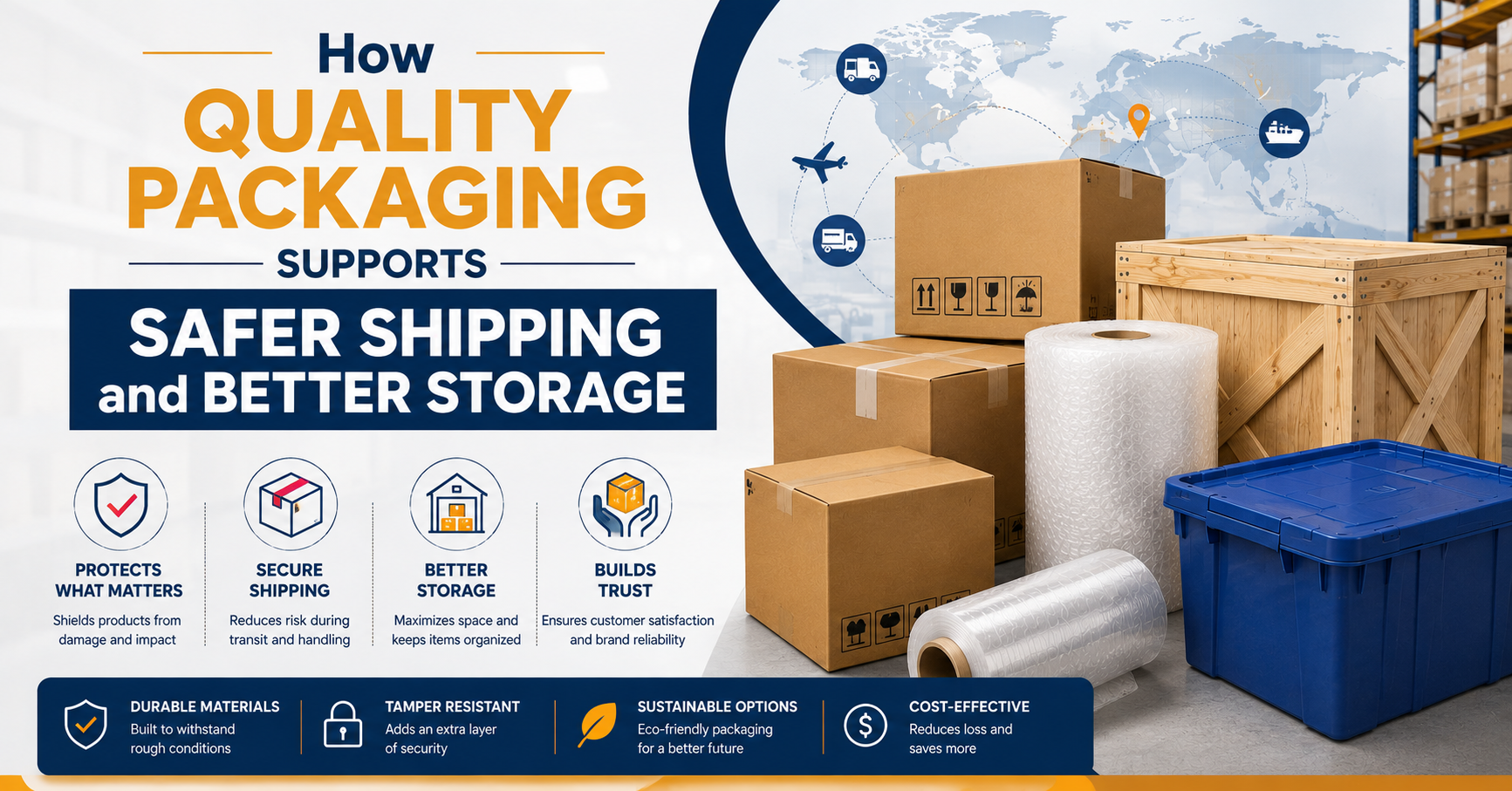
Quality packaging plays an important role in protecting products during shipping, storage, and handling. Well-designed packaging helps reduce damage, maintain product condition, and improve warehouse organization. Businesses need packaging that matches the product’s weight, size, fragility, and transportation requirements. Working with reliable corrugated box manufacturers in Chennai can help businesses access suitable packaging options for different applications. From strong boxes to cushioning materials, the right packaging approach supports safer movement and more efficient storage.
Protecting Products During Transportation
Products can experience vibration, pressure, impacts, and repeated handling while being transported. Quality packaging provides a protective barrier against these conditions and helps keep products secure.
Strong boxes can prevent crushing, while appropriate internal cushioning can reduce movement inside the package. This is especially important for fragile, sensitive, or high-value products that may be more vulnerable to damage.
Choosing the Right Box Strength
Different products require different levels of packaging strength. Lightweight items may be suitable for standard cartons, while heavier products need packaging with greater structural stability.Corrugated boxes are widely used because their layered construction provides useful strength without adding excessive weight. Selecting the appropriate board thickness and box size can improve product protection while supporting efficient transportation.
Improving Warehouse Storage
Packaging also contributes to better warehouse organization. Properly sized boxes and containers can be stacked efficiently, helping businesses make better use of available storage space.
Uniform packaging dimensions can simplify inventory arrangement and make products easier to locate. Strong packaging also helps maintain stack stability, reducing the possibility of packages collapsing or becoming damaged.
Reducing Product Movement
Excessive movement inside a package can lead to scratches, dents, breakage, or other damage. Packaging should therefore provide a suitable fit around the product.Using inserts, foam, paper-based cushioning, or air-filled protective materials can help keep products in position. Reducing internal movement is particularly valuable when goods are transported over long distances.
Supporting Safer Handling
Quality packaging can make products easier to handle during loading, unloading, and warehouse operations. Boxes with suitable dimensions and practical designs can be moved more efficiently.Packaging should also be compatible with material-handling equipment when products are palletized. Stable packages help reduce shifting and make movement safer for warehouse personnel and equipment.
Protection from Environmental Conditions
Products may be exposed to moisture, dust, temperature changes, and other environmental conditions during storage and transportation. Selecting packaging with appropriate protective properties can help minimize these risks.For products sensitive to moisture or contamination, additional protective layers may be useful. Packaging should be selected according to the conditions expected throughout the supply chain.
Secure Sealing Matters
Even strong packaging can fail if it is not properly sealed. Suitable tapes and sealing methods help keep boxes closed during handling and transportation.A secure seal can prevent accidental opening and reduce the risk of products falling out. Businesses should select sealing materials based on box type, package weight, and expected handling conditions.
Packaging for Different Industries
Packaging requirements vary across industries. Retail products may require attractive and convenient packaging, while manufacturing businesses often prioritize durability and repeated handling.
Electronics may require cushioning and protection from impact, whereas machinery components may need stronger boxes or containers. Understanding the application helps businesses choose packaging that provides appropriate protection without unnecessary material use.
Balancing Protection and Cost
Quality packaging does not necessarily mean using excessive materials. The goal is to achieve the right balance between protection, cost, weight, and usability.
Overpackaging can increase material and transportation costs, while insufficient packaging can result in product damage. Selecting materials based on actual requirements helps businesses manage expenses while maintaining adequate protection.
Improving Logistics Efficiency
Good packaging can contribute to smoother logistics operations. Properly packed products are easier to stack, move, count, and organize.
Stable loads can also simplify loading and unloading while reducing the possibility of damaged goods. As a result, businesses can improve operational efficiency while providing better protection throughout the distribution process.
Choosing Protective Cushioning
Fragile products often require additional cushioning to absorb impacts during transportation. Foam, air bubble rolls, and other protective materials can be placed around products to minimize direct contact with the outer packaging.
Businesses can explore suitable options from foam manufacturers in Chennai when additional cushioning and impact protection are required. The appropriate foam type and thickness can help protect sensitive products during storage and transit.
Conclusion
Quality packaging supports safer shipping and better storage by protecting products from impacts, movement, environmental conditions, and handling-related risks. Strong boxes, secure sealing, suitable cushioning, and efficient stacking all contribute to reliable packaging performance. By choosing materials according to product and logistics requirements, businesses can reduce damage, improve warehouse organization, and make transportation more efficient. A thoughtful packaging strategy ultimately supports product safety while helping businesses manage operational costs effectively.
Comments
Log in or sign up to join the conversation.