

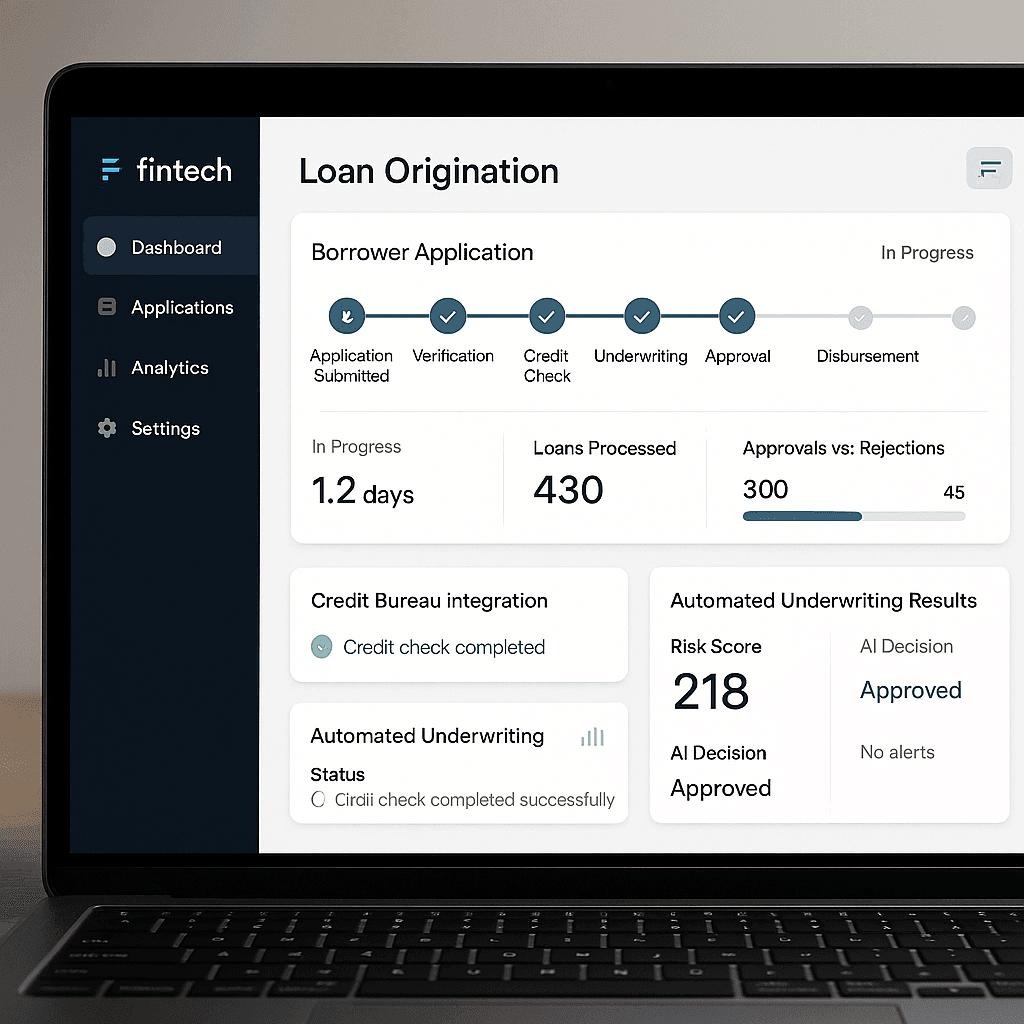
The Big Challenge for Online Lenders Alliance
Online lenders alliance has changed how people and small businesses get access to money or simple bank applications, and quick Accelitas paperwork or weeks of waiting like traditional banks.
But lenders face a difficult problem.
If they approve too many loans too quickly, default rates can rise. If they become too strict, they lose good customers and reduce revenue. Many lenders feel trapped between growth and safety.
This is where smart lending strategy matters.
At Accelitas, many lenders are learning that approving more loans does not always mean taking more risk. In fact, with better systems, stronger data, and smarter decision-making, lenders can grow approval rates while keeping portfolios healthy.
The real answer is not “approve everyone” or “reject more people.”
Why Good Borrowers Get Rejected
Many lenders still use outdated approval systems. These systems depend heavily on traditional credit scores, rigid rules, or limited borrower history.
That creates three common problems:
1. Thin Credit Files
Some borrowers are financially responsible but have little borrowing history. Younger customers, immigrants, gig workers, and first-time borrowers often fall into this group.
Traditional systems may reject them unfairly.
2. Income Changes
Many people today earn through freelance work, side jobs, contract work, or seasonal income. Old lending models may not understand these income patterns.
3. One-Size-Fits-All Rules
Some lenders use the same approval model for every applicant. But a salaried worker, a small business owner, and a self-employed consultant should not always be judged the same way.
This means lenders miss many profitable opportunities.
Real Experience: A Common Lending Scenario
One mid-sized online lender reviewed six months of declined applications.
They found something surprising.
Many rejected borrowers had:
Stable bank deposits
Consistent rent payments
Low overdraft activity
Strong job tenure
No recent missed obligations
But because their traditional credit score was below the cutoff, they were declined.
The lender updated its review model to include more real-world financial behavior.
Within months:
Approval rates improved
Customer acquisition costs dropped
Default rates stayed controlled
Repeat borrowing increased
This shows that smarter approvals can outperform stricter approvals.
How to Approve More Loans Without More Risk
1. Use More Than Credit Scores
Credit scores are useful, but they should not be the only factor.
Modern lenders can review:
Income consistency
Bank transaction behavior
Savings patterns
Debt-to-income ratio
Utility payment habits
Employment history
A borrower with average credit but strong cash flow may be lower risk than someone with high credit and unstable finances.
Using broader data helps identify hidden good borrowers.
2. Build Risk Tiers Instead of Yes/No Decisions
Many lenders only think in two categories:
Approved
Rejected
This is outdated.
A better model uses tiers such as:
Low Risk
Moderate Risk
Higher Risk with adjusted pricing
Needs manual review
For example:
Instead of rejecting a moderate-risk borrower, you may approve:
Smaller loan amount
Shorter repayment term
Higher verification level
Adjusted pricing
This increases approvals while managing exposure.
3. Verify Income Better
Fraud and repayment problems often start with poor income verification.
Use modern tools to verify:
Payroll records
Bank deposits
Tax records
Employer consistency
Self-employed cash trends
Approving verified income borrowers is safer than approving based only on self-reported numbers.
Strong verification increases confidence.
4. Offer Smaller First Loans
New borrowers may have unknown risks.
Instead of large first approvals, offer starter products:
Lower initial limits
Short terms
Automatic payment setup
Fast graduation after good repayment
This lets lenders test borrower behavior safely.
Many excellent long-term customers begin with small first loans.
5. Use Behavioral Signals
Borrower behavior during application can reveal useful risk signals.
Examples:
Completes application carefully
Uploads documents quickly
Consistent information across forms
Realistic requested amount
Responds professionally to verification requests
These signals should not replace underwriting, but they can improve decisions.
6. Re-Underwrite Declined Files Regularly
Many rejected applications become good opportunities later.
Maybe the borrower:
Increased income
Paid debts down
Improved banking habits
Built work stability
Smart lenders review declines monthly and remarket qualified applicants.
This lowers acquisition cost because leads already exist.
7. Reduce Friction for Good Borrowers
Sometimes low-risk borrowers abandon applications because the process is too difficult.
Common reasons:
Too many forms
Slow response times
Repeated document requests
Poor mobile experience
Simplifying the process can increase funded volume without changing credit policy.
Growth can come from conversion improvements—not more risk.
8. Watch Early Warning Metrics
Approving more loans safely requires fast monitoring.
Track:
First payment default rate
Missed first two payments
Fraud alerts
Income mismatch trends
Repeat customer performance
Channel-level loan quality
If any metric rises, adjust quickly.
This allows safe scaling.
How Accelitas Helps Lenders Grow Smarter
Accelitas focuses on helping lenders use better decision systems, smarter customer evaluation, and scalable growth strategies.
Instead of relying only on old approval logic, lenders can improve:
Borrower segmentation
Approval strategy
Risk modeling
Customer retention
Portfolio quality
The result is healthier lending growth.
Simple Example
Imagine 1,000 monthly applicants.
Old model:
300 approved
700 rejected
Defaults moderate
Smarter model:
420 approved
580 rejected
Similar default levels due to better segmentation
That means more revenue, more customers, and controlled risk.
This is how modern lenders win.
Mistakes to Avoid
Approving Everyone Fast
Growth without controls creates future losses.
Trusting Only One Score
Single-number decisions miss strong borrowers.
Ignoring Existing Declines
Past leads can become future customers.
No Post-Funding Monitoring
Approval is only the beginning.
Complex Applications
Good customers leave when the process is painful.
Action Plan for Online Lenders
Week 1
Audit current decline reasons.
Week 2
Review approval cutoffs and identify hidden opportunities.
Week 3
Test alternative data inputs.
Week 4
Launch smaller starter offers for moderate-risk applicants.
Ongoing
Track loan performance weekly.
Why Human Experience Matters (E-E-A-T)
Today, search engines and users trust content based on real expertise.
That means lenders should learn from:
Real portfolio results
Real borrower behavior
Real repayment patterns
Real operational data
Not theory alone.
The most successful lenders combine technology with real lending experience.
That is true E-E-A-T:
Experience
Expertise
Authoritativeness
Trustworthiness
Conclusion
Online lenders do not need to choose between growth and safety.
They can approve more loans without more risk by improving how they evaluate applicants.
The smartest path includes:
Better data
Risk tiers
Strong verification
Smaller first loans
Portfolio monitoring
Better customer experience
When lenders approve smarter, everyone wins.
Borrowers get fairer access.
Lenders gain revenue.
Risk stays controlled.
That is the future of lending and brands like Accelitas are helping make it possible.
Comments
Log in or sign up to join the conversation.